 Pocket Botanist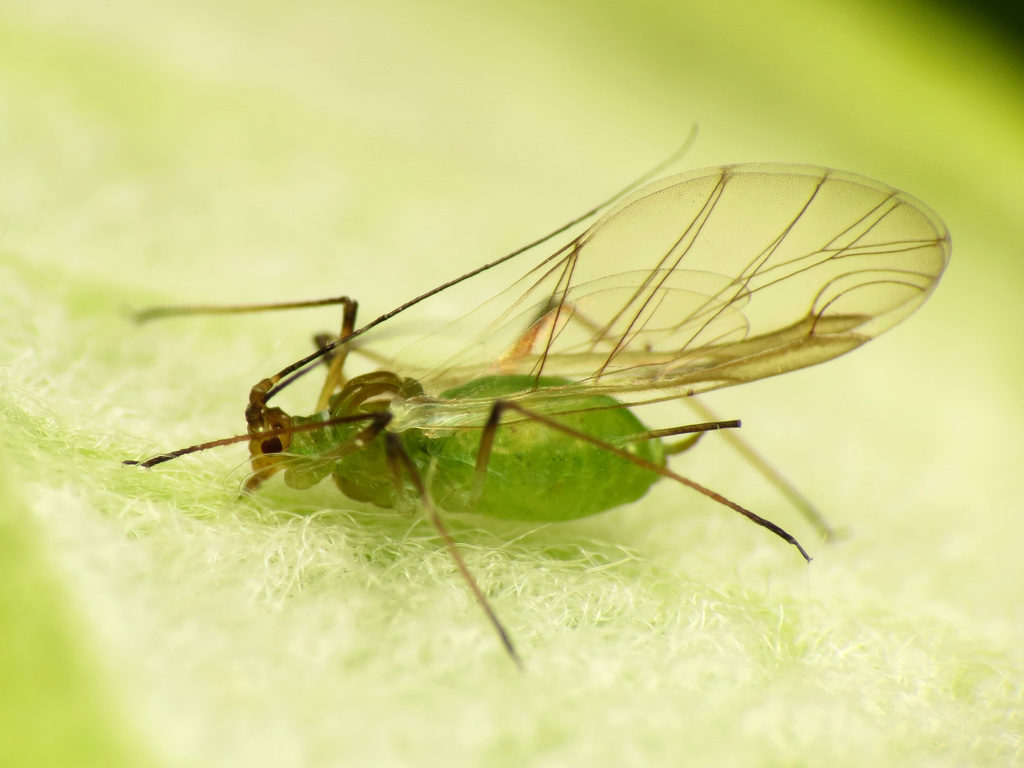
Symptoms by part
Leaves
Leaves may look yellow, curled, or distorted, and you might see a sticky substance called honeydew or a black sooty mold growing on the surface.
Stems
Clusters of small green, black, or pink insects gather on new, tender growth, often causing the stem to bend or stop growing.
Flowers
Buds may fail to open properly or appear deformed, and the flowers themselves may be covered in sticky honeydew.
Causes
- Excessive nitrogen fertilizer which encourages soft, succulent growth that aphids love.
- Lack of natural predators like ladybugs or lacewings in the garden.
- High humidity and warm temperatures during the growing season.
Could be confused with
- Whiteflies · Whiteflies are tiny white winged insects that fly up in a cloud when you disturb the plant, whereas aphids are usually wingless and stay put.
- Scale insects · Scale insects look like small, immobile bumps or shells attached to the plant, while aphids are soft and move slowly.
Treatment
- 1. Use a strong stream of water from a hose to physically blast the aphids off the leaves and stems.
- 2. Prune away heavily infested tips or leaves to reduce the population quickly.
- 3. Apply fatty acids as a contact spray directly onto the insects, follow the label.
Without chemicals
- Prune off the most heavily infested plant parts.
- Introduce or encourage natural predators like ladybugs and lacewings.
- Use reflective mulches to confuse the insects.
Chemical options
- Fatty acids, spray directly on the insects to disrupt their cell membranes, follow the label.
- Pyrethrins, use as a contact spray on the insects, follow the label.
Preventing it
- Avoid over fertilizing with nitrogen to prevent excessive soft growth.
- Plant flowers like marigolds or dill to attract beneficial insects that eat aphids.
- Check the undersides of leaves regularly for early signs of infestation.
Season
The warm growing season.
Spread risk
High
Severity
Moderate
When to act
Act as soon as you see the first clusters of insects to prevent a full outbreak. If the plant is severely stunted or covered in mold, it may be best to remove it to protect the rest of your collection.
Think it's Aphids?
This guide covers the general picture. Pocket Botanist looks at your actual plant from a photo and tells you what's really going on, how serious it is, and what to try first. Identification and a health check are free.


Questions people ask
- Do ants mean I have aphids?
- Yes, ants often farm aphids to collect the sweet honeydew they produce, so seeing a lot of ants on your plant is a strong sign of an aphid problem.
- Will aphids kill my plant?
- While they rarely kill a healthy, mature plant, they can severely weaken it and stunt its growth, making it more susceptible to other diseases.
- Can I just wash them off?
- For small infestations, a strong spray of water is often enough to control them, but you must be consistent and hit the undersides of the leaves.
Plants it affects
This guide was generated with AI and is general information, not horticultural advice. Read about how we build these guides.