 Pocket Botanist
Plant guide
Buckwheat.
Fagopyrum esculentum
Pronounced fa-go-PY-rum es-kyoo-LEN-tum
Also known as Brank, Buckwheat, Common Buckwheat, Japanese Buckwheat, Silverhull Buckwheat



Scan with your phone's camera to get the app
Or go to pocketbotanist.app/get on your phone
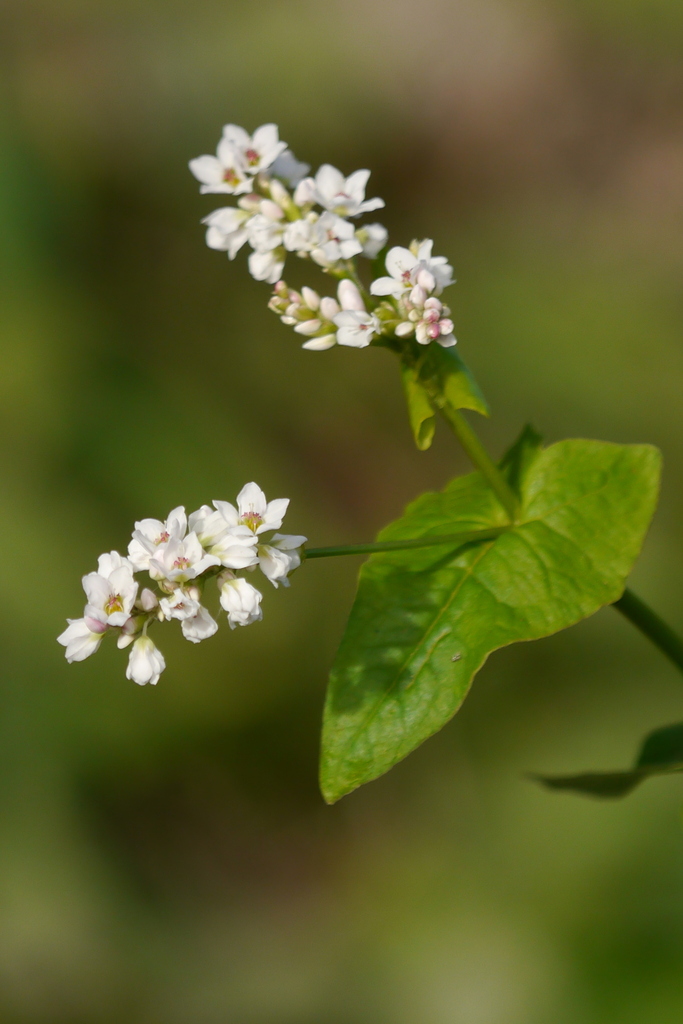
Buckwheat is a fast growing annual plant often grown as a cover crop or for its edible seeds. It thrives in cooler weather and adds nutrients back into your garden soil. You will love how quickly it fills in empty garden beds.

At a glance
- Care level
- Easy
- Plant type
- Annual herb
- Light
- Full sun
- Indoor light
- Direct sun
- Water
- Every 3 to 7 days
- Mature size
- 2 to 4 feet
- Growth rate
- Fast
- Hardiness
- USDA 3 to 10
- Bloom time
- Mid to late summer
Care
Sow seeds directly into the soil once the danger of frost has passed. Keep the soil consistently moist until germination occurs. Watch for wilting during hot spells as this plant prefers cooler temperatures.
- Watering
- Keep the soil evenly moist but not waterlogged throughout the growing season.
- Feeding
- Buckwheat generally does not require supplemental fertilizer as it is often used to improve soil quality.
- Pruning
- Pruning is not necessary for this annual crop.
- Repotting
- This plant is an annual and is typically grown directly in the garden soil rather than containers.
- Soil
- Well draining loamy soil
- Soil pH
- 6.0 to 7.0
- Temperature
- 5 to 30°C
- Humidity
- 40 to 70%
- Drought tolerance
- Moderate
- Lifespan
- Annual, completes life cycle in one season
- Fragrance
- Light
- Deer and rabbits
- Moderate
Safety
- People
- The plant is generally safe for consumption, though raw greens should be cooked to reduce potential photosensitizing compounds.
- Children
- There are no specific safety concerns for children, though the seeds are hard and pose a minor choking hazard.
- Contact allergens
- Handling the foliage can cause skin irritation or allergic reactions in sensitive individuals.
- Airborne allergens
- Buckwheat pollen is a known allergen that can cause respiratory distress in some people.
- Edibility
- Raw buckwheat leaves contain fagopyrin which can cause photosensitivity if consumed in large quantities.
How to identify it
- Heart shaped green leaves
- Clusters of small white flowers
- Triangular dark brown seeds
- Reddish stems on mature plants
- Height
- 0.3 to 1.2m
- Spread
- 0.2 to 0.4m
- Leaves
- green, deciduous
- Flowers
- white, pink, 0.5 to 1cm
- Fruit
- brown, black, Autumn
Problems to watch for
- AphidsCommon
- Root RotCommon
- BoltingUncommon
- Damping OffUncommon
Check your buckwheat from a photo
Pocket Botanist looks at a photo of your plant and tells you what's wrong and what to try first.
Scan with your phone's camera to get the app
Or go to pocketbotanist.app/get on your phone
Growing it
- Propagation
- seed
- When to plant
- spring, late summer
- Overwintering
- It is an annual that dies with the first frost, so no winter care is needed.
- In containers
- It grows well in containers at least 20 cm deep.
Direct sowing
- Prepare a weed free seedbed.
- Sow seeds 2 cm deep in rows.
- Keep soil moist until germination.
Plant buckwheat as a quick cover crop between vegetable rotations to improve soil health.
Grows well with
Similar species
- Tartary buckwheat · A related species often grown for grain in colder climates.
Science
- Family
- Polygonaceae
- Genus
- Fagopyrum
- Order
- Caryophyllales
- Class
- Magnoliopsida
- Native range
- Central and East Asia
- Conservation
- This species is widely cultivated and not of conservation concern.
It thrives in poor, acidic soils where other crops struggle and helps to solubilize phosphorus for subsequent plants.
- Value to wildlife
- excellent nectar source, attracts beneficial predatory insects
- Pollinators
- bees, butterflies, beetles
- Uses
- cover crop, grain production, honey production, green manure
Through the year
Ecological indicators
- Salinity
- 2/9
- Soil reaction
- 4/9
- Light
- 7/9
- Temperature
- 6/9
- Moisture
- 5/9
- Nutrients
- 3/9
Taxonomy resolved against GBIF.
Questions people ask
- Is buckwheat related to wheat?
- No, it is a broadleaf plant in the Polygonaceae family.
- Can I grow it in a pot?
- Yes, it grows well in containers if they are deep enough to support the root system.
Where the name comes from
The name buckwheat comes from the Middle Dutch 'boecweite' meaning beech wheat, because its seeds resemble beech nuts. The scientific name Fagopyrum is derived from the Latin 'fagus' for beech and the Greek 'pyros' for wheat.
Good to know
- Buckwheat honey is dark, rich, and highly prized for its strong flavor.
- It grows very quickly, often reaching maturity in just 10 to 12 weeks.
- Farmers use it as a cover crop to suppress weeds and improve soil structure.
- It is a gluten free pseudo cereal.
Keep your buckwheat growing
This page is a general guide. Save your plant in Pocket Botanist and you get care reminders timed for this plant, plus a care history that shows what worked.
Scan with your phone's camera to get the app
Or go to pocketbotanist.app/get on your phone
This guide was generated with AI on and checked against GBIF taxonomy. It is general information, not horticultural or veterinary advice. Read about how we build these guides.