Skip to content

Features

Identify.

Name a plant from one photo or by typing what you think it is. Common and scientific names, a confidence figure, runner-up matches, and where the species grows in the wild.

One photo, one name
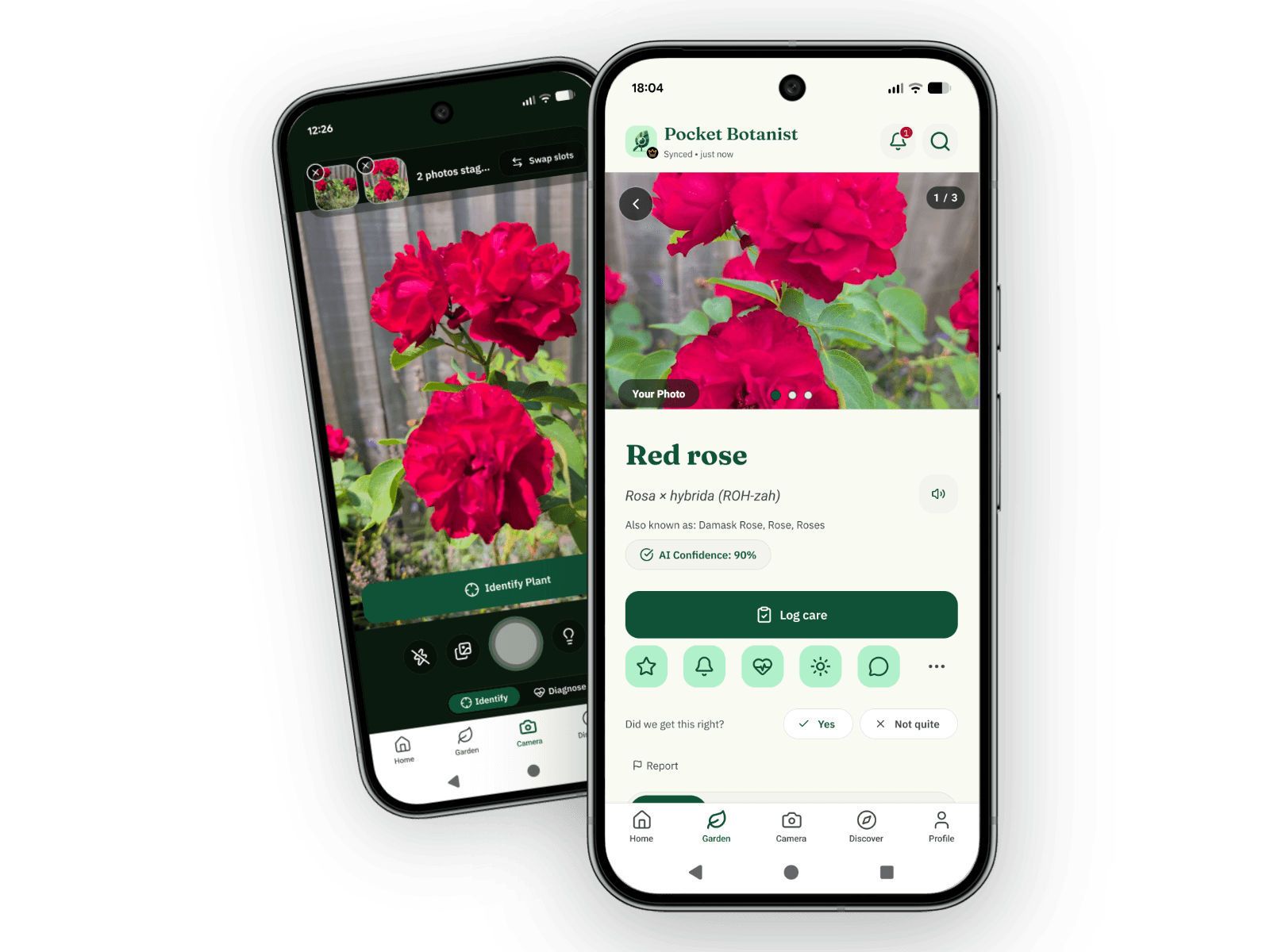
Pl. II · Rosa × hybrida
Free

One photo, one name

Point the camera and shoot. In about a second you get the common name, the scientific name, the family, and a confidence figure that tells you how sure the model actually is. It works on flowers, houseplants, trees, shrubs, succulents, herbs, fungi, and bark.

  • A result in about a second from a single photo
  • Common name, scientific name, and family
  • A confidence figure, not just an answer
  • Three a day as a guest, five with a free account

Pl. III · Name search
Free account

Or just type the name

When you already know what you are looking at, skip the camera. Type a common or scientific name and Pocket Botanist resolves it to the accepted botanical name, then gives you the same full profile a photo would. Handy for planning before you buy.

  • Search by common or scientific name
  • Resolved against the GBIF backbone taxonomy
  • The same details a photo lookup returns
  • Shares your daily allowance
Pl. IV · Other possibilities
Free

When it could be two things

Near-identical species are where plant ID gets honest. Rather than picking one and hoping, Pocket Botanist shows an Other Possibilities card with the runner-up matches and their own confidence figures. Tap any of them to read its full profile and decide for yourself.

  • Runner-up matches listed with confidence figures
  • A reason given for each alternative
  • Open any candidate to compare the details
  • Similar species called out on the result
The botany behind the answer
Pl. V · Where it grows
Free

The botany behind the answer

Every result carries its taxonomy from phylum down to genus, the names it also goes by, and a map of verified wild sightings drawn from GBIF occurrence records. It is the part that turns a lookup into something you actually learn from.

  • Full taxonomy, sourced from GBIF
  • Other names the plant goes by
  • A map of where the species grows in the wild
  • Origin, lore, and a few facts worth keeping
Go deeper on a species
Pl. VI · Detailed guide
PremiumIncluded with Premium

Go deeper on a species

For the plants you care most about, the detailed guide goes past the summary into propagation, flowering, and the specific ways a species tends to fail. Regional growing information uses your hardiness zone to say what applies where you actually live.

  • A long-form guide per species
  • Regional growing notes for your zone
  • Invasive and legal status where it matters
  • Seasonal photo gallery through the year

No sign-up needed to start.