 Pocket Botanist
Plant guide
Bougainvillea.
Bougainvillea Comm. ex Juss.
Pronounced boo-gan-VIL-ee-uh spek-TAH-bih-liss
Also known as Bouganvillea, Bouganvillia, bougainvillea, bougainvilleas, paperflowers


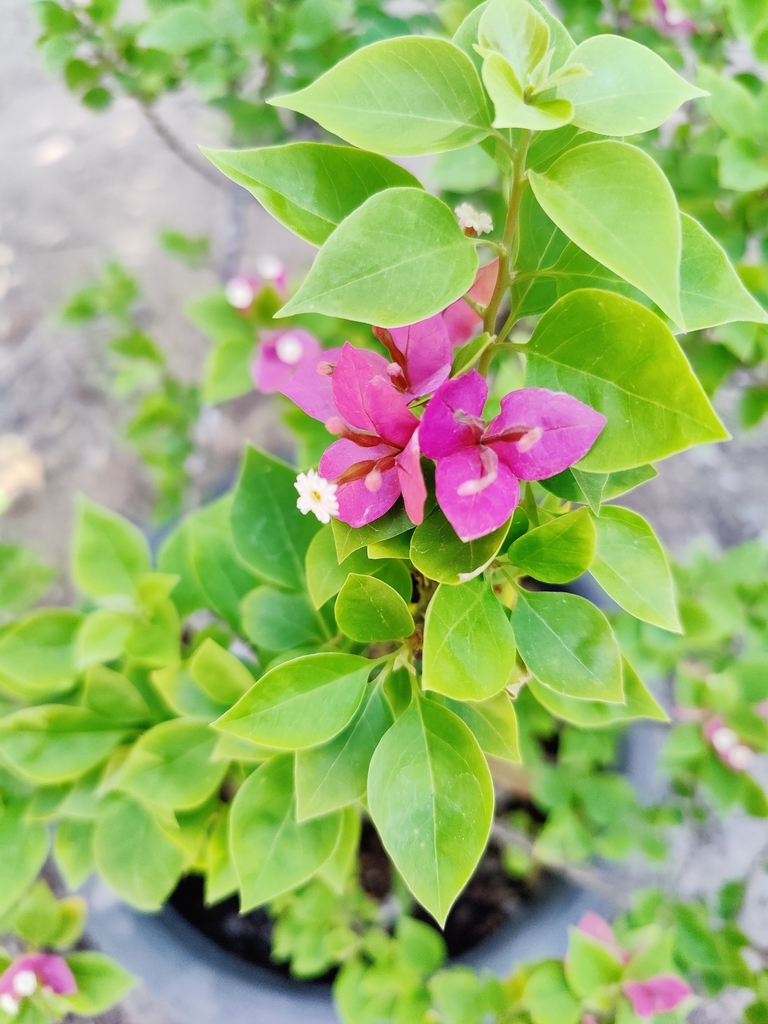
Bougainvillea is a stunning woody vine known for its vibrant, papery bracts that surround tiny white flowers. It thrives in warm climates and loves soaking up the sun. You will find it makes a dramatic statement on any trellis or wall.
At a glance
- Care level
- Moderate
- Plant type
- Evergreen woody vine
- Light
- Full sun
- Indoor light
- Direct sun
- Water
- Every 7 to 14 days
- Mature size
- 15 to 30 feet
- Growth rate
- Fast
- Hardiness
- USDA 9 to 11
- Bloom time
- Spring to autumn
Care
Give this plant as much direct sunlight as possible to encourage those beautiful blooms. Keep the soil well drained and watch for wilting, which is a sign it needs a deep drink. If the plant stops flowering, it usually means it needs more light or a bit of stress from drying out.
- Watering
- Allow the top few inches of soil to dry out completely between waterings.
- Feeding
- Use a balanced liquid fertilizer during the active growing season to support heavy blooming.
- Pruning
- Trim back long stems after a flowering cycle to maintain shape and encourage bushier growth.
- Repotting
- Repot when the roots become crowded or the plant outgrows its container.
- Soil
- Well draining sandy or loamy soil
- Soil pH
- 5.5 to 6.0
- Temperature
- 10 to 38°C
- Humidity
- 30 to 50%
Safety
- People
- The sap can cause skin irritation and contact dermatitis in sensitive individuals.
- Pets
- The sap can cause skin irritation, and the thorns may cause injury to curious pets.
- Children
- Keep children away from the sharp, woody thorns found along the stems.
- Contact allergens
- The sharp thorns can cause mechanical injury and the sap may trigger skin irritation.
- Airborne allergens
- There is no significant evidence of airborne pollen allergies from this plant.
- Edibility
- The plant is not considered edible and ingestion may cause gastrointestinal distress.
How to identify it
- Vibrant papery bracts in bright colors
- Thorny woody stems and branches
- Small white tubular flowers
- Alternate simple green leaves
- Height
- 1.5 to 9m
- Spread
- 1.5 to 6m
- Leaves
- green, evergreen
- Flowers
- pink, purple, red, white, orange, yellow, 2 to 5cm
Common problems
- Aphids — Small insects that cluster on new growth and suck plant sap.
- Root rot — Fungal decay caused by overly wet soil conditions.
Growing it
- Propagation
- cuttings, layering
- When to plant
- spring
Pair with other drought tolerant plants that enjoy full sun to simplify your watering schedule.
Grows well with
Similar species
- Paperflower — It is a very common species with similar growth habits.
Science
- Family
- Nyctaginaceae
- Genus
- Bougainvillea
- Order
- Caryophyllales
- Class
- Magnoliopsida
- Native range
- Tropical South America
- Conservation
- Not of conservation concern.
It survives in dry, rocky environments by developing deep roots and tolerating intense heat.
- Value to wildlife
- nectar source
- Pollinators
- butterflies, hummingbirds
- Uses
- ornamental climber, container plant, hedging, topiary
Through the year
Ecological indicators
- Salinity
- 4/9
- Soil reaction
- 6/9
- Light
- 8/9
- Temperature
- 8/9
- Moisture
- 3/9
- Nutrients
- 3/9
Taxonomy resolved against GBIF.
Questions people ask
- Why is my plant not blooming?
- It likely needs more direct sunlight or is receiving too much nitrogen fertilizer.
- How often should I water it?
- Water thoroughly when the soil is dry, but allow it to dry out significantly between waterings.
Where the name comes from
The genus was named by Philibert Commerçon to honor the French navigator Louis Antoine de Bougainville who discovered it in Brazil.
Good to know
- Bougainvillea is named after French explorer Louis Antoine de Bougainville.
- It thrives in poor soil as long as it has excellent drainage.
- The plant is native to tropical South America.
- It is a member of the Nyctaginaceae family.
- It requires intense sunlight to produce its vibrant bracts.
Also in
Is your bougainvillea looking unwell?
This page is a general guide. Pocket Botanist diagnoses problems from a photo of your actual plant, works out watering for your light and conditions, and reminds you when care is due.
This guide was generated with AI and checked against GBIF taxonomy. It is general information, not horticultural or veterinary advice. Read about how we build these guides.