 Pocket Botanist
Plant guide
Lantana.
Lantana camara L.
Pronounced lan-TAH-nuh kuh-MARE-uh
Also known as Bird's Brandy, Black Sage, Cherry Pie, Cherry-Pie, Common Lantana, Lantana, Largeleaf Lantana


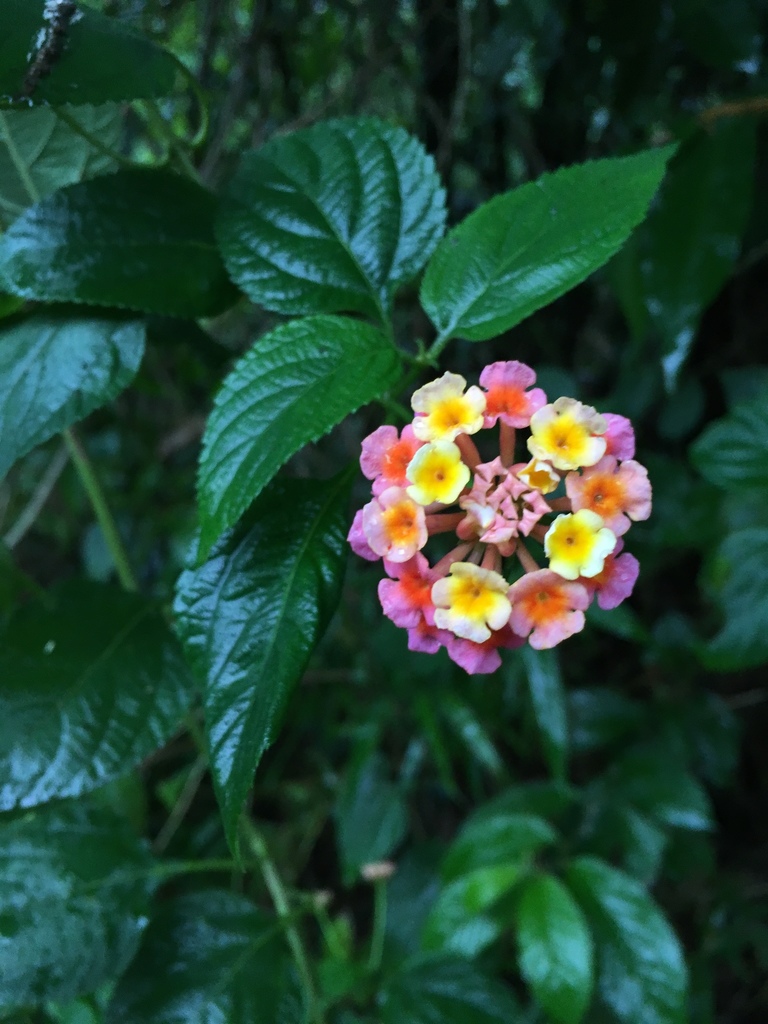
Lantana is a cheerful, sun loving shrub that produces clusters of vibrant, multi colored flowers. It is a fantastic choice for attracting butterflies and bees to your garden. You will find it thrives in warm climates and handles heat quite well.

At a glance
- Care level
- Easy
- Plant type
- Perennial shrub
- Light
- Full sun
- Indoor light
- Direct sun
- Water
- Every 3 to 7 days
- Mature size
- 3 to 6 feet
- Growth rate
- Fast
- Hardiness
- USDA 8 to 11
- Bloom time
- Late spring to first frost
Care
Plant your lantana in a spot that gets plenty of sunshine to encourage the best blooms. Keep an eye out for wilting leaves, which usually means it needs a good drink. Regular deadheading will keep the plant looking tidy and promote more flowers throughout the season.
- Watering
- Water deeply once the top inch of soil feels dry to the touch.
- Feeding
- Apply a balanced liquid fertilizer once a month during the active growing season.
- Pruning
- Trim back the stems by a few inches every few months to encourage a bushier shape.
- Repotting
- Move to a larger container once the roots begin to circle the bottom of the pot.
- Soil
- Well draining, fertile soil
- Soil pH
- 6.0 to 7.5
- Temperature
- 10 to 35°C
- Humidity
- 40 to 70%
- Drought tolerance
- High
- Lifespan
- Perennial, typically 3 to 5 years
- Fragrance
- Light
- Deer and rabbits
- High
Signs it needs repotting
- Roots growing out of the drainage holes.
- Stunted growth during the active season.
- Water running straight through the pot without soaking in.
Safety
- People
- The foliage and unripe berries contain triterpenoids that are poisonous to humans and pets.
- Pets
- This plant is toxic to cats and dogs if ingested, so keep it away from curious pets.
- Children
- Keep this plant away from children as the berries are tempting but toxic if eaten.
- Contact allergens
- The leaves have fine, stiff hairs that can cause skin irritation or dermatitis upon contact.
- Airborne allergens
- The pollen is not typically considered a major airborne allergen.
- Edibility
- All parts of this plant are toxic if ingested and can cause severe gastrointestinal distress.
How to identify it
- Clusters of small tubular flowers
- Rough, ovate, serrated green leaves
- Strong, pungent scent when crushed
- Small, dark, berry like fruits
- Height
- 0.6 to 1.8m
- Spread
- 0.6 to 1.8m
- Leaves
- dark green, evergreen
- Flowers
- yellow, orange, red, pink, white, 2 to 5cm
- Fruit
- green, black, Late summer to autumn
Problems to watch for
- Powdery MildewCommon
- WhiteflyCommon
- Root RotUncommon
- Sooty MoldUncommon
By symptom
Check your lantana from a photo
Pocket Botanist looks at a photo of your plant and tells you what's wrong and what to try first.
Growing it
- Propagation
- cuttings, seed
- When to plant
- spring, early summer
- Overwintering
- In cold climates, treat as an annual or bring pots indoors to a bright, cool location. If kept outdoors in mild areas, prune back in late winter to encourage fresh growth.
- In containers
- It is excellent for containers, requiring a pot at least 30 centimeters wide with good drainage.
Stem Cuttings
- 1. Take a 10 centimeter cutting from a non flowering stem.
- 2. Remove the lower leaves.
- 3. Dip the end in rooting hormone.
- 4. Place in moist potting mix.
- 5. Keep in bright, indirect light until rooted.
Pair with other heat loving, drought tolerant plants to create a low maintenance summer display.
Grows well with
Similar species
- Verbena — They are closely related and share similar flower structures.
Science
- Family
- Verbenaceae
- Genus
- Lantana
- Order
- Lamiales
- Class
- Magnoliopsida
- Native range
- Tropical and subtropical Americas
- Conservation
- It is listed as a noxious weed in many areas and should not be planted near natural habitats.
It thrives in disturbed soils and open sunny areas where it outcompetes native vegetation.
- Value to wildlife
- nectar source, attracts pollinators
- Pollinators
- bees, butterflies, hummingbirds
- Uses
- ornamental shrub, container plant, pollinator garden
Through the year
Ecological indicators
- Salinity
- 3/9
- Soil reaction
- 6/9
- Light
- 8/9
- Temperature
- 8/9
- Nutrients
- 5/9
- Moisture
- 4/9
Taxonomy resolved against GBIF.
Questions people ask
- Is Lantana invasive?
- Yes, it is highly invasive in many warm climates and should be avoided in those regions.
- Can I grow Lantana in a pot?
- It grows very well in containers and makes a great patio plant.
Where the name comes from
The genus name comes from the Latin name for Viburnum, which has similar leaves. The species name camara is a Brazilian name for this plant.
Good to know
- The flowers change color as they age, often showing multiple colors on the same cluster.
- It is a member of the Verbenaceae family.
- Lantana is extremely heat and drought tolerant once established.
- It is often used as an annual in cooler climates.
Also in
Keep your lantana growing
This page is a general guide. Save your plant in Pocket Botanist and you get care reminders timed for this plant, plus a care history that shows what worked.
This guide was generated with AI and checked against GBIF taxonomy. It is general information, not horticultural or veterinary advice. Read about how we build these guides.