 Pocket Botanist
Guide botanique
Lantana.
Lantana camara L.
Prononciation lan-TAH-nuh kuh-MARE-uh
Aussi appelée Lantana, Lantana


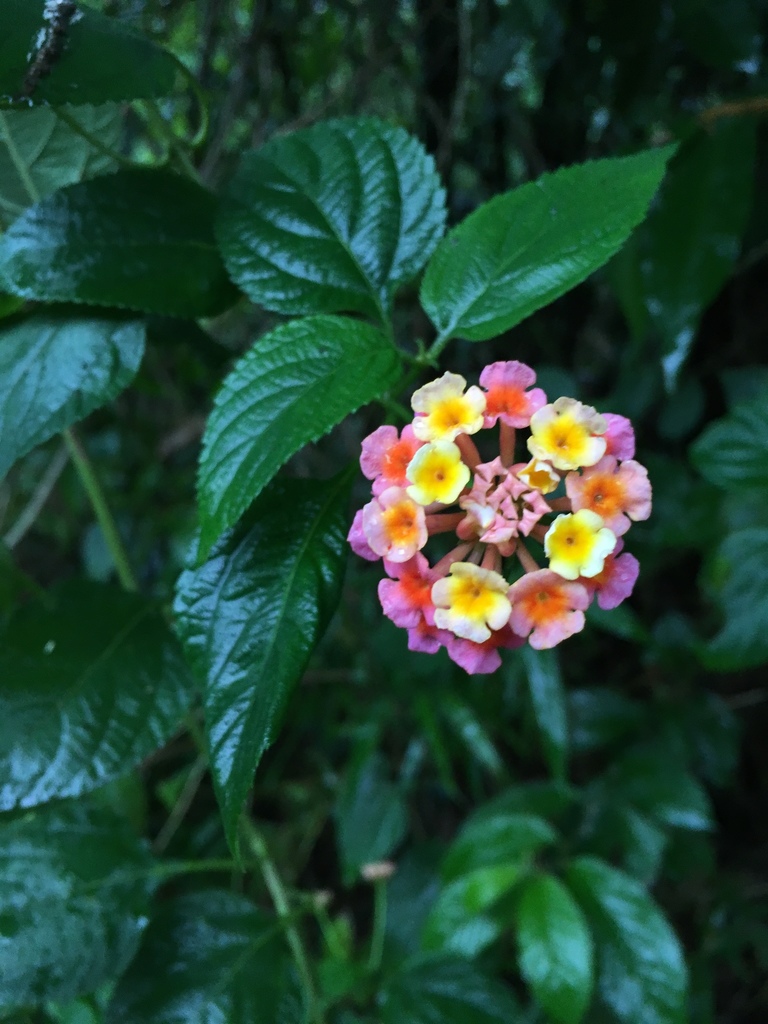
Le lantana est un arbuste joyeux qui aime le soleil et produit des grappes de fleurs vibrantes multicolores. C'est un excellent choix pour attirer les papillons et les abeilles dans votre jardin. Vous constaterez qu'il prospère dans les climats chauds et qu'il supporte très bien la chaleur.

En un coup d'œil
- Niveau d'entretien
- Facile
- Type de plante
- Arbuste vivace
- Lumière
- Plein soleil
- Lumière en intérieur
- Soleil direct
- Arrosage
- Tous les 3 à 7 jours
- Taille adulte
- 3 à 6 pieds
- Croissance
- Rapide
- Rusticité
- USDA 8 à 11
- Floraison
- Fin du printemps jusqu'au premier gel
Entretien
Plantez votre lantana dans un endroit qui bénéficie de beaucoup de soleil pour encourager les plus belles floraisons. Gardez un œil sur les feuilles flétries, qui indiquent généralement qu'il a besoin d'un bon arrosage. La suppression régulière des fleurs fanées gardera la plante soignée et favorisera davantage de fleurs tout au long de la saison.
- Arrosage
- Arrosez profondément une fois que le premier centimètre de terre au toucher est sec.
- Engrais
- Appliquez un engrais liquide équilibré une fois par mois pendant la saison de croissance active.
- Taille
- Taillez les tiges de quelques centimètres tous les quelques mois pour encourager une forme plus touffue.
- Rempotage
- Transplantez dans un pot plus grand une fois que les racines commencent à tourner au fond du pot.
- Sol
- Sol fertile et bien drainé
- pH du sol
- 6.0 à 7.5
- Température
- 10 à 35°C
- Humidité
- 40 à 70%
- Résistance à la sécheresse
- Élevée
- Durée de vie
- Vivace, généralement 3 à 5 ans
- Parfum
- Léger
- Résistance aux chevreuils et lapins
- Élevée
Signes qu'il faut rempoter
- Les racines sortent des trous de drainage.
- Croissance ralentie pendant la saison active.
- L'eau traverse directement le pot sans s'infiltrer.
Sécurité
- Humains
- Le feuillage et les baies non mûres contiennent des triterpénoïdes qui sont toxiques pour les humains et les animaux domestiques.
- Animaux
- Cette plante est toxique pour les chats et les chiens en cas d'ingestion, alors gardez-la loin des animaux curieux.
- Enfants
- Tenez cette plante à l'écart des enfants car les baies sont tentantes mais toxiques si elles sont mangées.
- Allergènes de contact
- Les feuilles ont des poils fins et rigides qui peuvent provoquer une irritation cutanée ou une dermatite au contact.
- Allergènes aéroportés
- Le pollen n'est généralement pas considéré comme un allergène aérien majeur.
- Comestibilité
- Toutes les parties de cette plante sont toxiques si elles sont ingérées et peuvent provoquer de graves troubles gastro-intestinaux.
Comment l'identifier
- Grappes de petites fleurs tubulaires
- Feuilles vertes, rugueuses, ovales et dentées
- Odeur forte et piquante lorsqu'elle est écrasée
- Petits fruits sombres ressemblant à des baies
- Hauteur
- 0,6 à 1,8m
- Envergure
- 0,6 à 1,8m
- Feuilles
- vert foncé, evergreen
- Fleurs
- jaune, orange, rouge, rose, blanc, 2 à 5cm
- Fruits
- vert, noir, Fin de l'été à l'automne
Problèmes à surveiller
- AleurodesCourant
- OïdiumCourant
- FumaginePeu courant
- Pourriture des racinesPeu courant
- Aleurode — Petits insectes suceurs de sève qui se rassemblent sous les feuilles.
- Mildiou poudreux — Une infection fongique qui apparaît sous forme de taches blanches poudreuses sur le feuillage.
Par symptôme
Vérifie la santé de ta plante en photo
Pocket Botanist analyse une photo de ta plante et te dit ce qui ne va pas et quoi essayer en premier.
La cultiver
- Multiplication
- bouturage, semis
- Quand planter
- printemps, début de l'été
- Hivernage
- Dans les climats froids, traitez comme une annuelle ou rentrez les pots à l'intérieur dans un endroit lumineux et frais. Si vous les laissez dehors dans les régions clémentes, taillez à la fin de l'hiver pour encourager une nouvelle croissance.
- En pot
- Il est excellent pour les conteneurs, nécessitant un pot d'au moins 30 centimètres de large avec un bon drainage.
Boutures de tige
- 1. Prélevez une bouture de 10 centimètres sur une tige non florifère.
- 2. Retirez les feuilles inférieures.
- 3. Trempez l'extrémité dans de l'hormone de bouturage.
- 4. Placez dans un terreau humide.
- 5. Maintenez à la lumière vive et indirecte jusqu'à l'enracinement.
Associez-la à d'autres plantes aimant la chaleur et tolérant la sécheresse pour créer un näyttage estival nécessitant peu d'entretien.
Bonnes associations
Espèces similaires
- Verbena — Ils sont étroitement liés et partagent des structures florales similaires.
Science
- Famille
- Verbenaceae
- Genre
- Lantana
- Ordre
- Lamiales
- Classe
- Magnoliopsida
- Région d'origine
- Amériques tropicales et subtropicales
- Préservation
- Il est répertorié comme une mauvaise herbe envahissante dans de nombreuses régions et ne doit pas être planté près des habitats naturels.
Il prospère dans les sols perturbés et les zones ensoleillées ouvertes où il concurrence la végétation indigène.
- Intérêt pour la faune
- source de nectar, attire les pollinisateurs
- Pollinisateurs
- abeilles, papillons, colibris
- Utilisations
- arbuste ornemental, plante en pot, jardin pour pollinisateurs
Au fil des saisons
Repères écologiques
- Salinité
- 3/9
- Réaction du sol
- 6/9
- Lumière
- 8/9
- Température
- 8/9
- Nutriments
- 5/9
- Humidité
- 4/9
Taxonomie vérifiée avec le GBIF.
Ce qu'on demande souvent
- Le Lantana est-il envahissant ?
- Oui, il est très envahissant dans de nombreux climats chauds et doit être évité dans ces régions.
- Puis-je cultiver du Lantana en pot ?
- Il pousse très bien en pots et fait une excellente plante de patio.
D'où vient le nom
Le nom du genre vient du nom latin du Viburnum, qui a des feuilles similaires. Le nom de l'espèce camara est un nom brésilien pour cette plante.
Bon à savoir
- Les fleurs changent de couleur en vieillissant, montrant souvent plusieurs couleurs sur le même bouquet.
- C'est un membre de la famille des Verbenaceae.
- Le Lantana est extrêmement tolérant à la chaleur et à la sécheresse une fois établi.
- Il est souvent utilisé comme plante annuelle dans les climats plus froids.
Aussi dans
Garde ta plante en pleine forme
Cette page est un guide général. Enregistre ta plante dans Pocket Botanist et tu reçois des rappels d'entretien adaptés à cette plante, ainsi qu'un historique d'entretien qui montre ce qui a marché.
Ce guide a été généré par IA et vérifié avec la taxonomie du GBIF. Il s'agit d'informations générales, et non de conseils horticoles ou vétérinaires. Découvre comment nous concevons ces guides.