 Pocket Botanist
Plant guide
Autumn sage.
Salvia greggii
Pronounced SAL-vee-uh GREG-ee-eye
Also known as San Antone-oregano, autumn sage



Scan with your phone's camera to get the app
Or go to pocketbotanist.app/get on your phone

Autumn sage is a lovely, woody perennial that brings vibrant color to dry, sunny gardens. It thrives in heat and attracts hummingbirds with its nectar rich blooms. This plant is a fantastic choice for xeriscaping.
At a glance
- Care level
- Easy
- Plant type
- Subshrub
- Light
- Full sun
- Indoor light
- Direct sun
- Water
- Every 7 to 14 days
- Mature size
- 90 cm tall by 90 cm wide
- Growth rate
- Medium
- Hardiness
- USDA 7 to 10
- Bloom time
- Late spring to first frost
Care
Plant in well-draining soil to prevent root rot, as this sage dislikes sitting in water. Prune back lightly after the first flush of flowers to encourage a second show in the fall. Watch for yellowing leaves, which often signal overwatering.
- Watering
- Allow the soil to dry out significantly between waterings once established.
- Feeding
- Apply a balanced, slow-release fertilizer once in early spring.
- Pruning
- Cut back by one third in late winter to maintain a compact shape.
- Repotting
- Repot only if the plant becomes root-bound in its container.
- Soil
- Sandy, rocky, or well-draining loam
- Soil pH
- Neutral to slightly alkaline
- Temperature
- -12 to 40°C
- Humidity
- 20 to 50%
- Drought tolerance
- High
- Lifespan
- Perennial, typically 5 to 10 years.
- Fragrance
- Light
- Deer and rabbits
- High
Signs it needs repotting
- Roots growing out of the drainage holes.
- Water sitting on the surface for too long.
Safety
- People
- This plant is generally considered non toxic to humans.
- Children
- There are no specific safety concerns for children regarding this plant.
- Edibility
- While the flowers are technically edible, they are mostly grown for their ornamental value and should be avoided if treated with pesticides.
How to identify it
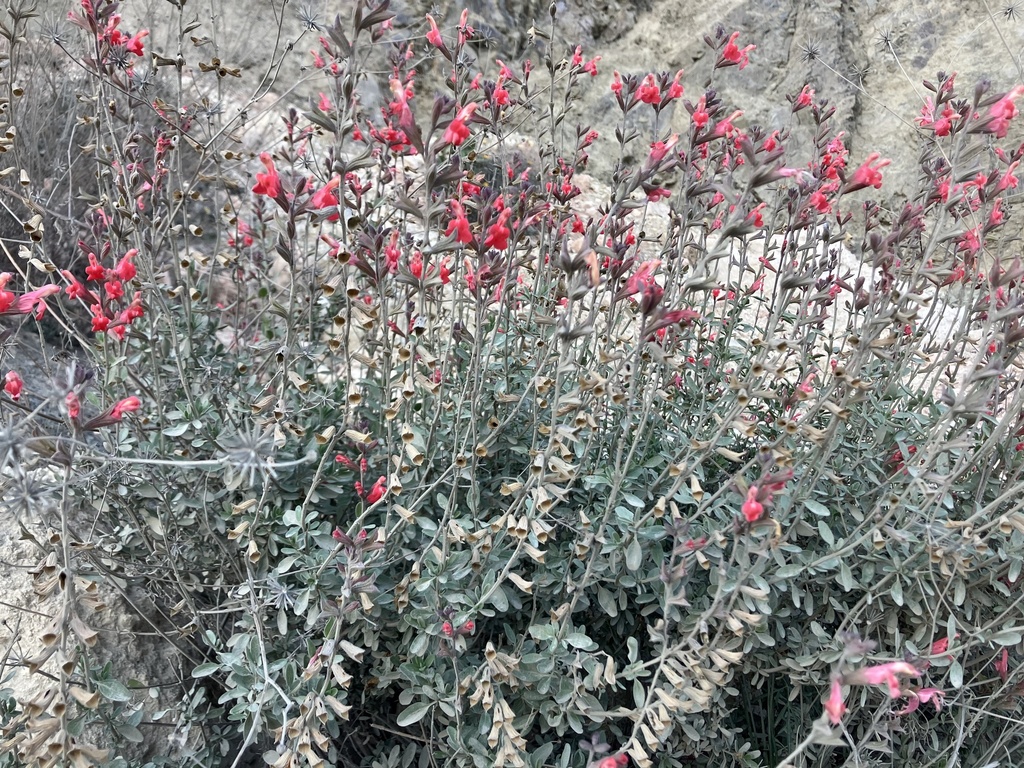
- Small, oval, aromatic green leaves
- Tubular flowers in various colors
- Woody, multi-stemmed base
- Opposite leaf arrangement
- Height
- 0.6 to 0.9m
- Spread
- 0.6 to 0.9m
- Leaves
- green, semi-evergreen
- Flowers
- red, pink, white, purple, coral, 1 to 2cm
Problems to watch for
- AphidsCommon
- Root RotCommon
- Powdery MildewUncommon
- Spider MitesUncommon
Check your autumn sage from a photo
Pocket Botanist looks at a photo of your plant and tells you what's wrong and what to try first.
Scan with your phone's camera to get the app
Or go to pocketbotanist.app/get on your phone
Growing it
- Propagation
- cuttings, seed
- When to plant
- spring, fall
- Overwintering
- Cut back by one third in late winter to refresh the plant for spring growth. Ensure the soil is well drained to prevent winter rot.
- In containers
- It grows well in pots at least 30 centimeters wide, provided the soil is very well draining.
Softwood Cuttings
- Take a 10 centimeter cutting in late spring.
- Remove the lower leaves.
- Place in moist, sandy soil until roots form.
Pair this plant with other drought tolerant perennials to create a low maintenance garden that thrives on neglect.
Grows well with
- Blackfoot Daisy · They share similar water and light requirements in a sunny garden.
- Purple Coneflower · The contrasting colors and textures look great together in a pollinator border.
Similar species
- Mealycup Sage · It offers a similar growth habit but with blue or violet flower spikes.
Science
- Family
- Lamiaceae
- Genus
- Salvia
- Order
- Lamiales
- Class
- Magnoliopsida
- Native range
- Texas and Northern Mexico.
- Conservation
- It is not of conservation concern as it is widespread in its native range.
It grows on dry, rocky slopes where it relies on its deep root system to survive periods of intense heat and drought.
- Value to wildlife
- nectar source
- Pollinators
- bees, butterflies, hummingbirds
- Uses
- pollinator garden, xeriscape, border plant, container gardening
Through the year
Ecological indicators
- Salinity
- 2/9
- Soil reaction
- 6/9
- Light
- 8/9
- Temperature
- 7/9
- Moisture
- 2/9
- Nutrients
- 2/9
Taxonomy resolved against GBIF.
Questions people ask
- How often should I prune it?
- Lightly prune after the first flush of flowers to encourage a second wave of blooms.
- Does it need fertilizer?
- It prefers lean soil and usually does not require supplemental fertilizer.
Where the name comes from
The name honors Josiah Gregg, a 19th century merchant and amateur botanist who collected the plant in Texas.
Good to know
- It is commonly called Autumn Sage because it puts on a massive show of color as the weather cools.
- The flowers are highly attractive to hummingbirds throughout the summer.
- It is native to the rocky slopes of Texas and Mexico.
- It is very drought tolerant once established.
Also in
Keep your autumn sage growing
This page is a general guide. Save your plant in Pocket Botanist and you get care reminders timed for this plant, plus a care history that shows what worked.
Scan with your phone's camera to get the app
Or go to pocketbotanist.app/get on your phone
This guide was generated with AI on and checked against GBIF taxonomy. It is general information, not horticultural or veterinary advice. Read about how we build these guides.