 Pocket Botanist
Plant guide
Browallia.
Browallia americana
Pronounced bro-WAL-ee-uh uh-mer-ih-KAY-nuh
Also known as Jamaican Forget-Me-Not


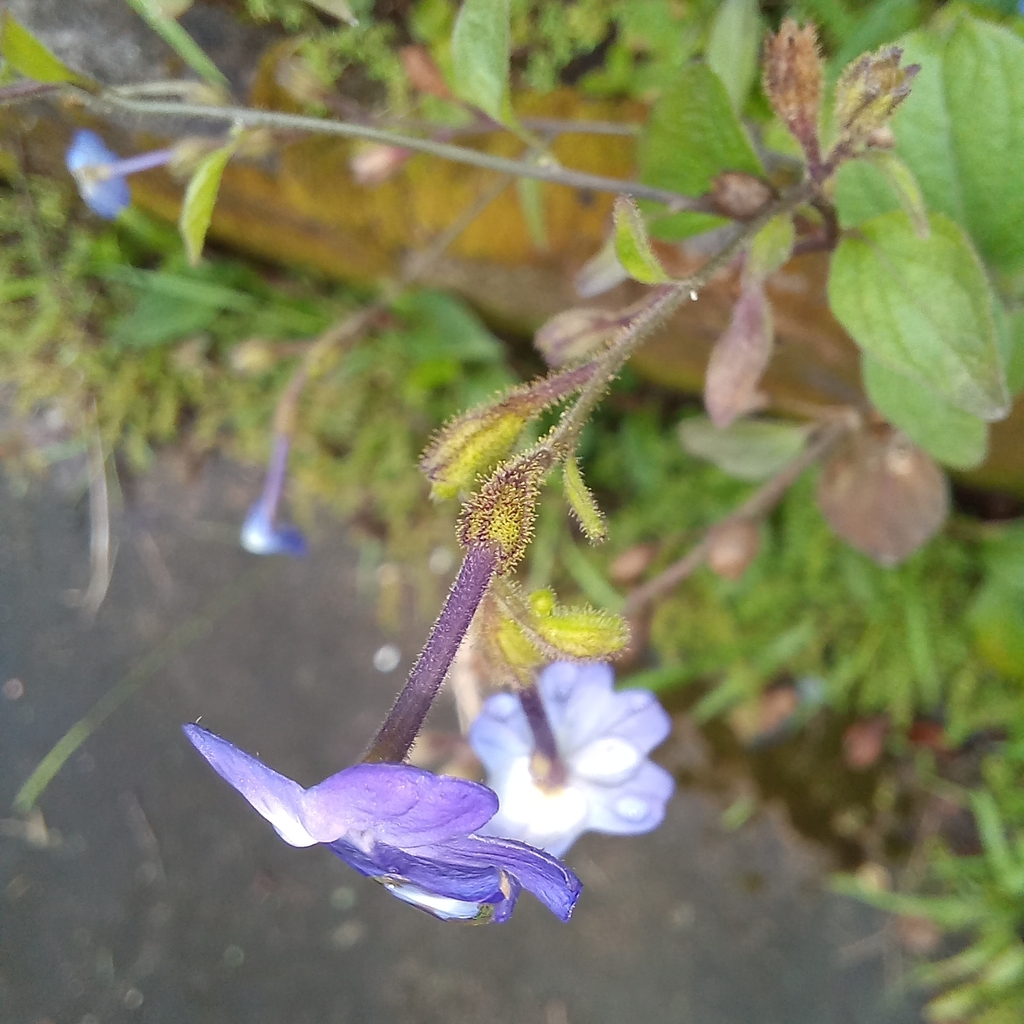
Browallia americana is a charming annual that brings a splash of color to shaded garden spots. It produces lovely star shaped flowers throughout the warmer months. You will find it thrives best when kept consistently moist and protected from intense afternoon sun.
At a glance
- Care level
- Moderate
- Plant type
- Annual
- Light
- Partial shade to full shade
- Indoor light
- Bright indirect
- Water
- Every 2 to 4 days
- Mature size
- 45 to 60 cm
- Growth rate
- Fast
- Hardiness
- USDA 9 to 11
- Bloom time
- Summer to early autumn
Care
Keep the soil evenly moist but not waterlogged to encourage continuous blooming. Watch for wilting as a sign of thirst, and pinch back the stems to promote a bushier shape. Ensure good air circulation to prevent fungal issues in humid conditions.
- Watering
- Keep the soil consistently moist but never soggy.
- Feeding
- Use a balanced liquid fertilizer every two weeks during the growing season.
- Pruning
- Pinch back the tips of stems to encourage a fuller, bushier plant.
- Repotting
- As an annual, this plant is typically discarded after one season.
- Soil
- Well draining, fertile, loamy soil
- Soil pH
- 6.0 to 7.0
- Temperature
- 10 to 30°C
- Humidity
- 40 to 70%
- Drought tolerance
- Low
- Lifespan
- Annual, typically one growing season.
- Deer and rabbits
- Moderate
Signs it needs repotting
- Roots growing out of the drainage holes.
- Water running straight through the soil without soaking in.
Safety
- People
- The plant contains alkaloids that can be toxic if ingested in large quantities.
- Pets
- This plant is generally considered non-toxic to cats and dogs.
- Children
- Keep this plant out of reach of small children to prevent accidental ingestion.
- Contact allergens
- Handling the foliage may cause mild skin irritation in sensitive individuals.
- Airborne allergens
- There are no significant reports of respiratory allergies associated with this plant.
- Edibility
- This plant is not intended for consumption and may cause digestive upset if ingested.
How to identify it
- Star shaped blue or violet flowers
- Oval shaped bright green leaves
- Slender branching stems
- Small tubular flower base
- Height
- 0.3 to 0.6m
- Spread
- 0.2 to 0.4m
- Leaves
- green, deciduous
- Flowers
- blue, violet, white, 2 to 3cm
Problems to watch for
By symptom
Check your browallia from a photo
Pocket Botanist looks at a photo of your plant and tells you what's wrong and what to try first.
Growing it
- Propagation
- seed
- When to plant
- spring
- Overwintering
- In colder climates, treat this plant as an annual and discard after the first frost. If you wish to save it, bring it indoors before temperatures drop below 10 Celsius.
- In containers
- It is excellent for containers and hanging baskets, needing at least a 15 cm pot.
Seed
- Sow seeds indoors 8 to 10 weeks before the last frost.
- Press seeds into moist seed starting mix without covering them.
- Keep the container warm and in bright light until germination.
- Transplant seedlings outdoors once all danger of frost has passed.
Pair with other shade loving annuals to create a lush, layered look in containers.
Grows well with
Similar species
- Browallia speciosa — It is a larger, more commonly grown relative with showier flowers.
Science
- Family
- Solanaceae
- Genus
- Browallia
- Order
- Solanales
- Class
- Magnoliopsida
- Native range
- Tropical regions of Central and South America.
- Conservation
- This species is not currently of conservation concern.
It naturally grows in moist, shaded forest clearings where it can easily reseed.
- Value to wildlife
- nectar source
- Pollinators
- bees, butterflies
- Uses
- container gardening, bedding plant, hanging baskets
Through the year
Ecological indicators
- Temperature
- 7/9
- Nutrients
- 5/9
- Salinity
- 2/9
- Moisture
- 6/9
- Soil reaction
- 6/9
- Light
- 5/9
Taxonomy resolved against GBIF.
Questions people ask
- Does it need full sun?
- It prefers partial shade, especially in hotter climates.
- Can I grow it indoors?
- Yes, it makes a lovely houseplant if given bright, indirect light.
Where the name comes from
The genus honors John Browall, an 18th century Swedish botanist and bishop.
Good to know
- It is a member of the nightshade family.
- It thrives in partial shade, making it perfect for porches.
- The flowers are star shaped and quite delicate.
Also in
Keep your browallia growing
This page is a general guide. Save your plant in Pocket Botanist and you get care reminders timed for this plant, plus a care history that shows what worked.
This guide was generated with AI and checked against GBIF taxonomy. It is general information, not horticultural or veterinary advice. Read about how we build these guides.