 Pocket Botanist
Guide botanique
Violette d'Amérique.
Browallia americana
Prononciation bro-WAL-ee-uh uh-mer-ih-KAY-nuh
Aussi appelée Myosotis de Jamaïque


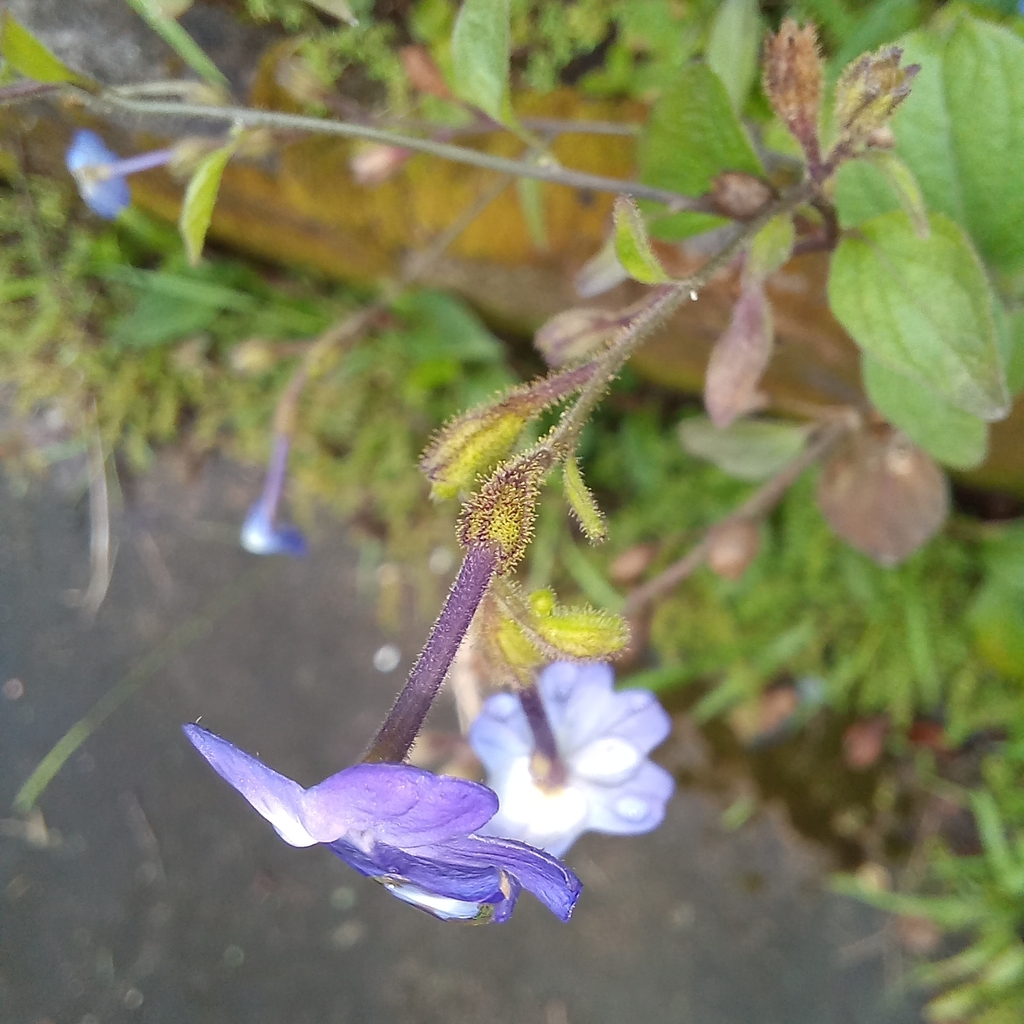
Browallia americana est une charmante annuelle qui apporte une touche de couleur aux endroits ombragés du jardin. Elle produit de jolies fleurs en forme d'étoile tout au long des mois les plus chauds. Vous la trouverez plus épanouie si elle est maintenue constamment humide et à l'abri du soleil intense de l'après-midi.
En un coup d'œil
- Niveau d'entretien
- Moyenne
- Type de plante
- Annuelle
- Lumière
- Mi-ombre à ombre totale
- Lumière en intérieur
- Lumière vive indirecte
- Arrosage
- Tous les 2 à 4 jours
- Taille adulte
- 45 à 60 cm
- Croissance
- Rapide
- Rusticité
- USDA 9 à 11
- Floraison
- Été à début d'automne
Entretien
Gardez le sol uniformément humide mais pas détrempé pour encourager une floraison continue. Surveillez le flétrissement comme signe de soif, et pincez les tiges pour favoriser une forme plus touffue. Assurez une bonne circulation de l'air pour prévenir les problèmes fongiques dans des conditions humides.
- Arrosage
- Gardez le sol constamment humide mais jamais détrempé.
- Engrais
- Utilisez un engrais liquide équilibré toutes les deux semaines pendant la saison de croissance.
- Taille
- Pincez les extrémités des tiges pour encourager une plante plus pleine et touffue.
- Rempotage
- En tant qu'annuelle, cette plante est généralement jetée après une saison.
- Sol
- Sol bien drainé, fertile et limoneux
- pH du sol
- 6.0 à 7.0
- Température
- 10 à 30°C
- Humidité
- 40 à 70%
- Résistance à la sécheresse
- Faible
- Durée de vie
- Annuelle, généralement une saison de croissance.
- Résistance aux chevreuils et lapins
- Moyenne
Signes qu'il faut rempoter
- Les racines sortent des trous de drainage.
- L'eau traverse directement le sol sans s'imbiber.
Sécurité
- Humains
- La plante contient des alcaloïdes qui peuvent être toxiques si ingérés en grandes quantités.
- Animaux
- Cette plante est généralement considérée comme non toxique pour les chats et les chiens.
- Enfants
- Gardez cette plante hors de portée des jeunes enfants pour éviter toute ingestion accidentelle.
- Allergènes de contact
- La manipulation du feuillage peut provoquer une légère irritation cutanée chez les personnes sensibles.
- Allergènes aéroportés
- Il n'y a pas de rapports significatifs d'allergies respiratoires associées à cette plante.
- Comestibilité
- Cette plante n'est pas destinée à la consommation et peut provoquer des troubles digestifs si elle est ingérée.
Comment l'identifier
- Fleurs bleues ou violettes en forme d'étoile
- Feuilles ovales vert vif
- Tiges fines et ramifiées
- Petite base de fleur tubulaire
- Hauteur
- 0,3 à 0,6m
- Envergure
- 0,2 à 0,4m
- Feuilles
- vert, caduc
- Fleurs
- bleu, violet, blanc, 2 à 3cm
Problèmes à surveiller
- AleurodesCourant
- PuceronsCourant
- Pourriture des racinesPeu courant
- Pourriture grisePeu courant
Par symptôme
Vérifie la santé de ta plante en photo
Pocket Botanist analyse une photo de ta plante et te dit ce qui ne va pas et quoi essayer en premier.
La cultiver
- Multiplication
- semis
- Quand planter
- printemps
- Hivernage
- Dans les climats plus froids, considérez cette plante comme une annuelle et jetez-la après le premier gel. Si vous souhaitez la conserver, rentrez-la avant que les températures ne descendent en dessous de 10 Celsius.
- En pot
- Elle est excellente pour les contenants et les paniers suspendus, nécessitant un pot d'au moins 15 cm.
Semis
- Semez les graines à l'intérieur 8 à 10 semaines avant le dernier gel.
- Pressez les graines dans un terreau de semis humide sans les couvrir.
- Gardez le pot au chaud et en pleine lumière jusqu'à la germination.
- Transplantez les semis à l'extérieur une fois que tout risque de gel est passé.
Associez-la à d'autres annuelles aimant l'ombre pour créer un look luxuriant et superposé dans les contenants.
Bonnes associations
- Balsamine des jardins — Ils partagent des exigences similaires en matière de lumière et d'humidité pour les endroits ombragés.
- Coléus — Les couleurs du feuillage offrent un joli contraste avec les fleurs bleues.
Espèces similaires
- Browallia speciosa — C'est un parent plus grand et plus couramment cultivé avec des fleurs plus voyantes.
Science
- Famille
- Solanaceae
- Genre
- Browallia
- Ordre
- Solanales
- Classe
- Magnoliopsida
- Région d'origine
- Régions tropicales d'Amérique centrale et du Sud.
- Préservation
- Cette espèce n'est actuellement pas préoccupante en matière de conservation.
Il pousse naturellement dans les clairières de forêts humides et ombragées où il peut facilement se ressemer.
- Intérêt pour la faune
- source de nectar
- Pollinisateurs
- abeilles, papillons
- Utilisations
- jardinières, plantes de parterre, paniers suspendus
Au fil des saisons
Repères écologiques
- Température
- 7/9
- Nutriments
- 5/9
- Salinité
- 2/9
- Humidité
- 6/9
- Réaction du sol
- 6/9
- Lumière
- 5/9
Taxonomie vérifiée avec le GBIF.
Ce qu'on demande souvent
- A-t-il besoin de plein soleil ?
- Il préfère la mi-ombre, surtout dans les climats plus chauds.
- Puis-je le cultiver à l'intérieur ?
- Oui, c'est une jolie plante d'intérieur si on lui donne une lumière vive et indirecte.
D'où vient le nom
Le genre honore John Browall, un botaniste et évêque suédois du XVIIIe siècle.
Bon à savoir
- C'est un membre de la famille des morelles.
- Il prospère à mi-ombre, ce qui le rend parfait pour les porches.
- Les fleurs sont en forme d'étoile et assez délicates.
Aussi dans
Garde ta plante en pleine forme
Cette page est un guide général. Enregistre ta plante dans Pocket Botanist et tu reçois des rappels d'entretien adaptés à cette plante, ainsi qu'un historique d'entretien qui montre ce qui a marché.
Ce guide a été généré par IA et vérifié avec la taxonomie du GBIF. Il s'agit d'informations générales, et non de conseils horticoles ou vétérinaires. Découvre comment nous concevons ces guides.