 Pocket Botanist
Plant guide
Borage.
Borago officinalis
Pronounced bo-RA-go o-fi-shi-NA-lis
Also known as Beebread, Beeplant, Borage, Boražina, Common Borage



Scan with your phone's camera to get the app
Or go to pocketbotanist.app/get on your phone
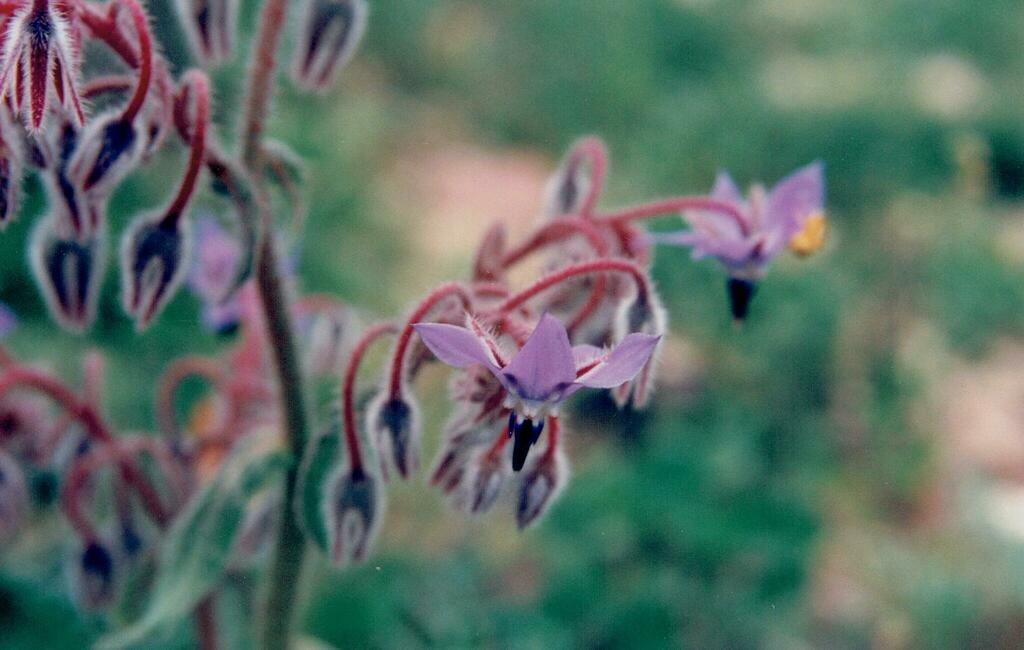
Borage is a charming annual herb known for its beautiful star shaped blue flowers. It is a favorite among gardeners because it attracts bees and other pollinators to the yard. You will find it is quite hardy and grows quickly in the right spot.

At a glance
- Care level
- Easy
- Plant type
- Annual herb
- Light
- Full sun
- Indoor light
- Direct sun
- Water
- Every 3 to 7 days
- Mature size
- 2 to 3 feet
- Growth rate
- Fast
- Hardiness
- USDA 2 to 11
- Bloom time
- Late spring to early autumn
Care
Plant your borage in a sunny spot with well draining soil. Keep an eye out for powdery mildew on the leaves if the air circulation is poor. It is a prolific self seeder so you might find new plants popping up nearby next year.
- Watering
- Water consistently to keep the soil moist but not soggy.
- Feeding
- A light application of balanced fertilizer once a month is plenty.
- Pruning
- Deadhead spent flowers to encourage more blooms throughout the season.
- Repotting
- As an annual, borage is typically grown from seed each year and does not require repotting.
- Soil
- Well draining loamy soil
- Soil pH
- 6.0 to 7.0
- Temperature
- -10 to 35°C
- Humidity
- 40 to 70%
- Drought tolerance
- Moderate
- Lifespan
- Annual, typically 1 season
- Deer and rabbits
- High
Signs it needs repotting
- Roots growing out of the drainage holes
- Stunted growth despite regular watering
Safety
- People
- The plant is generally considered safe for culinary use in small amounts, but raw consumption should be limited.
- Pets
- Borage is generally considered non toxic to cats and dogs.
- Children
- The coarse, prickly hairs on the foliage may cause minor skin irritation if handled by young children.
- Contact allergens
- The stiff, bristly hairs on the stems and leaves can cause skin irritation or contact dermatitis in sensitive individuals.
- Airborne allergens
- There are no significant reports of respiratory allergies associated with this plant.
- Edibility
- Consume borage in moderation as it contains pyrrolizidine alkaloids that may affect liver health if eaten in large quantities.
How to identify it
- Star shaped blue flowers
- Hairy stems and leaves
- Cucumber scented foliage
- Oval shaped wrinkled leaves
- Height
- 0.3 to 0.9m
- Spread
- 0.3 to 0.6m
- Leaves
- green, deciduous
- Flowers
- blue, white, 2 to 3cm
- Fruit
- black, late summer
Problems to watch for
- AphidsCommon
- BoltingCommon
- Powdery MildewCommon
- Slugs and SnailsUncommon
Check your borage from a photo
Pocket Botanist looks at a photo of your plant and tells you what's wrong and what to try first.
Scan with your phone's camera to get the app
Or go to pocketbotanist.app/get on your phone
Growing it
- Propagation
- seed
- When to plant
- spring
- Overwintering
- In colder climates, the plant will die back completely after the first frost. You can collect seeds in autumn to sow again the following spring.
- In containers
- Borage grows well in containers, provided the pot is at least 30 centimeters deep to accommodate its taproot.
Direct Sowing
- Prepare a sunny spot with well draining soil.
- Sow seeds 1 centimeter deep after the last frost.
- Thin seedlings to 30 centimeters apart.
Plant borage near your vegetable patch to draw in bees that will help pollinate your crops.
Grows well with
- Strawberry · Borage is believed to improve the flavor and growth of strawberries.
- Tomato · It helps deter tomato hornworms and attracts pollinators to the garden.
Similar species
- Comfrey · Both are members of the Boraginaceae family and share similar hairy foliage.
Science
- Family
- Boraginaceae
- Genus
- Borago
- Order
- Boraginales
- Class
- Magnoliopsida
- Native range
- Mediterranean region
- Conservation
- This plant is widespread and not of conservation concern.
It thrives in disturbed soils and open fields where it can quickly establish through prolific seed production.
- Value to wildlife
- high nectar production, attracts beneficial insects
- Pollinators
- bees, butterflies
- Uses
- culinary herb, pollinator garden, companion planting, edible flowers
Through the year
Ecological indicators
- Salinity
- 2/9
- Soil reaction
- 6/9
- Light
- 7/9
- Temperature
- 6/9
- Moisture
- 5/9
- Nutrients
- 6/9
Taxonomy resolved against GBIF.
Questions people ask
- Is borage a perennial?
- It is typically grown as an annual, though it may self sow reliably.
- Does borage need full sun?
- Yes, it thrives best in full sun but tolerates light shade.
Where the name comes from
The name Borago is thought to derive from the Latin burra, meaning rough hair, referring to the plant's texture. The specific epithet officinalis indicates its historical use in traditional medicine.
Good to know
- Borage flowers are star shaped and often used to decorate cocktails.
- It is said to provide courage to those who consume it.
- The plant readily self seeds in the garden.
Also in
Keep your borage growing
This page is a general guide. Save your plant in Pocket Botanist and you get care reminders timed for this plant, plus a care history that shows what worked.
Scan with your phone's camera to get the app
Or go to pocketbotanist.app/get on your phone
This guide was generated with AI on and checked against GBIF taxonomy. It is general information, not horticultural or veterinary advice. Read about how we build these guides.