 Pocket Botanist
Plant guide
Strawberry.
Fragaria × ananassa
Pronounced fruh-GAIR-ee-uh uh-nuh-NASS-uh
Also known as Fragaria × ananassa, Garden Strawberry, Strawberry



Strawberries are delicious, low growing perennials that produce sweet fruit in the garden. They thrive in sunny spots with well draining soil. You will love picking your own berries right from the patch.
At a glance
- Care level
- Moderate
- Plant type
- Herbaceous perennial
- Light
- Full sun
- Indoor light
- Direct sun
- Water
- Every 2 to 4 days
- Mature size
- 30 cm tall by 50 cm wide
- Growth rate
- Fast
- Hardiness
- USDA 4 to 9
- Bloom time
- Mid to late spring
Care
Keep the soil consistently moist but not soggy to support fruit production. Watch for fungal issues like gray mold by ensuring good air circulation around the plants. Mulch with straw to keep the berries off the damp soil.
- Watering
- Keep the soil evenly moist throughout the growing season.
- Feeding
- Apply a balanced fertilizer during the active growing season.
- Pruning
- Remove runners and dead foliage after the harvest season.
- Repotting
- Refresh the soil or divide the plants every two years.
- Soil
- Rich, sandy loam
- Soil pH
- 5.5 to 6.5
- Temperature
- -20 to 35°C
- Humidity
- 40 to 70%
- Drought tolerance
- Low
- Lifespan
- Perennial, typically 3 to 5 years.
- Fragrance
- Light
- Deer and rabbits
- Low
Signs it needs repotting
- Roots growing out of the drainage holes.
- Stunted growth despite regular feeding.
- Soil drying out very quickly.
Safety
- People
- The plant is non-toxic to humans.
- Children
- The small fruit is safe for children, but ensure they are supervised to avoid choking on whole berries.
- Contact allergens
- Some people may experience mild skin irritation from the fine hairs on the leaves or stems.
- Airborne allergens
- Strawberry pollen is generally not a significant airborne allergen.
- Edibility
- Wash fruit thoroughly to remove soil particles and potential contaminants before eating.
How to identify it
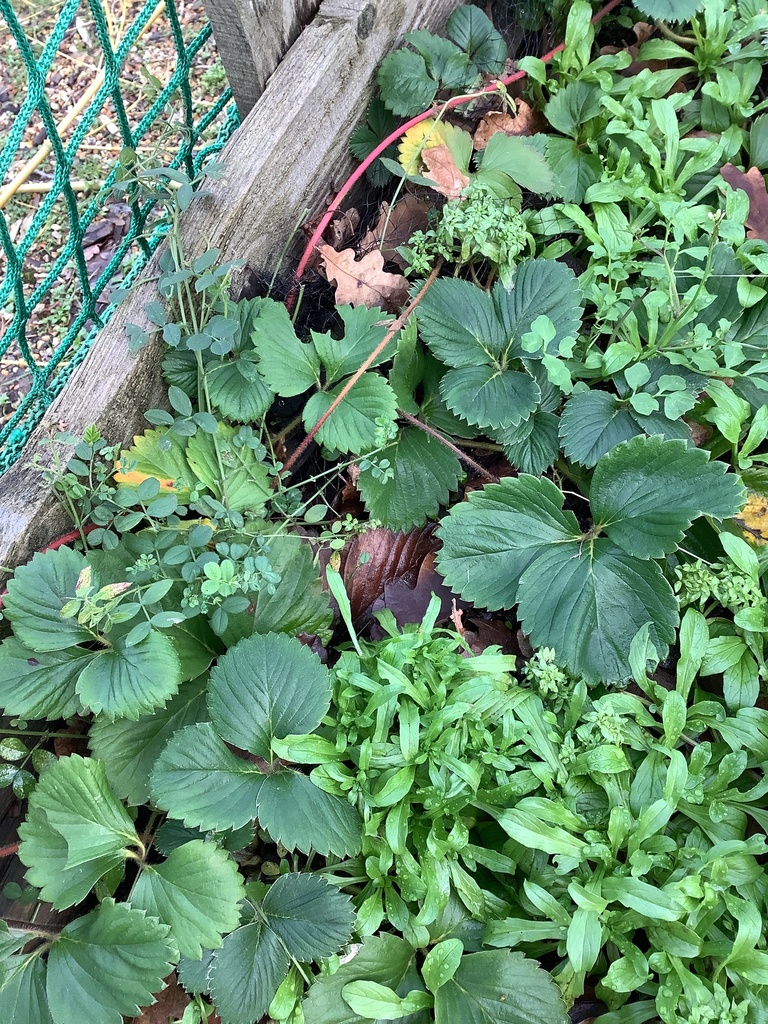
- Three leaflets with serrated edges
- White flowers with yellow centers
- Red fleshy fruit with external seeds
- Low growing herbaceous habit
- Height
- 0.15 to 0.3m
- Spread
- 0.3 to 0.5m
- Leaves
- green, evergreen
- Flowers
- white, 2 to 3cm
- Fruit
- red, Late spring to summer
Problems to watch for
- Gray MoldCommon
- Leaf SpotCommon
- Powdery MildewCommon
- Slugs and SnailsCommon
- AphidsUncommon
- Root RotUncommon
- Spider MitesUncommon
- Verticillium WiltUncommon
- Botrytis fruit rot — A fungal infection that causes gray mold on ripening fruit.
By symptom
Check your strawberry from a photo
Pocket Botanist looks at a photo of your plant and tells you what's wrong and what to try first.
Growing it
- Propagation
- runners, division, seed
- When to plant
- spring, early autumn
- Overwintering
- Apply a layer of straw mulch around the base in late autumn to protect the crown from freezing temperatures. Remove the mulch once new growth appears in spring.
- In containers
- Strawberries grow very well in pots or hanging baskets, provided the container is at least 20 cm deep.
Runners
- 1. Identify a healthy runner.
- 2. Pin the small plantlet into a pot of soil.
- 3. Keep the soil moist until roots form.
- 4. Cut the runner from the parent plant.
Planting borage nearby is a classic trick to boost strawberry health and attract pollinators.
Grows well with
Keep away from
- Cabbage — They compete for nutrients and can inhibit each other's growth.
Similar species
- Wild Strawberry — It is a smaller, more intense flavored relative.
Science
- Family
- Rosaceae
- Genus
- Fragaria
- Order
- Rosales
- Class
- Magnoliopsida
- Native range
- Global hybrid origin.
- Conservation
- This is a widely cultivated hybrid and is not of conservation concern.
It thrives in sunny spots with well-drained soil and spreads through vegetative runners.
- Value to wildlife
- nectar source, attracts beneficial insects
- Pollinators
- bees, butterflies
- Uses
- culinary, groundcover, container gardening
Through the year
Ecological indicators
- Salinity
- 2/9
- Light
- 7/9
- Temperature
- 5/9
- Moisture
- 6/9
- Nutrients
- 6/9
- Soil reaction
- 5/9
Taxonomy resolved against GBIF.
Questions people ask
- Do I need to prune my strawberries?
- Remove dead leaves in early spring and trim back runners if you want to focus energy on fruit production.
- Why are my berries small?
- This often happens if the plant is overcrowded or lacks sufficient water during fruit development.
Where the name comes from
The name Fragaria comes from the Latin word for fragrant, while ananassa refers to the pineapple-like aroma of the fruit.
Good to know
- Strawberries are the only fruit with seeds on the outside.
- They belong to the rose family.
- A single strawberry can have up to 200 seeds.
Keep your strawberry growing
This page is a general guide. Save your plant in Pocket Botanist and you get care reminders timed for this plant, plus a care history that shows what worked.
This guide was generated with AI and checked against GBIF taxonomy. It is general information, not horticultural or veterinary advice. Read about how we build these guides.