 Pocket Botanist
Guide botanique
Garden Strawberry.
Fragaria × ananassa
Prononciation fruh-GAIR-ee-uh uh-nuh-NASS-uh
Aussi appelée Fragaria × ananassa, Garden Strawberry, Fraisier



Les fraises sont des plantes vivaces délicieuses et à faible croissance qui produisent des fruits sucrés dans le jardin. Elles prospèrent dans les endroits ensoleillés avec un sol bien drainé. Vous adorerez cueillir vos propres baies directement dans le massif.
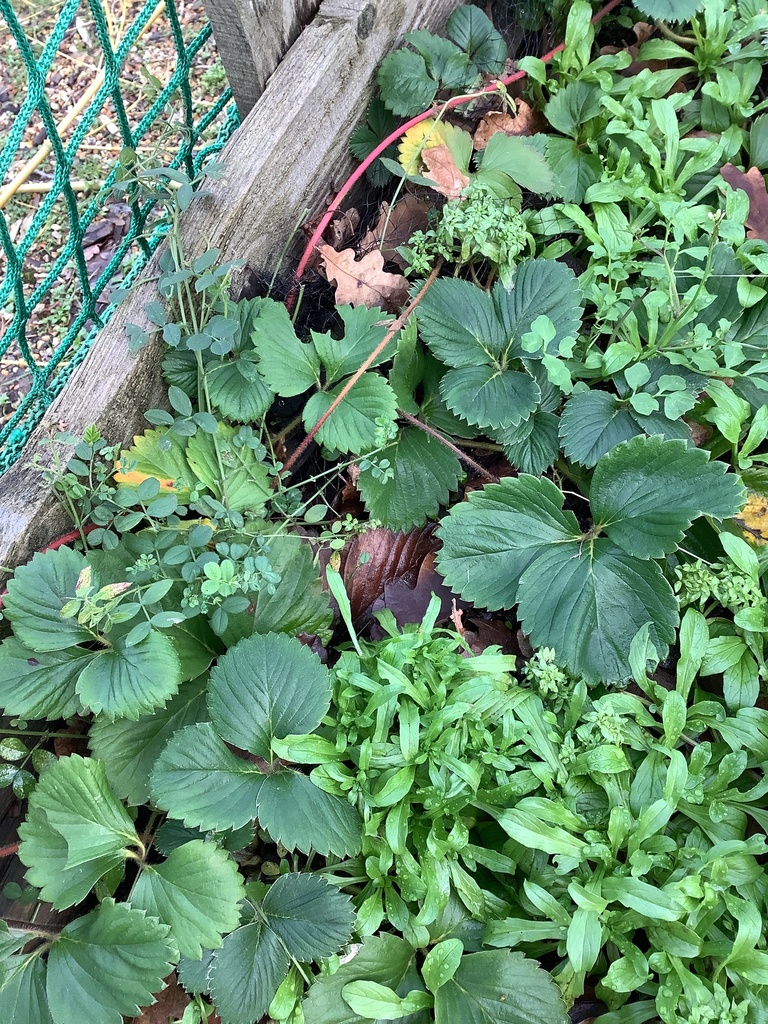
En un coup d'œil
- Niveau d'entretien
- Moyenne
- Type de plante
- Vivace herbacée
- Lumière
- Plein soleil
- Lumière en intérieur
- Soleil direct
- Arrosage
- Tous les 2 à 4 jours
- Taille adulte
- 30 cm de haut par 50 cm de large
- Croissance
- Rapide
- Rusticité
- USDA 4 à 9
- Floraison
- Milieu à fin du printemps
Entretien
Maintenez le sol uniformément humide, mais pas détrempé, pour favoriser la production de fruits. Surveillez les problèmes fongiques comme la pourriture grise en assurant une bonne circulation de l'air autour des plantes. Paillis avec de la paille pour éloigner les baies du sol humide.
- Arrosage
- Gardez le sol uniformément humide tout au long de la saison de croissance.
- Engrais
- Appliquez un engrais équilibré pendant la saison de croissance active.
- Taille
- Retirez les stolons et le feuillage mort après la saison de récolte.
- Rempotage
- Rafraîchissez le sol ou divisez les plantes tous les deux ans.
- Sol
- Lom rich et sableux
- pH du sol
- 5.5 à 6.5
- Température
- -20 à 35°C
- Humidité
- 40 à 70%
- Résistance à la sécheresse
- Faible
- Durée de vie
- Vivace, généralement de 3 à 5 ans.
- Parfum
- Léger
- Résistance aux chevreuils et lapins
- Faible
Signes qu'il faut rempoter
- Les racines sortent des trous de drainage.
- Croissance ralentie malgré un arrosage régulier.
- Le sol sèche très rapidement.
Sécurité
- Humains
- La plante est non toxique pour l'homme.
- Enfants
- Le petit fruit est sans danger pour les enfants, mais assurez-vous qu'ils sont surveillés pour éviter qu'ils ne s'étouffent avec des baies entières.
- Allergènes de contact
- Certaines personnes peuvent ressentir une légère irritation cutanée due aux poils fins sur les feuilles ou les tiges.
- Allergènes aéroportés
- Le pollen de fraise n'est généralement pas un allergène aéroporté significatif.
- Comestibilité
- Lavez soigneusement les fruits pour enlever la terre et les contaminants potentiels avant de les manger.
Comment l'identifier
- Trois folioles à bords dentés
- Fleurs blanches à centres jaunes
- Fruit charnu rouge à graines externes
- Port herbacé à faible croissance
- Hauteur
- 0,15 à 0,3m
- Envergure
- 0,3 à 0,5m
- Feuilles
- vert, persistant
- Fleurs
- blanc, 2 à 3cm
- Fruits
- rouge, Fin du printemps à l'été
Problèmes à surveiller
- Limaces et escargotsCourant
- OïdiumCourant
- Pourriture griseCourant
- Taches foliairesCourant
- Pourriture des racinesPeu courant
- PuceronsPeu courant
- TétranyquesPeu courant
- VerticilliosePeu courant
- Pourriture grise des fruits (Botrytis) — Une infection fongique qui provoque une moisissure grise sur les fruits mûrs.
- Limaces — Ces mollusques se nourrissent des feuilles et des fruits mûrs.
Par symptôme
Vérifie la santé de ta plante en photo
Pocket Botanist analyse une photo de ta plante et te dit ce qui ne va pas et quoi essayer en premier.
La cultiver
- Multiplication
- stolons, division, semis
- Quand planter
- printemps, début de l'automne
- Hivernage
- Appliquez une couche de paillis de paille autour de la base à la fin de l'automne pour protéger la couronne du gel. Retirez le paillis une fois que la nouvelle croissance apparaît au printemps.
- En pot
- Les fraises poussent très bien en pots ou en paniers suspendus, à condition que le conteneur ait au moins 20 cm de profondeur.
Stolons
- 1. Identifiez un stolon sain.
- 2. Fixez le petit plant dans un pot de terre.
- 3. Gardez le sol humide jusqu'à ce que les racines se forment.
- 4. Coupez le stolon de la plante mère.
Planter de la bourrache à proximité est une astuce classique pour améliorer la santé des fraises et attirer les pollinisateurs.
Bonnes associations
À éloigner de
- Chou frisé — Ils entrent en compétition pour les nutriments et peuvent inhiber leur croissance mutuelle.
Espèces similaires
- Fraisier des bois — C'est un parent plus petit avec une saveur plus intense.
Science
- Famille
- Rosaceae
- Genre
- Fragaria
- Ordre
- Rosales
- Classe
- Magnoliopsida
- Région d'origine
- Origine hybride mondiale.
- Préservation
- C'est un hybride largement cultivé et il ne présente pas de préoccupation pour la conservation.
Il prospère dans les endroits ensoleillés avec un sol bien drainé et se propage par des stolons végétatifs.
- Intérêt pour la faune
- source de nectar, attire les insectes bénéfiques
- Pollinisateurs
- abeilles, papillons
- Utilisations
- culinaire, couvre-sol, culture en pots
Au fil des saisons
Repères écologiques
- Salinité
- 2/9
- Lumière
- 7/9
- Température
- 5/9
- Humidité
- 6/9
- Nutriments
- 6/9
- Réaction du sol
- 5/9
Taxonomie vérifiée avec le GBIF.
Ce qu'on demande souvent
- Dois-je tailler mes fraisiers?
- Retirez les feuilles mortes au début du printemps et taillez les stolons si vous souhaitez concentrer l'énergie sur la production de fruits.
- Pourquoi mes fraises sont-elles petites?
- Cela arrive souvent si la plante est trop dense ou manque d'eau pendant le développement des fruits.
D'où vient le nom
Le nom Fragaria vient du mot latin pour parfumé, tandis qu'ananassa fait référence à l'arôme de fruit de la passion du fruit.
Bon à savoir
- Les fraises sont le seul fruit avec des graines à l'extérieur.
- Elles appartiennent à la famille des roses.
- Une seule fraise peut avoir jusqu'à 200 graines.
Garde ta plante en pleine forme
Cette page est un guide général. Enregistre ta plante dans Pocket Botanist et tu reçois des rappels d'entretien adaptés à cette plante, ainsi qu'un historique d'entretien qui montre ce qui a marché.
Ce guide a été généré par IA et vérifié avec la taxonomie du GBIF. Il s'agit d'informations générales, et non de conseils horticoles ou vétérinaires. Découvre comment nous concevons ces guides.