 Pocket Botanist
Guide botanique
Lettuce.
Lactuca sativa
Prononciation lak-TOO-kuh suh-TEE-vuh
Aussi appelée Garden Lettuce



Lettuce is a cool season annual that loves mild temperatures and consistent moisture. It grows quickly in the garden and is perfect for harvesting fresh leaves throughout the spring and fall. You will find it thrives best when protected from intense summer heat.
En un coup d'œil
- Niveau d'entretien
- Facile
- Type de plante
- Annual vegetable
- Lumière
- Full sun to partial shade
- Lumière en intérieur
- Soleil direct
- Arrosage
- Tous les 2 à 4 jours
- Taille adulte
- 12 inches
- Croissance
- Rapide
- Rusticité
- USDA 2 à 11
- Floraison
- Late spring to early summer
Entretien
Keep the soil consistently moist to prevent the leaves from turning bitter. Watch for wilting during warm afternoons, which signals the plant needs more shade or water. Harvest outer leaves regularly to encourage the plant to keep producing.
- Arrosage
- Keep the soil evenly moist but not waterlogged to ensure crisp leaves.
- Engrais
- Use a balanced liquid fertilizer to support quick leaf growth.
- Taille
- Regularly harvest outer leaves to keep the plant productive.
- Rempotage
- Lettuce is an annual and does not require repotting.
- Sol
- Well draining, rich organic soil
- pH du sol
- 6.0 to 7.0
- Température
- 7 à 24°C
- Humidité
- 40 à 70%
- Résistance à la sécheresse
- Faible
- Durée de vie
- Annual, typically 3 to 5 months.
- Résistance aux chevreuils et lapins
- Faible
Signes qu'il faut rempoter
- Roots growing out of drainage holes.
- Stunted growth despite regular feeding.
- Soil drying out very quickly.
Sécurité
- Humains
- None, it is a common edible vegetable.
- Enfants
- No specific concerns, though young children should be supervised when handling garden tools.
- Allergènes de contact
- Some individuals may experience mild skin irritation from contact with the milky sap.
- Allergènes aéroportés
- None.
- Comestibilité
- Wash leaves thoroughly to remove soil and potential pathogens.
Comment l'identifier
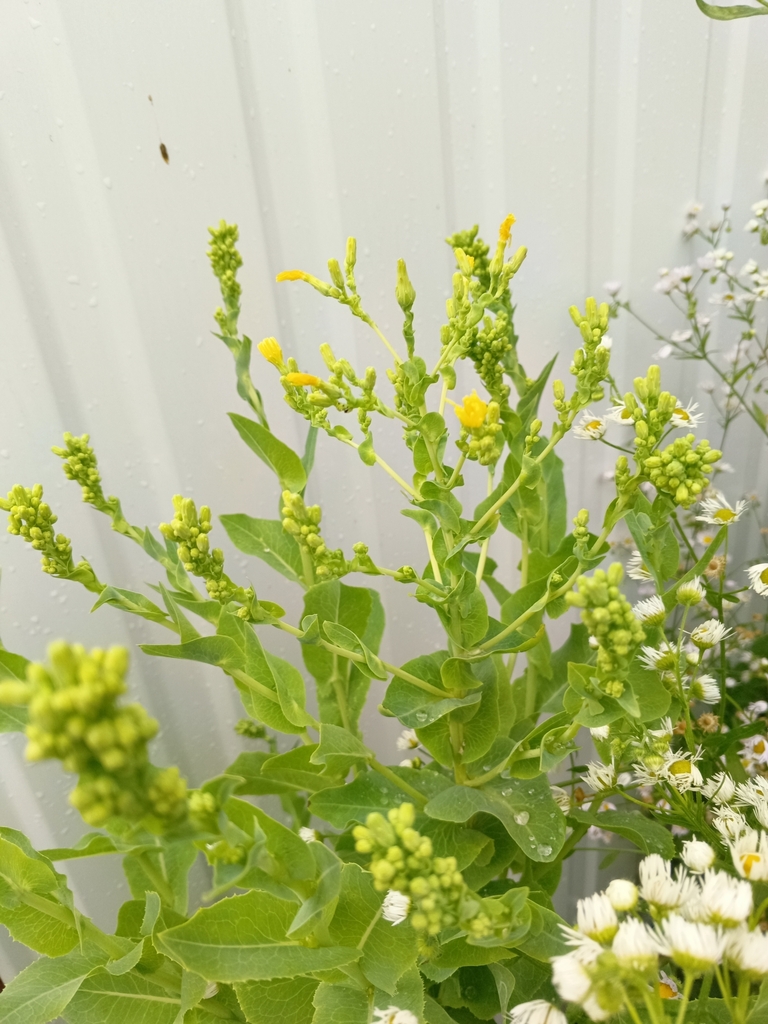
- Soft, leafy rosettes
- Varied leaf shapes and colors
- Milky sap when stems break
- Small yellow flower heads
- Hauteur
- 0,15 à 0,45m
- Envergure
- 0,2 à 0,4m
- Feuilles
- green, red, purple, deciduous
- Fleurs
- yellow, 1 à 2cm
Problèmes courants
- Aphids — Small insects that cluster on the undersides of leaves and suck plant juices.
- Slugs — Gastropods that chew large, irregular holes in the foliage.
- Downy mildew — Fungal infection causing yellow spots and white fuzzy growth on leaves.
La cultiver
- Multiplication
- seed
- Quand planter
- early spring, late summer, early autumn
- Hivernage
- In mild climates, it can be grown through winter with protection. In cold areas, it is typically grown as a spring or fall crop.
- En pot
- Lettuce is excellent for containers, requiring a pot at least 15 cm deep with good drainage.
Direct Sowing
- Prepare a fine, weed free seedbed.
- Sow seeds shallowly, about 0.5 cm deep.
- Keep the soil consistently moist until germination.
- Thin seedlings to 20 cm apart once they have two true leaves.
Plant lettuce in the shade of taller crops like tomatoes to keep it cool during warmer months.
Bonnes associations
Espèces similaires
Science
- Famille
- Asteraceae
- Genre
- Lactuca
- Ordre
- Asterales
- Classe
- Magnoliopsida
- Région d'origine
- Mediterranean region and parts of Western Asia.
- Préservation
- Not of conservation concern as it is a widely grown agricultural crop.
It grows as a cool season annual, quickly completing its life cycle before the heat of summer.
- Intérêt pour la faune
- nectar source
- Pollinisateurs
- abeilles, papillons
- Utilisations
- culinary salads, garnish, sandwich greens
Au fil des saisons
Repères écologiques
- Salinité
- 2/9
- Réaction du sol
- 6/9
- Lumière
- 7/9
- Température
- 4/9
- Humidité
- 6/9
- Nutriments
- 7/9
Taxonomie vérifiée avec le GBIF.
Ce qu'on demande souvent
- Why is my lettuce bitter?
- High temperatures and long days cause the plant to bolt, which releases a milky sap that tastes bitter.
- Can I grow lettuce in a pot?
- Yes, lettuce has shallow roots and thrives in containers at least 15 cm deep.
D'où vient le nom
The genus name Lactuca comes from the Latin word for milk, referring to the milky sap, while sativa means cultivated.
Bon à savoir
- Lettuce is a member of the daisy family.
- The plant will bolt and turn bitter when temperatures rise too high.
- Most lettuce varieties are annuals.
- It is primarily composed of water.
Ta plante a mauvaise mine ?
Cette page est un guide général. Pocket Botanist diagnostique les problèmes directement à partir d'une photo de ta plante, adapte l'arrosage à sa luminosité et te prévient quand il faut t'en occuper.
Ce guide a été généré par IA et vérifié avec la taxonomie du GBIF. Il s'agit d'informations générales, et non de conseils horticoles ou vétérinaires. Découvre comment nous concevons ces guides.