 Pocket Botanist
Guide botanique
Ail.
Allium sativum
Prononciation AL-ee-um sah-TEE-vum
Aussi appelée Ail cultivé, Ail


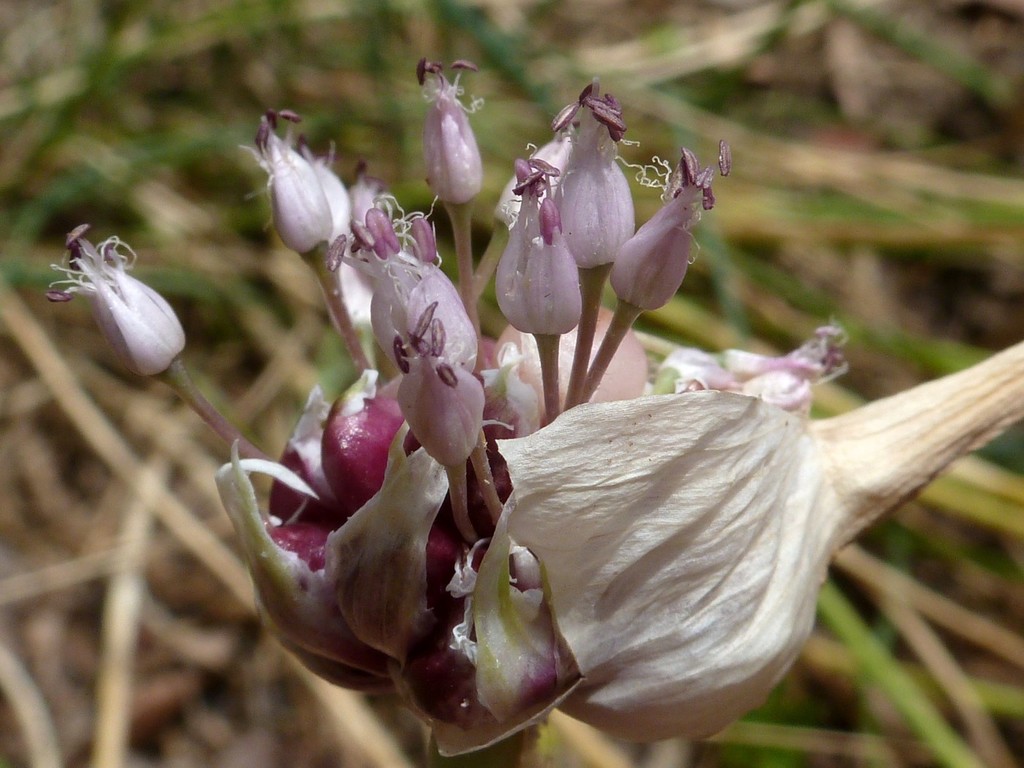
L'ail est une plante vivace bulbeuse rustique, largement cultivée pour ses gousses savoureuses. Il prospère dans un sol bien drainé et a besoin d'une période de froid pour se développer correctement. Vous aimerez sa facilité de culture dans votre propre jardin.

En un coup d'œil
- Niveau d'entretien
- Facile
- Type de plante
- Vivace bulbeuse
- Lumière
- Plein soleil
- Lumière en intérieur
- Soleil direct
- Arrosage
- Tous les 7 à 10 jours
- Taille adulte
- 2 pieds de haut
- Croissance
- Moyenne
- Rusticité
- USDA 4 à 9
- Floraison
- Fin du printemps au début de l'été
Entretien
Plantez les gousses à l'automne et assurez-vous que le sol reste humide mais pas détrempé. Surveillez le jaunissement des feuilles, signe que les bulbes sont prêts à être récoltés. Gardez la zone exempte de mauvaises herbes pour éviter la compétition pour les nutriments.
- Arrosage
- Gardez le sol constamment humide pendant la saison de croissance active.
- Engrais
- Appliquez un engrais équilibré au début du printemps pour favoriser le développement des bulbes.
- Taille
- Retirez toutes les hampes florales qui apparaissent pour diriger l'énergie vers le bulbe.
- Rempotage
- L'ail est généralement récolté annuellement plutôt que rempoté.
- Sol
- Sol limoneux bien drainé
- pH du sol
- 6,0 à 7,0
- Température
- -15 à 30°C
- Humidité
- 40 à 60%
- Résistance à la sécheresse
- Moyenne
- Durée de vie
- Vivace, généralement cultivée comme culture annuelle
- Parfum
- Fort
- Résistance aux chevreuils et lapins
- Élevée
Signes qu'il faut rempoter
- Racines sortant des trous de drainage
- Bulbes devenant trop serrés dans le pot
- Croissance ralentie malgré des soins appropriés
Sécurité
- Humains
- L'ail est généralement sans danger pour l'homme, bien qu'il puisse provoquer une irritation cutanée chez les personnes sensibles.
- Animaux
- L'ail est toxique pour les chats et les chiens car il peut endommager leurs globules rouges.
- Enfants
- Les bulbes d'ail ne sont pas toxiques pour les enfants, mais ils présentent un risque d'étouffement s'ils sont avalés entiers.
- Allergènes de contact
- La manipulation d'ail cru peut provoquer une dermatite de contact chez les personnes sensibles en raison du diallyl disulfure.
- Allergènes aéroportés
- Le pollen d'ail n'est pas une cause fréquente d'allergies respiratoires.
- Comestibilité
- Bien que largement consommé, de grandes quantités d'ail cru peuvent causer des troubles gastro-intestinaux chez certaines personnes.
Comment l'identifier
- Longues feuilles plates semblables à de l'herbe
- Bulbe souterrain avec plusieurs gousses
- Tige florale centrale haute
- Petites fleurs blanches ou rosées
- Hauteur
- 0,3 à 0,6m
- Envergure
- 0,1 à 0,15m
- Feuilles
- vert, vert-bleu, caduc
- Fleurs
- blanc, rose, violet, 2 à 5cm
- Fruits
- blanc, violet, brun, Milieu à fin de l'été
Problèmes à surveiller
- Mouche de l'oignonCourant
- Pourriture blanche de l'oignonCourant
- Thrips de l'oignonCourant
- Montée en grainesPeu courant
- Pourriture des bulbesPeu courant
- Pourriture des racinesPeu courant
- RouillePeu courant
- Pourriture molleRare
- Pourriture blanche — Une infection fongique qui provoque le jaunissement des feuilles et la pourriture des racines.
Par symptôme
Vérifie la santé de ta plante en photo
Pocket Botanist analyse une photo de ta plante et te dit ce qui ne va pas et quoi essayer en premier.
La cultiver
- Multiplication
- division, bulbilles
- Quand planter
- automne
- Hivernage
- L'ail nécessite une période de froid pour déclencher la formation des bulbes. Pailler abondamment à la fin de l'automne pour protéger les gousses des fluctuations de température extrêmes.
- En pot
- L'ail pousse bien dans des conteneurs d'au moins 20 centimètres de profondeur avec un bon drainage.
Division de bulbes
- 1. Séparez le bulbe en gousses individuelles.
- 2. Plantez les gousses avec l'extrémité pointue vers le haut dans un sol bien drainé.
- 3. Espacez les gousses de 10 à 15 centimètres.
- 4. Couvrez de 5 centimètres de terre.
- 5. Arrosez abondamment après la plantation.
Plantez de l'ail près des rosiers pour aider à repousser les pucerons et autres insectes à corps mous.
Bonnes associations
À éloigner de
- Asperge — L'ail peut ralentir la croissance des asperges lorsqu'il est planté à proximité.
- Haricot commun — L'ail peut inhiber la croissance des haricots en affectant les bactéries du sol.
Espèces similaires
- Oignon — Ce sont tous deux des légumes bulbeux du même genre avec des exigences de croissance similaires.
- Ciboulette — Un parent plus petit souvent cultivé pour ses feuilles et ses fleurs comestibles.
Science
- Famille
- Amaryllidaceae
- Genre
- Allium
- Ordre
- Asparagales
- Classe
- Liliopsida
- Région d'origine
- Asie Centrale
- Préservation
- L'ail est une culture largement cultivée et n'est pas une préoccupation pour la conservation.
L'ail survit en stockant de l'énergie dans son bulbe pendant la saison de croissance pour repousser après une période de dormance froide.
- Intérêt pour la faune
- source de nectar, repousse certains ravageurs de jardin
- Pollinisateurs
- abeilles, papillons
- Utilisations
- aromatisation culinaire, plantation compagne, médecine traditionnelle
Au fil des saisons
Repères écologiques
- Salinité
- 2/9
- Réaction du sol
- 6/9
- Température
- 5/9
- Humidité
- 5/9
- Nutriments
- 6/9
- Lumière
- 8/9
Taxonomie vérifiée avec le GBIF.
Ce qu'on demande souvent
- Quand faut-il récolter l'ail ?
- Récoltez lorsque les feuilles inférieures commencent à jaunir et à sécher.
- L'ail a-t-il besoin de plein soleil ?
- Oui, il prospère en plein soleil pendant au moins six heures par jour.
D'où vient le nom
Le nom Allium est le mot latin pour ail, tandis que sativum signifie cultivé.
Bon à savoir
- L'ail fait partie de la famille des Amaryllidacées.
- Il a été utilisé comme répulsif naturel contre les insectes dans les jardins.
- Les anciens Égyptiens donnaient de l'ail aux ouvriers pour augmenter leur force.
- L'odeur piquante provient de composés soufrés libérés lorsque le bulbe est écrasé.
Aussi dans
Garde ta plante en pleine forme
Cette page est un guide général. Enregistre ta plante dans Pocket Botanist et tu reçois des rappels d'entretien adaptés à cette plante, ainsi qu'un historique d'entretien qui montre ce qui a marché.
Ce guide a été généré par IA et vérifié avec la taxonomie du GBIF. Il s'agit d'informations générales, et non de conseils horticoles ou vétérinaires. Découvre comment nous concevons ces guides.