 Pocket Botanist
Plant guide
Ail.
Allium sativum
Pronounced AL-ee-um sah-TEE-vum
Also known as Cultivated Garlic, Garlic


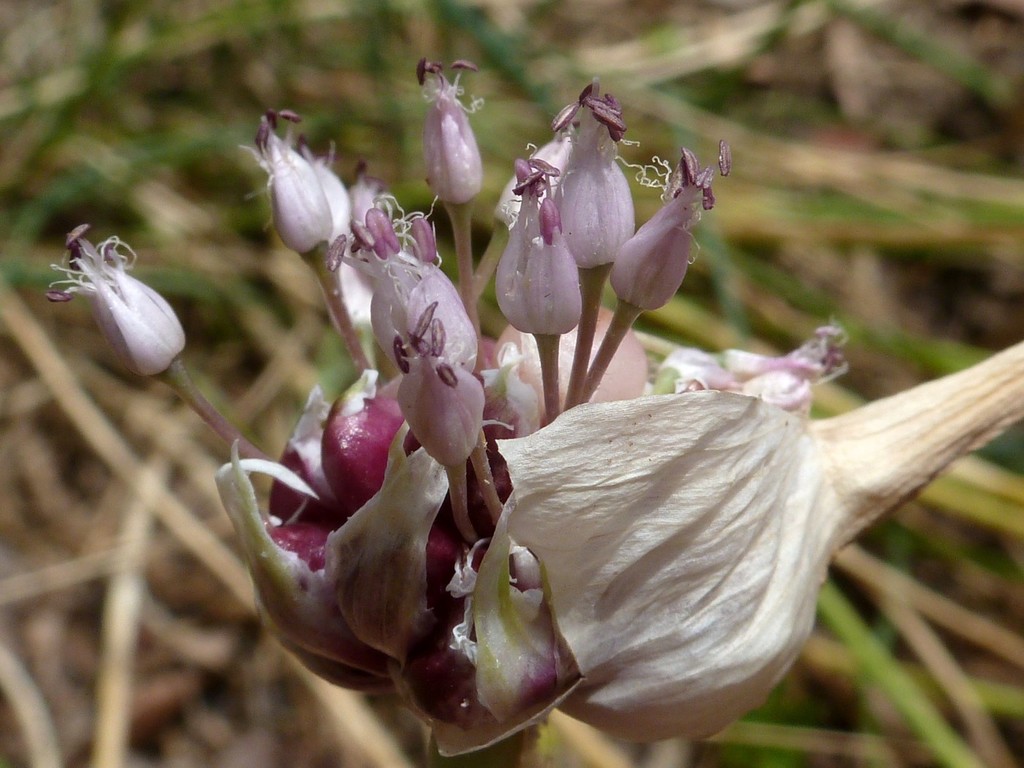
Garlic is a hardy bulbous perennial that is widely grown for its flavorful cloves. It thrives in well drained soil and requires a period of cold to develop properly. You will love how easy it is to grow in your own garden.

At a glance
- Care level
- Easy
- Plant type
- Bulbous perennial
- Light
- Full sun
- Indoor light
- Direct sun
- Water
- Every 7 to 10 days
- Mature size
- 2 feet tall
- Growth rate
- Medium
- Hardiness
- USDA 4 to 9
- Bloom time
- Late spring to early summer
Care
Plant cloves in the fall and ensure the soil stays moist but not soggy. Watch for yellowing leaves as a sign that the bulbs are ready for harvest. Keep the area free of weeds to prevent competition for nutrients.
- Watering
- Keep the soil consistently moist during the active growing season.
- Feeding
- Apply a balanced fertilizer in early spring to encourage bulb development.
- Pruning
- Remove any flower scapes that appear to direct energy back into the bulb.
- Repotting
- Garlic is typically harvested annually rather than repotted.
- Soil
- Well draining loamy soil
- Soil pH
- 6.0 to 7.0
- Temperature
- -15 to 30°C
- Humidity
- 40 to 60%
- Drought tolerance
- Moderate
- Lifespan
- Perennial, typically grown as an annual crop
- Fragrance
- Strong
- Deer and rabbits
- High
Signs it needs repotting
- Roots growing out of drainage holes
- Bulbs becoming crowded in the pot
- Stunted growth despite proper care
Safety
- People
- Garlic is generally safe for humans, though it can cause skin irritation in sensitive individuals.
- Pets
- Garlic is toxic to cats and dogs as it can cause damage to their red blood cells.
- Children
- Garlic bulbs are not toxic to children, but they are a choking hazard if swallowed whole.
- Contact allergens
- Handling raw garlic can cause contact dermatitis in sensitive individuals due to diallyl disulfide.
- Airborne allergens
- Garlic pollen is not a common cause of respiratory allergies.
- Edibility
- While widely consumed, large quantities of raw garlic can cause gastrointestinal distress in some people.
How to identify it
- Long flat grass like leaves
- Underground bulb with multiple cloves
- Tall central flowering stalk
- Small white or pinkish flowers
- Height
- 0.3 to 0.6m
- Spread
- 0.1 to 0.15m
- Leaves
- green, blue-green, deciduous
- Flowers
- white, pink, purple, 2 to 5cm
- Fruit
- white, purple, brown, Mid to late summer
Problems to watch for
- Onion FlyCommon
- Onion ThripsCommon
- White RotCommon
- BoltingUncommon
- Bulb RotUncommon
- Root RotUncommon
- RustUncommon
- Soft RotRare
By symptom
Check your ail from a photo
Pocket Botanist looks at a photo of your plant and tells you what's wrong and what to try first.
Growing it
- Propagation
- division, bulbils
- When to plant
- fall
- Overwintering
- Garlic requires a cold period to trigger bulb formation. Mulch heavily in late autumn to protect the cloves from extreme temperature fluctuations.
- In containers
- Garlic grows well in containers at least 20 centimeters deep with good drainage.
Bulb Division
- 1. Separate the bulb into individual cloves.
- 2. Plant cloves pointed end up in well draining soil.
- 3. Space cloves 10 to 15 centimeters apart.
- 4. Cover with 5 centimeters of soil.
- 5. Water thoroughly after planting.
Plant garlic near roses to help deter aphids and other soft bodied insects.
Grows well with
Keep away from
Similar species
Science
- Family
- Amaryllidaceae
- Genus
- Allium
- Order
- Asparagales
- Class
- Liliopsida
- Native range
- Central Asia
- Conservation
- Garlic is a widely cultivated crop and is not of conservation concern.
Garlic survives by storing energy in its bulb during the growing season to sprout again after a cold dormant period.
- Value to wildlife
- nectar source, repels certain garden pests
- Pollinators
- bees, butterflies
- Uses
- culinary flavoring, companion planting, traditional medicine
Through the year
Ecological indicators
- Salinity
- 2/9
- Soil reaction
- 6/9
- Temperature
- 5/9
- Moisture
- 5/9
- Nutrients
- 6/9
- Light
- 8/9
Taxonomy resolved against GBIF.
Questions people ask
- When should I harvest garlic?
- Harvest when the lower leaves begin to turn brown and dry out.
- Does garlic need full sun?
- Yes, it thrives in full sun for at least six hours a day.
Where the name comes from
The name Allium is the Latin word for garlic, while sativum means cultivated.
Good to know
- Garlic is a member of the Amaryllidaceae family.
- It has been used as a natural insect repellent in gardens.
- Ancient Egyptians fed garlic to laborers to increase their strength.
- The pungent smell comes from sulfur compounds released when the bulb is crushed.
Also in
Keep your ail growing
This page is a general guide. Save your plant in Pocket Botanist and you get care reminders timed for this plant, plus a care history that shows what worked.
This guide was generated with AI and checked against GBIF taxonomy. It is general information, not horticultural or veterinary advice. Read about how we build these guides.