 Pocket Botanist
Guide botanique
Fraisier des bois.
Fragaria vesca
Prononciation fra-GA-ree-uh VESS-kuh
Aussi appelée Fraisier des Alpes, Fraisier d'Europe, Fraisier des collines



Le fraisier des bois est une charmante plante vivace à faible croissance qui produit de petites baies d'une saveur intense. Il se propage par ses stolons, ce qui en fait un joli couvre-sol pour les jardins forestiers. Vous constaterez qu'il prospère à mi-ombre et dans un sol humide bien drainé.
En un coup d'œil
- Niveau d'entretien
- Facile
- Type de plante
- Plante vivace herbacée
- Lumière
- Mi-ombre à plein soleil
- Lumière en intérieur
- Lumière vive indirecte
- Arrosage
- Tous les 2 à 5 jours
- Taille adulte
- 15 à 20 cm de haut
- Croissance
- Rapide
- Rusticité
- USDA 3 à 10
- Floraison
- Milieu à fin du printemps
Entretien
Gardez le sol constamment humide mais jamais détrempé pour encourager une production de fruits saine. Surveillez les signes de mildiou sur les feuilles si la circulation de l'air est mauvaise. Pailler autour de la base aide à garder les baies propres et hors du sol humide.
- Arrosage
- Gardez le sol uniformément humide tout au long de la saison de croissance.
- Engrais
- Appliquez un engrais biologique équilibré une fois au début du printemps.
- Taille
- Taille le vieux feuillage à la fin de l'hiver pour faire place à la nouvelle croissance.
- Rempotage
- Rempotez lorsque la plante est à l'étroit dans son pot ou que les stolons ont rempli le conteneur.
- Sol
- Sol riche, limoneux et bien drainé
- pH du sol
- Légèrement acide à neutre
- Température
- -25 à 30°C
- Humidité
- 40 à 70%
- Résistance à la sécheresse
- Moyenne
- Durée de vie
- Vivace, généralement 3 à 5 ans.
- Parfum
- Fort
- Résistance aux chevreuils et lapins
- Faible
Signes qu'il faut rempoter
- Racines sortant des trous de drainage
- L'eau traverse directement le sol
- Croissance de la plante ralentissant considérablement
Sécurité
- Humains
- La plante n'est pas toxique pour l'homme.
- Enfants
- Les petites baies sont sans danger pour les enfants, mais surveillez toujours les plus jeunes pour éviter qu'ils ne s'étouffent.
- Allergènes de contact
- Certaines personnes peuvent ressentir une légère irritation cutanée due aux poils fins sur les feuilles.
- Allergènes aéroportés
- Le pollen n'est généralement pas considéré comme un allergène important.
- Comestibilité
- Assurez-vous toujours d'avoir correctement identifié la plante avant de consommer une partie de celle-ci.
Comment l'identifier
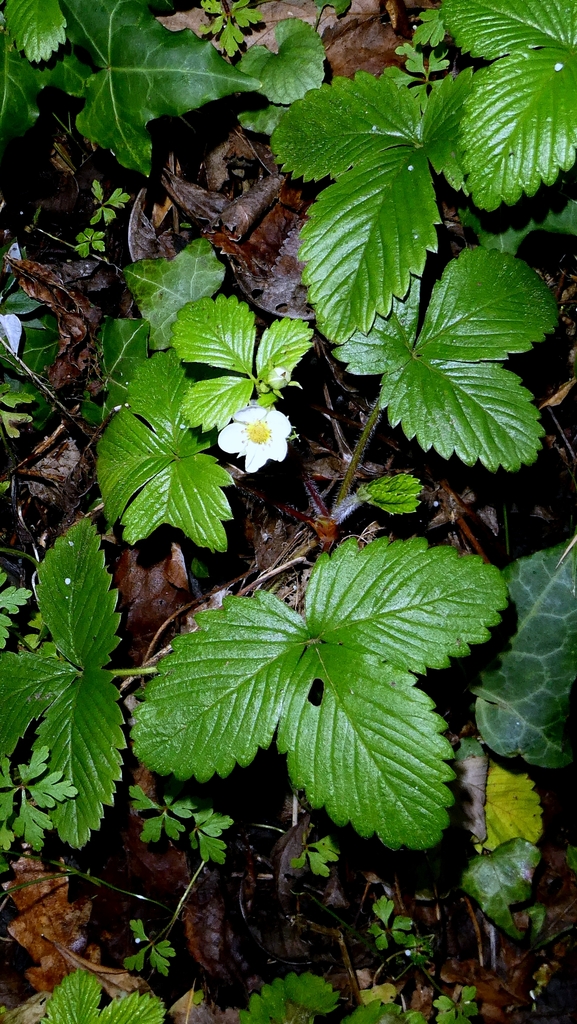
- Trois folioles aux bords dentés
- Fleurs blanches à cinq pétales
- Petits fruits coniques rouges
- Tiges et stolons rougeâtres
- Hauteur
- 0,1 à 0,2m
- Envergure
- 0,2 à 0,4m
- Feuilles
- vert vif, sempervirent
- Fleurs
- blanc, 1 à 2cm
- Fruits
- rouge, Été
Problèmes à surveiller
- Limaces et escargotsCourant
- OïdiumCourant
- PuceronsCourant
- Pourriture des racinesPeu courant
- Pourriture grisePeu courant
- Taches foliairesPeu courant
- TétranyquesPeu courant
- VerticillioseRare
- Mildiou poudreux — Une croissance fongique blanche sur les feuilles, souvent causée par une mauvaise circulation de l'air.
- Limaces — Ces mollusques se nourrissent des feuilles et des fruits mûrs.
Par symptôme
Vérifie la santé de ta plante en photo
Pocket Botanist analyse une photo de ta plante et te dit ce qui ne va pas et quoi essayer en premier.
La cultiver
- Multiplication
- division, semis, stolons
- Quand planter
- printemps, début de l'automne
- Hivernage
- Paillis autour de la base pour protéger les racines des fluctuations extrêmes de température. Dans les climats très froids, vous pouvez recouvrir les plantes de paille.
- En pot
- Il pousse très bien en pots, à condition d'utiliser un conteneur d'au moins 20 centimètres de profondeur avec un bon drainage.
Division de stolon
- 1. Identifiez un stolon sain avec une petite plantule.
- 2. Fixez la plantule au sol jusqu'à ce que les racines se forment.
- 3. Séparez le stolon de la plante mère.
Planter des herbes aromatiques à proximité peut aider à masquer l'odeur des baies pour les visiteurs affamés du jardin.
Bonnes associations
À éloigner de
- Chou frisé — Ils rivalisent pour les mêmes nutriments du sol et l'espace.
Espèces similaires
- Fragaria virginiana — C'est une espèce apparentée originaire d'Amérique du Nord.
Science
- Famille
- Rosaceae
- Genre
- Fragaria
- Ordre
- Rosales
- Classe
- Magnoliopsida
- Région d'origine
- Régions tempérées de l'hémisphère Nord.
- Préservation
- C'est une espèce commune et répandue qui ne suscite actuellement aucune préoccupation en matière de conservation.
Il colonise les lisières de forêts et les clairières en se propageant par stolons pour former des tapis denses.
- Intérêt pour la faune
- source de nectar, source de nourriture pour la faune
- Pollinisateurs
- abeilles, papillons
- Utilisations
- couvre-sol, jardin comestible, plante en conteneur
Au fil des saisons
Repères écologiques
- Humidité
- 5/9
- Nutriments
- 5/9
- Salinité
- 2/9
- Réaction du sol
- 5/9
- Lumière
- 5/9
- Température
- 5/9
Taxonomie vérifiée avec le GBIF.
Ce qu'on demande souvent
- A-t-il besoin de plein soleil ?
- Il préfère la mi-ombre mais tolère le plein soleil s'il est maintenu humide.
- Puis-je le cultiver en pot ?
- Oui, il prospère dans les conteneurs et les paniers suspendus.
D'où vient le nom
Fragaria vient du mot latin pour parfumé, faisant référence à l'odeur du fruit, tandis que vesca signifie comestible.
Bon à savoir
- Les graines se trouvent à l'extérieur du fruit.
- Il se propage naturellement par stolons.
- Il est cultivé depuis l'Antiquité.
Garde ta plante en pleine forme
Cette page est un guide général. Enregistre ta plante dans Pocket Botanist et tu reçois des rappels d'entretien adaptés à cette plante, ainsi qu'un historique d'entretien qui montre ce qui a marché.
Ce guide a été généré par IA et vérifié avec la taxonomie du GBIF. Il s'agit d'informations générales, et non de conseils horticoles ou vétérinaires. Découvre comment nous concevons ces guides.