 Pocket Botanist
Plant guide
Kale.
Brassica oleracea
Pronounced BRASS-ih-kuh oh-ler-AY-see-uh
Also known as Cabbage, Chou Mollier, Haria



Scan with your phone's camera to get the app
Or go to pocketbotanist.app/get on your phone
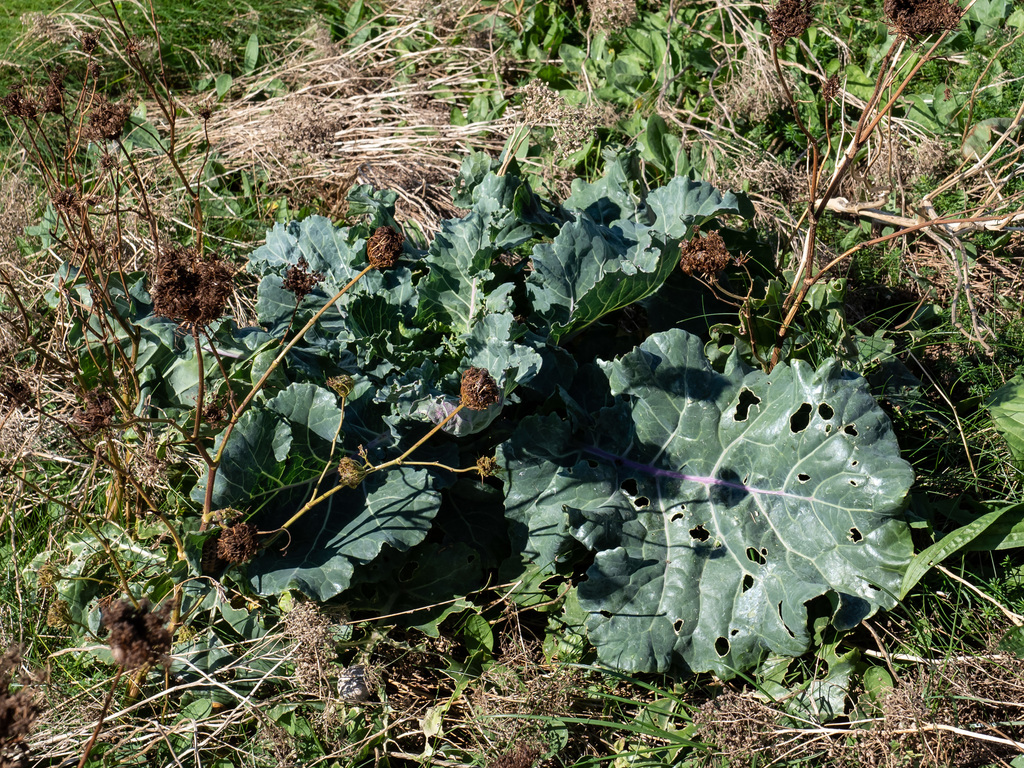
Kale is a hardy, leafy green that thrives in cooler weather. It is a member of the cabbage family and is prized for its nutritious, ruffled leaves. You can harvest it throughout the season as the plant continues to produce new growth from the center.
At a glance
- Care level
- Easy
- Plant type
- Biennial vegetable
- Light
- Full sun to partial shade
- Indoor light
- Direct sun
- Water
- Every 2 to 4 days
- Mature size
- 1 to 2 feet tall
- Growth rate
- Fast
- Hardiness
- USDA 6 to 10
- Bloom time
- Late spring to early summer
Care
Keep the soil consistently moist and mulch around the base to retain water. Watch for cabbage worms or aphids, which often hide on the undersides of the leaves. Harvest the outer leaves first to encourage the plant to keep growing from the middle.
- Watering
- Keep the soil evenly moist but not waterlogged.
- Feeding
- Apply a balanced organic fertilizer every few weeks during the growing season.
- Pruning
- Remove yellowing or damaged lower leaves to improve air circulation.
- Repotting
- Kale is typically grown as an annual in the garden, so repotting is rarely needed.
- Soil
- Well draining, fertile, loamy soil
- Soil pH
- 6.0 to 7.5
- Temperature
- -12 to 25°C
- Humidity
- 40 to 70%
- Drought tolerance
- Low
- Lifespan
- Biennial, typically 1 to 2 years
- Deer and rabbits
- Low
Signs it needs repotting
- Roots growing out of the drainage holes.
- Water running straight through the pot without soaking in.
Safety
- People
- The plant is non-toxic, though excessive consumption of raw cruciferous vegetables may affect thyroid function in sensitive individuals.
- Pets
- Kale is non toxic to cats and dogs.
- Children
- No specific safety concerns for children, but ensure plants are free of garden pests before handling.
- Contact allergens
- Some people may experience mild skin irritation from handling the leaves.
- Airborne allergens
- Pollen from flowering plants can trigger seasonal allergies in sensitive individuals.
- Edibility
- Always wash leaves thoroughly to remove soil or insect residue before eating.
How to identify it
- Ruffled or curly leaf edges
- Thick, fibrous central stems
- Deep green to purple foliage
- Large, rosette shaped growth habit
- Height
- 0.3 to 0.9m
- Spread
- 0.3 to 0.6m
- Leaves
- green, blue-green, purple, evergreen
- Flowers
- yellow, 1 to 2cm
- Fruit
- brown, Late summer
Problems to watch for
- AphidsCommon
- BoltingCommon
- Cabbage LooperCommon
- Cabbage White ButterflyCommon
- Crucifer Flea BeetleCommon
- ClubrootUncommon
- Downy MildewUncommon
- Root MaggotsUncommon
Check your kale from a photo
Pocket Botanist looks at a photo of your plant and tells you what's wrong and what to try first.
Scan with your phone's camera to get the app
Or go to pocketbotanist.app/get on your phone
Growing it
- Propagation
- seed
- When to plant
- early spring, late summer
- Overwintering
- In mild climates, it can stay in the garden through winter. In colder areas, cover with mulch or a frost cloth to protect the roots.
- In containers
- It grows well in containers, provided you use a pot at least 30 centimeters deep with good drainage.
Seed starting
- 1. Sow seeds 1 centimeter deep in moist soil.
- 2. Keep the soil warm until germination occurs.
- 3. Transplant seedlings once they have two sets of true leaves.
Planting aromatic herbs nearby is a great way to confuse pests that look for your vegetables by scent.
Grows well with
Keep away from
- Strawberry · Strawberries can stunt the growth of brassicas when planted too close.
Similar species
- Mustard · It is a close relative with a similar growth habit and culinary use.
Science
- Family
- Brassicaceae
- Genus
- Brassica
- Order
- Brassicales
- Class
- Magnoliopsida
- Native range
- Coastal regions of Western and Southern Europe.
- Conservation
- This species is common and widely cultivated, so it is not of conservation concern.
It thrives in cool, moist coastal environments where it can tolerate salty sea breezes.
- Value to wildlife
- larval host plant, nectar source
- Pollinators
- bees, butterflies
- Uses
- culinary vegetable, ornamental garden plant, cover crop
Through the year
Ecological indicators
- Salinity
- 4/9
- Soil reaction
- 7/9
- Light
- 7/9
- Temperature
- 4/9
- Nutrients
- 8/9
- Moisture
- 6/9
Taxonomy resolved against GBIF.
Questions people ask
- Why is my cabbage bolting?
- Bolting is usually triggered by rising temperatures or long daylight hours.
- Can I grow this in a pot?
- Yes, it grows well in containers at least 30 centimeters deep.
Where the name comes from
The genus name Brassica is the Latin word for cabbage, while oleracea means vegetable or herb used in the kitchen.
Good to know
- Brassica oleracea has been cultivated for thousands of years.
- The wild form of this plant still grows on limestone cliffs in Europe.
- It is incredibly rich in vitamin C and fiber.
Keep your kale growing
This page is a general guide. Save your plant in Pocket Botanist and you get care reminders timed for this plant, plus a care history that shows what worked.
Scan with your phone's camera to get the app
Or go to pocketbotanist.app/get on your phone
This guide was generated with AI on and checked against GBIF taxonomy. It is general information, not horticultural or veterinary advice. Read about how we build these guides.