 Pocket Botanist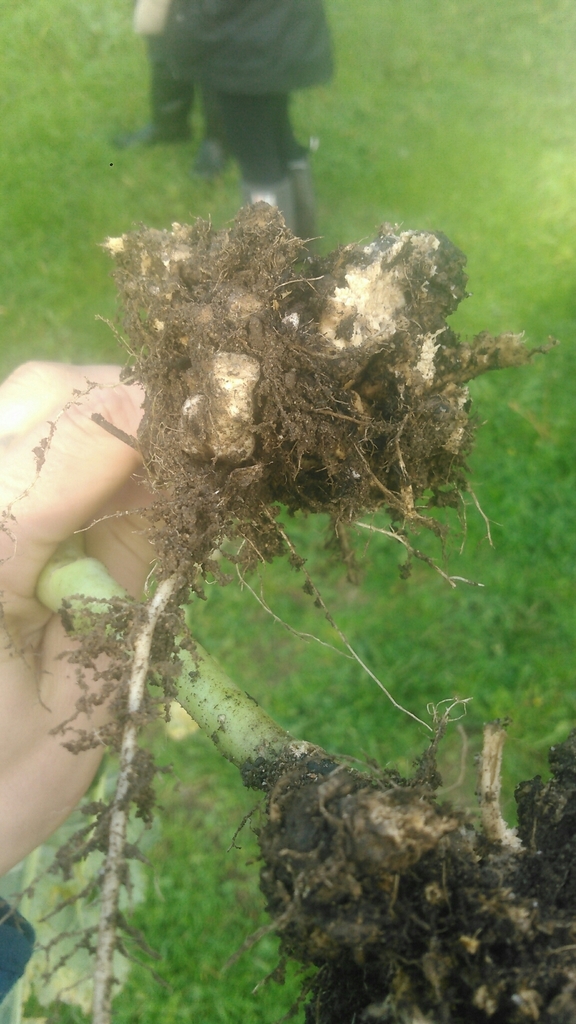
Symptoms by part
Roots
You will see large, swollen, distorted galls that look like clubs or fingers. As the disease progresses, these roots eventually rot and break down into a mushy mass.
Causes
- Acidic soil conditions with a pH below 7.0.
- Poorly drained or waterlogged soil.
- Warm soil temperatures during the growing season.
- Presence of the pathogen in the soil from previous infected crops.
Could be confused with
- Cabbage root fly · Cabbage root fly larvae tunnel into the roots and cause decay, but they do not create the large, tumor like galls characteristic of clubroot.
- Root knot nematodes · These cause small, bead like galls on the roots rather than the massive, irregular swellings seen with clubroot.
Treatment
- Remove the entire affected plant, including as much of the root system as possible, as soon as you notice wilting or stunted growth.
- Dispose of all infected plant material in the trash, never in your compost pile.
- Clean all gardening tools that touched the soil with a stiff brush and water to remove any clinging dirt before using them elsewhere.
Without chemicals
- Raise the soil pH to 7.2 or higher by adding garden lime, which makes the environment inhospitable to the pathogen.
- Improve soil drainage by adding organic matter or creating raised beds.
- Practice a long crop rotation of 6 to 7 years, avoiding all brassicas in the affected area during that time.
- Grow brassica seedlings in pots of clean, sterile potting mix before transplanting them into the garden.
Preventing it
- Test your soil pH regularly and add lime to keep it alkaline.
- Ensure all new plants are free of root galls before putting them in the ground.
- Avoid moving soil from an infected area to a clean part of the garden on your boots or tools.
- Control weeds in the brassica family, such as shepherd's purse or bittercress, as they can also host the disease.
Season
The warm growing season, especially when soil moisture is high.
Spread risk
High
Severity
High
When to act
Act immediately upon seeing stunted or wilting plants to prevent the pathogen from spreading further through the soil. If a plant is heavily infected, remove it entirely and do not attempt to save it.
Think it's Clubroot?
This guide covers the general picture. Pocket Botanist looks at your actual plant from a photo and tells you what's really going on, how serious it is, and what to try first. Identification and a health check are free.


Questions people ask
- Can I compost plants that have clubroot?
- No, you should never compost infected plants. The resting spores can survive the heat of a standard home compost pile and will spread the disease when you use the compost elsewhere.
- How long do clubroot spores stay in the soil?
- The resting spores are very resilient and can remain viable in the soil for up to 20 years, which is why long rotations and pH management are so important.
- Will adding lime cure an infected plant?
- No, lime will not cure a plant that is already infected. It only helps to suppress the activity of the spores in the soil for future plantings.
Plants it affects
This guide was generated with AI and is general information, not horticultural advice. Read about how we build these guides.