 Pocket Botanist
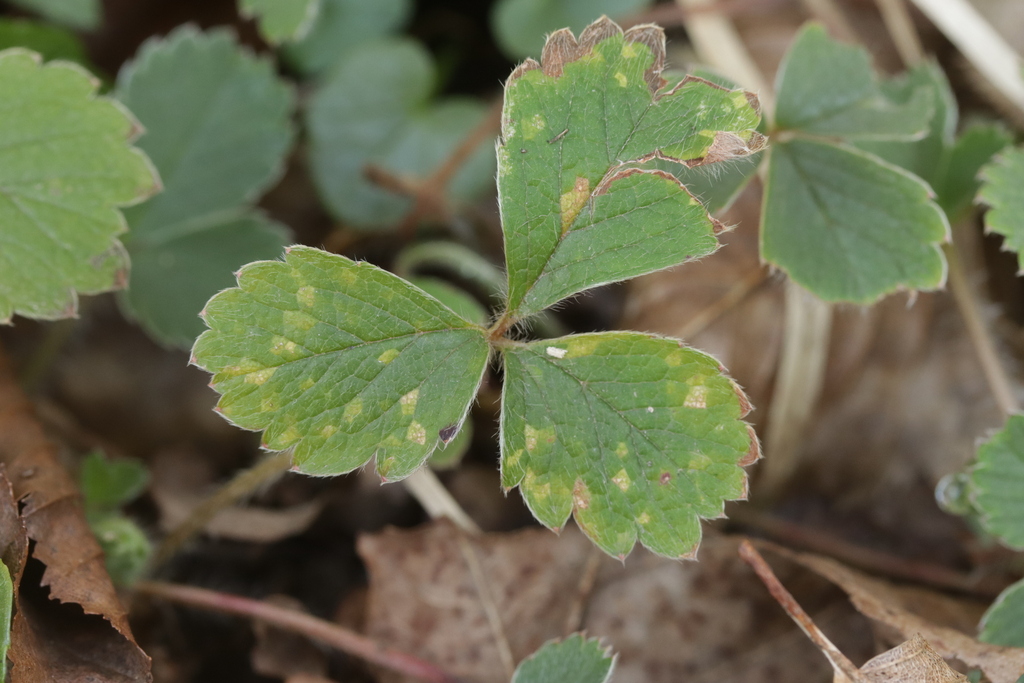
Symptoms by part
Leaves
Yellow, angular spots appear on the upper surface, often bounded by leaf veins, while a fuzzy gray or purple mold develops on the underside.
Causes
- High humidity
- Prolonged leaf wetness from rain or overhead watering
- Poor air circulation
- Cool temperatures during the growing season
Could be confused with
- Powdery Mildew · Powdery mildew appears as white, dusty spots on both sides of the leaf, whereas downy mildew is usually restricted to the underside and looks more like a fuzzy mat.
- Nutrient Deficiency · Nutrient issues typically cause uniform yellowing or patterns that do not respect leaf veins, while downy mildew spots are distinctly angular and confined by veins.
Find out what's really wrong with your plant
Problems that look alike are easy to mix up. Pocket Botanist looks at a photo of your actual plant and tells you what's going on, how serious it is, and what to try first. Identification and a health check are free.



Scan with your phone's camera to get the app
Or go to pocketbotanist.app/get on your phone
Treatment
- Prune away and destroy all severely infected leaves immediately to reduce the number of spores.
- Remove and dispose of entire plants that show heavy infection to prevent the disease from jumping to healthy neighbors.
- Apply potassium bicarbonate to the foliage, ensuring you cover the undersides of the leaves where the spores are most active, follow the label.
Without chemicals
- Improve air circulation by spacing plants further apart.
- Water only at the base of the plant to keep the foliage dry.
- Use a rain cover or cloche to keep moisture off the leaves during wet weather.
- Rotate crops to avoid planting susceptible species in the same spot for 2 to 3 years.
Chemical options
- Potassium bicarbonate, mix with water and spray onto all leaf surfaces, follow the label.
Preventing it
- Choose resistant plant varieties whenever possible.
- Ensure your garden beds have excellent drainage to reduce humidity.
- Clear away all plant debris at the end of the season to remove overwintering spores.
- Avoid overcrowding plants to allow for better airflow.
Season
The cool parts of the growing season, such as spring and autumn, particularly during periods of high moisture or heavy dew.
Spread risk
High
Severity
High
When to act
Act as soon as you see the first yellow spots on the leaves to stop the spread. If the plant is heavily covered in fuzzy growth, remove it entirely to protect the rest of your garden.
Keep your plants healthy from here
Save your plants in Pocket Botanist and you get care reminders timed for each one, plus a care history that shows what worked. Identification and a health check are free.
Questions people ask
- Can I compost plants infected with downy mildew?
- No, it is best to bag and dispose of infected plant material in the trash, as home compost piles rarely get hot enough to kill the spores.
- Does downy mildew live in the soil?
- Yes, many types of downy mildew produce resting spores that can survive in the soil or on plant debris for several years.
Plants it affects
Answers plant by plant
This guide was generated with AI on and is general information, not horticultural advice. Read about how we build these guides.