 Pocket Botanist
Plant guide
Grape.
Vitis vinifera
Pronounced VEE-tis vi-NIF-er-uh
Also known as Common Grapevine, European Grape, European wine grape, Grape, Grape-Vine, Grapevine


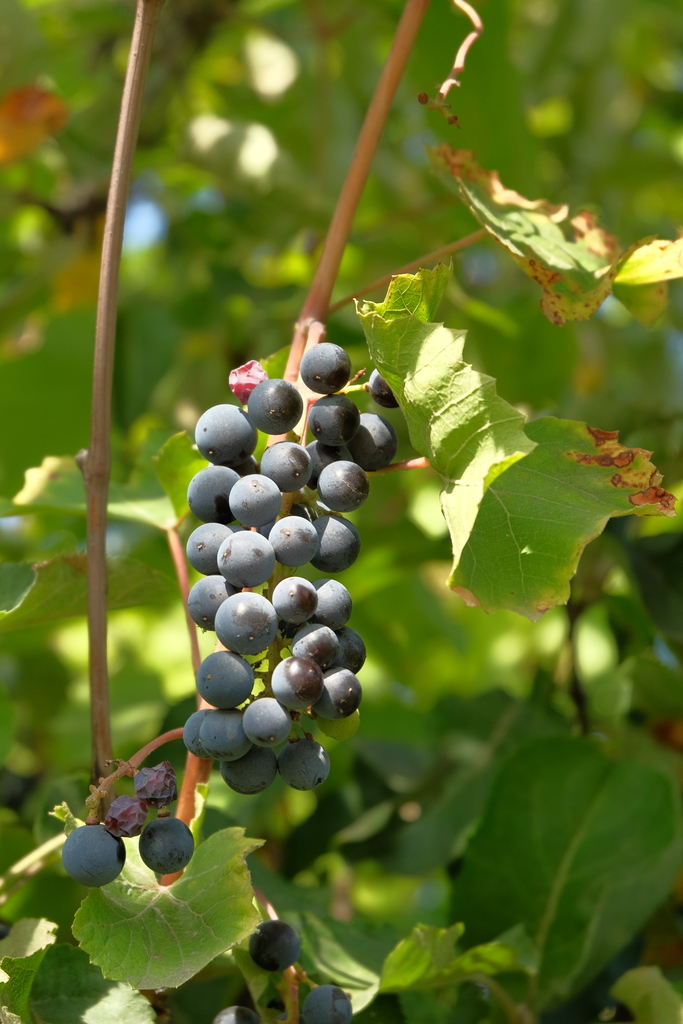
The common grapevine is a woody climbing vine prized for its delicious fruit and ornamental foliage. It thrives in sunny spots with well drained soil and requires a sturdy support structure to climb. You will need to prune it regularly to keep it productive and healthy.

At a glance
- Care level
- Moderate
- Plant type
- Deciduous woody vine
- Light
- Full sun
- Indoor light
- Direct sun
- Water
- Every 7 to 14 days
- Mature size
- Up to 15 meters
- Growth rate
- Fast
- Hardiness
- USDA 6 to 9
- Bloom time
- Late spring
Care
Train the vines onto a trellis or fence to ensure good air circulation and sun exposure. Watch for powdery mildew on leaves and keep an eye out for pests like aphids or beetles. Consistent pruning during the dormant season is essential for fruit production.
- Watering
- Water deeply during the growing season but allow the soil to dry slightly between waterings.
- Feeding
- Apply a balanced fertilizer in early spring before new growth begins.
- Pruning
- Prune heavily in late winter while the plant is dormant to encourage fruit bearing wood.
- Repotting
- Repot only if container grown, otherwise focus on soil health.
- Soil
- Well drained loamy soil
- Soil pH
- 6.0 to 7.5
- Temperature
- -15 to 40°C
- Humidity
- 40 to 60%
- Drought tolerance
- Moderate
- Lifespan
- Perennial, can live for 50 to 100 plus years.
- Fragrance
- Light
- Deer and rabbits
- Low
Signs it needs repotting
- Roots growing out of drainage holes
- Stunted growth despite regular feeding
Safety
- People
- The plant is generally non toxic, but ingestion of large amounts of leaves or stems is not recommended.
- Pets
- Grapes and raisins are highly toxic to dogs and cats and can cause kidney failure.
- Children
- The small, round grapes pose a choking hazard to very young children.
- Contact allergens
- Sap can cause mild skin irritation in sensitive individuals.
- Airborne allergens
- Pollen can trigger seasonal allergies for some people.
- Edibility
- While the fruit is edible, do not consume parts of the plant treated with non food grade pesticides.
How to identify it
- Large palmately lobed leaves
- Woody climbing stems with tendrils
- Clusters of small berries
- Peeling bark on mature vines
- Height
- 3 to 15m
- Spread
- 2 to 6m
- Leaves
- green, deciduous
- Flowers
- green, yellow, 0.5 to 1cm
- Fruit
- green, red, purple, black, Late summer to autumn
Problems to watch for
- Downy MildewCommon
- Grape PhylloxeraCommon
- Gray MoldCommon
- Powdery MildewCommon
- ChlorosisUncommon
- Crown GallUncommon
- Japanese BeetlesUncommon
- Leaf ScorchUncommon
By symptom
Check your grape from a photo
Pocket Botanist looks at a photo of your plant and tells you what's wrong and what to try first.
Growing it
- Propagation
- cuttings, grafting, seed
- When to plant
- spring, autumn
- Overwintering
- Prune back excess growth in late winter while the vine is dormant. Mulch the base to protect roots from extreme temperature fluctuations.
- In containers
- It can grow in large containers, but requires a very large pot and sturdy support structure.
Hardwood Cuttings
- 1. Take 30 cm cuttings in winter.
- 2. Place in moist soil.
- 3. Keep in a cool, dark place until spring.
Planting aromatic herbs nearby can help mask the scent of the vines from certain pests.
Grows well with
Keep away from
- Potato — Potatoes can harbor diseases that easily spread to grapevines.
Similar species
- Fox grape — This is a hardy North American species often used for juice and jelly.
Science
- Family
- Vitaceae
- Genus
- Vitis
- Order
- Vitales
- Class
- Magnoliopsida
- Native range
- Mediterranean region, Central Europe, and Southwestern Asia.
- Conservation
- Not of conservation concern as it is widely cultivated globally.
It is a climbing woody vine that uses tendrils to scale trees and rocks in its natural habitat.
- Value to wildlife
- nectar source, bird food source
- Pollinators
- bees, beetles
- Uses
- fruit production, ornamental vine, shade covering
Through the year
Ecological indicators
- Light
- 8/9
- Nutrients
- 6/9
- Salinity
- 3/9
- Soil reaction
- 6/9
- Temperature
- 7/9
- Moisture
- 5/9
Taxonomy resolved against GBIF.
Questions people ask
- Do I need to prune my grapevine?
- Yes, annual winter pruning is essential to manage growth and ensure a good harvest.
- How much sun does it need?
- It requires full sun for at least 6 to 8 hours daily to ripen fruit properly.
Where the name comes from
The name Vitis is the classical Latin term for the grapevine, while vinifera means wine bearing.
Good to know
- Grapevines can live for over 100 years if properly maintained.
- There are thousands of different varieties of this species.
- Vines are typically trained on trellises to improve air circulation and fruit quality.
Also in
Keep your grape growing
This page is a general guide. Save your plant in Pocket Botanist and you get care reminders timed for this plant, plus a care history that shows what worked.
This guide was generated with AI and checked against GBIF taxonomy. It is general information, not horticultural or veterinary advice. Read about how we build these guides.