 Pocket Botanist
Symptoms by part
Leaves
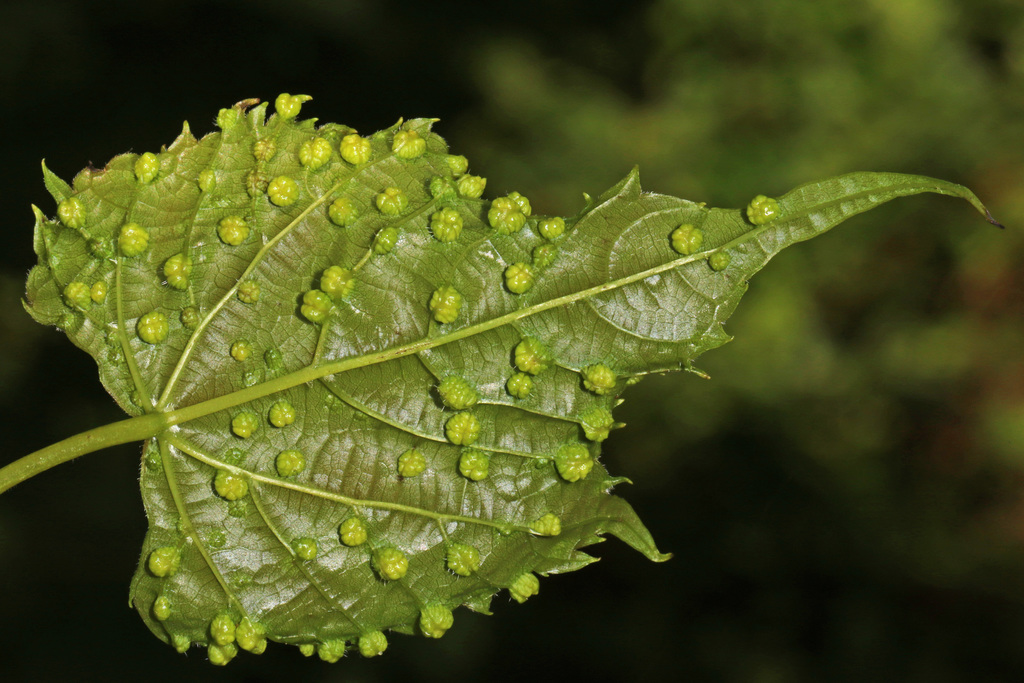
Small, raised, wart like galls form on the undersides of leaves, which are often mistaken for simple bumps.
Roots
Small swellings or hook shaped galls appear on the root tips, leading to rotting and a stunted, yellowed appearance of the entire vine.
Causes
- Planting susceptible Vitis vinifera grape varieties in infested soil.
- Introduction of the pest through infested nursery stock or contaminated tools.
- Movement of soil or water from an infested area to a clean vineyard.
Could be confused with
- Grape Erineum Mite · This mite causes felt like patches on the leaf underside rather than the distinct, hard galls produced by phylloxera.
- Root Rot · Root rot from overwatering typically affects the entire root system uniformly, whereas phylloxera causes specific, localized galling on root tips.
Find out what's really wrong with your plant
Problems that look alike are easy to mix up. Pocket Botanist looks at a photo of your actual plant and tells you what's going on, how serious it is, and what to try first. Identification and a health check are free.



Scan with your phone's camera to get the app
Or go to pocketbotanist.app/get on your phone
Treatment
- Remove and destroy any heavily infested vines to prevent the spread to healthy neighboring plants.
- Sanitize all pruning tools and footwear with a bleach solution after working near infested vines.
- Apply fatty acids to the foliage during the growing season to target the crawler stage of the insect, follow the label.
Without chemicals
- Replace susceptible grapevines with resistant rootstock varieties.
- Avoid moving soil or equipment between different vineyard blocks.
- Plant vines in sandy soil, which is less hospitable to the insect than heavy clay.
Chemical options
- Fatty acids, spray onto the foliage during the active growing season when crawlers are moving, since insects inside sealed galls and on roots are not reached, follow the label.
Preventing it
- Always purchase certified phylloxera free nursery stock.
- Use resistant rootstocks when establishing new grape plantings.
- Keep vineyard tools clean and free of soil debris.
Season
The warm growing season.
Spread risk
High
Severity
High
When to act
Act immediately upon identifying leaf galls or signs of vine decline. If a vine shows significant root damage and yellowing, it is best to remove and replace it with a resistant variety.
Keep your plants healthy from here
Save your plants in Pocket Botanist and you get care reminders timed for each one, plus a care history that shows what worked. Identification and a health check are free.
Questions people ask
- Can I save a vine once the roots are infested?
- Unfortunately, once the roots are heavily infested, it is very difficult to save the vine, and removal is often the most practical choice.
- Does this pest affect all types of grapes?
- European grape varieties are highly susceptible, while many American grape species have natural resistance.
Plants it affects
Answers plant by plant
This guide was generated with AI on and is general information, not horticultural advice. Read about how we build these guides.