 Pocket Botanist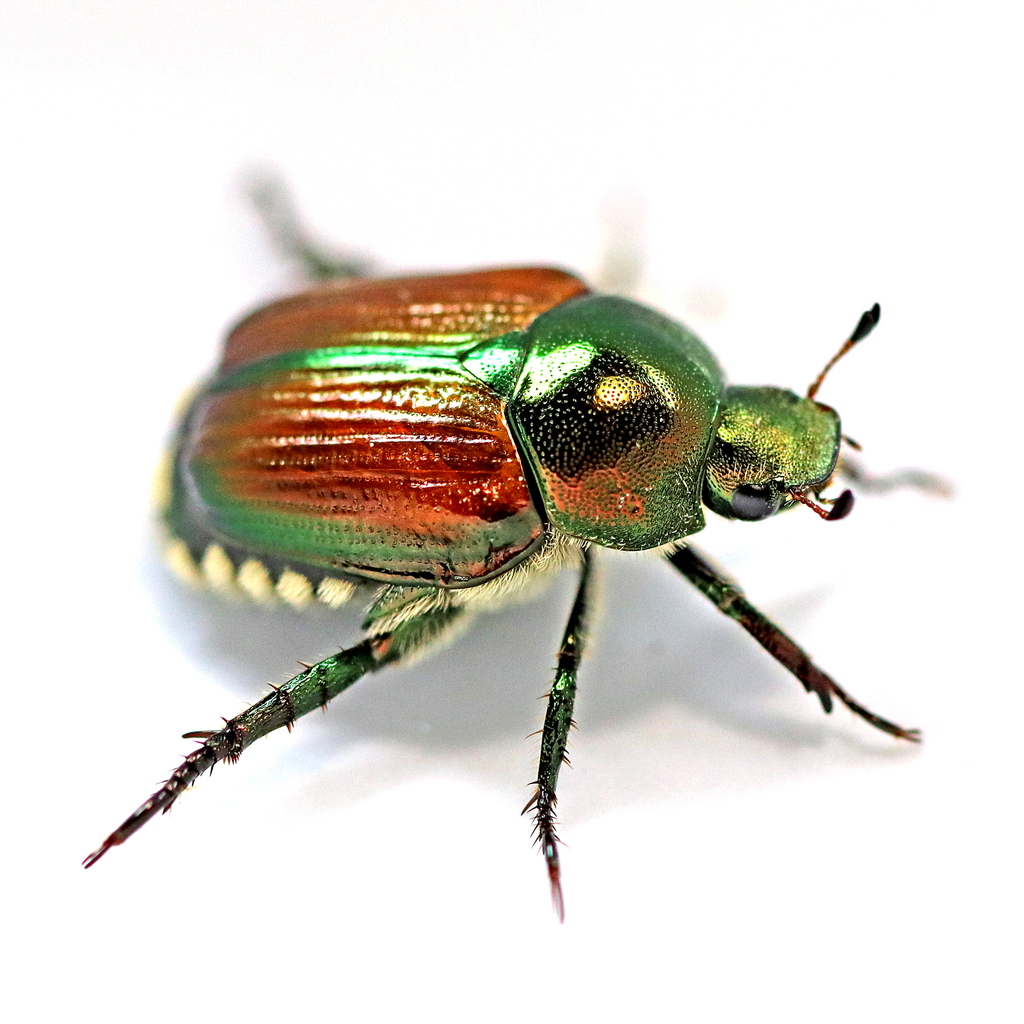
Symptoms by part
Leaves
The beetles eat the tissue between the leaf veins, leaving behind a skeletonized, lace like appearance.
Flowers
The beetles chew on petals and buds, often causing the blooms to look ragged, shredded, or completely destroyed.
Causes
- The presence of healthy, preferred host plants like roses or hibiscus.
- Warm temperatures that trigger the emergence of adult beetles from the soil.
- Nearby lawns with moist soil, which provide the ideal environment for the beetle larvae to develop.
Could be confused with
- Rose slugs · Rose slugs are small, green, caterpillar like larvae that create similar skeletonized patterns, but they are much smaller and lack the metallic shell of the adult beetle.
- Leaf cutter bees · These bees cut clean, circular or oval holes along the edges of leaves, whereas Japanese beetles leave jagged, irregular holes throughout the leaf surface.
Treatment
- Hand pick the beetles off the plants in the early morning when they are sluggish.
- Drop the collected beetles into a bucket of soapy water to kill them.
- Cover high value plants with fine mesh netting during the peak of the beetle season to prevent feeding.
- Apply spinosad to the foliage of affected plants if the infestation is severe, follow the label.
Without chemicals
- Hand picking beetles into soapy water.
- Using physical barriers like fine mesh netting over susceptible plants.
- Selecting plant varieties that are less attractive to the beetles.
Chemical options
- Spinosad, apply to foliage when beetles are active, follow the label.
Preventing it
- Avoid using pheromone traps, as these often attract more beetles to your garden than they catch.
- Maintain healthy, vigorous plants that can better withstand minor feeding.
- Choose plant species that are naturally less preferred by the beetles.
Season
The warm growing season, specifically when adults emerge from the ground to feed and mate.
Spread risk
High
Severity
Moderate
When to act
Act as soon as you see the first few beetles to prevent them from releasing pheromones that attract more of their kind. Remove or replace the plant only if it has been severely defoliated for several seasons and no longer provides the aesthetic or functional value you desire.
Think it's Japanese Beetles?
This guide covers the general picture. Pocket Botanist looks at your actual plant from a photo and tells you what's really going on, how serious it is, and what to try first. Identification and a health check are free.


Questions people ask
- Do pheromone traps help get rid of Japanese beetles?
- No, they usually do the opposite. The traps release a scent that draws beetles from a wide area, often leading to more damage on your plants than if you had used no trap at all.
- Will my plant die if it gets skeletonized?
- Usually not. While it looks terrible, most established trees and shrubs can survive a season of heavy feeding, though it may weaken them over time if it happens every year.
- Are the grubs in my lawn the same as the beetles on my roses?
- Yes, they are the same insect. The adults feed on your flowers and leaves, while their larval stage lives in the soil and feeds on grass roots.
Plants it affects
This guide was generated with AI and is general information, not horticultural advice. Read about how we build these guides.