 Pocket Botanist
Plant guide
Virginia creeper.
Parthenocissus quinquefolia
Pronounced par-then-oh-SIS-us kwin-kwe-FO-lee-uh
Also known as American Ivy, American-ivy, Five-leaf-ivy, Five-leaved Ivy, Fiveleaved Ivy


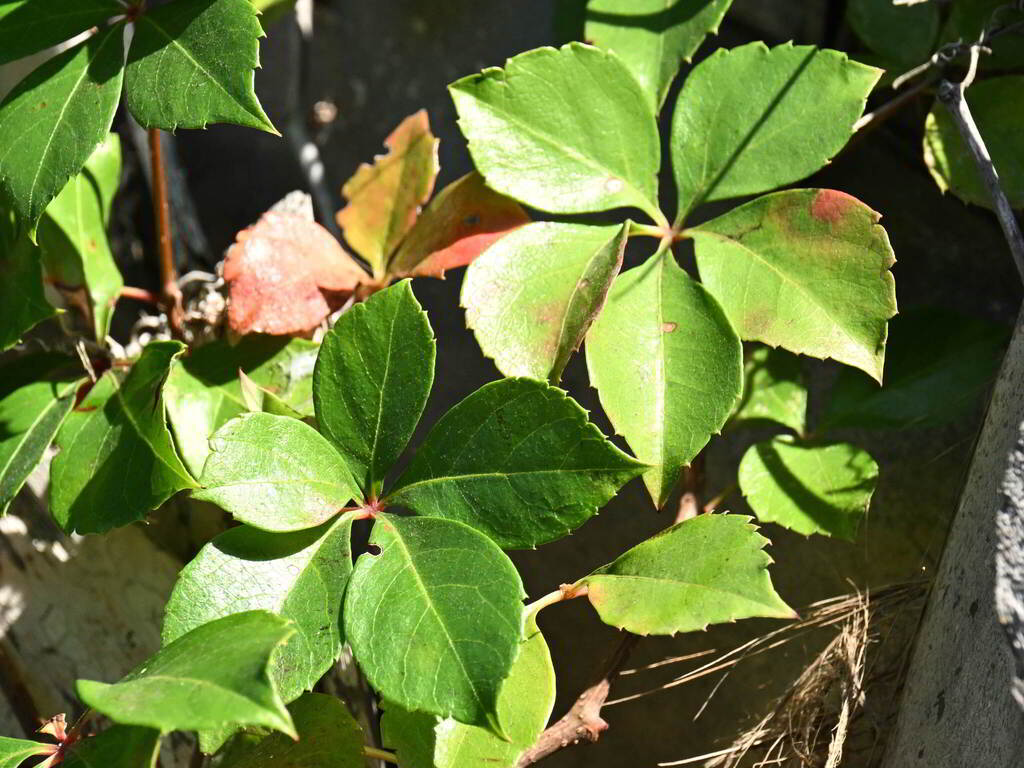
Virginia creeper is a vigorous, deciduous woody vine known for its stunning fall color. It climbs using small adhesive tendrils, making it perfect for covering walls or fences. It's a hardy native that supports local wildlife with its berries.
At a glance
- Care level
- Easy
- Plant type
- Deciduous woody vine
- Light
- Full sun to partial shade
- Indoor light
- Bright indirect
- Water
- Every 7 to 14 days
- Mature size
- 10 to 15 meters
- Growth rate
- Fast
- Hardiness
- USDA 3 to 9
- Bloom time
- Early to mid summer
Care
This vine is quite adaptable and thrives in most soil conditions. Keep an eye on its rapid growth, as it can quickly overtake structures or trees if not managed. Prune it back whenever it starts to spread beyond your desired area.
- Watering
- Water regularly until established, then it becomes quite drought tolerant.
- Feeding
- A single application of balanced fertilizer in early spring is plenty.
- Pruning
- Prune in late winter or summer to control its aggressive spread.
- Repotting
- Usually grown in the ground, but container specimens need fresh soil every few years.
- Soil
- Well-draining loam, clay, or sand
- Soil pH
- 6.0 to 7.5
- Temperature
- -30 to 35°C
- Humidity
- 40 to 70%
- Drought tolerance
- High
- Lifespan
- Long-lived perennial.
- Deer and rabbits
- Moderate
Signs it needs repotting
- Roots growing out of drainage holes.
- Water running straight through the pot.
- Stunted growth.
Safety
- People
- The sap can cause skin irritation in sensitive individuals, and the berries are poisonous.
- Pets
- The plant contains calcium oxalate crystals which can cause irritation if ingested by cats or dogs.
- Children
- Keep children away from the berries as they are toxic if eaten.
- Contact allergens
- Contact with the sap may cause mild skin irritation or dermatitis in some people.
- Airborne allergens
- The pollen is not considered a significant allergen.
- Edibility
- The berries contain oxalic acid and are considered toxic to humans if ingested.
How to identify it
- Five leaflets arranged in a palmately compound leaf
- Leaves turn brilliant red in autumn
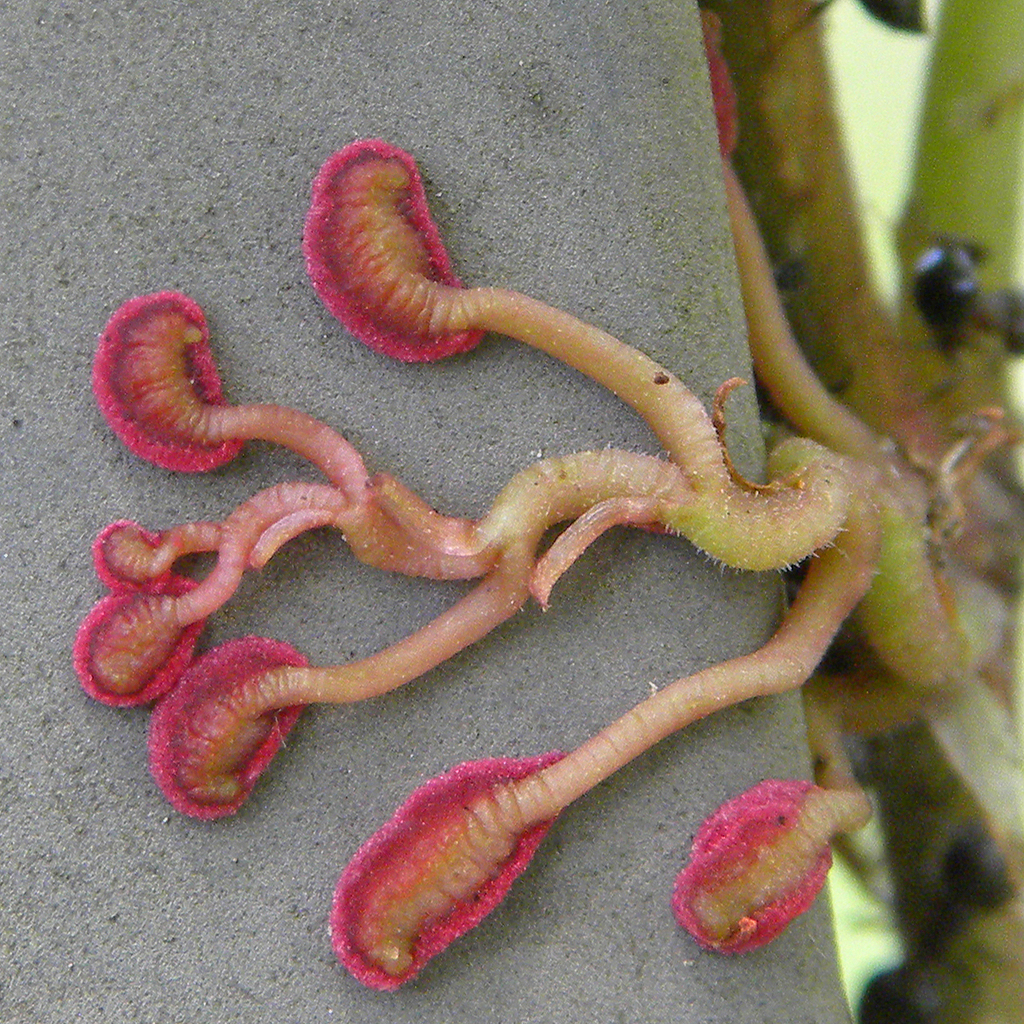
- Climbs via small adhesive disks on tendrils
- Small clusters of dark blue berries
- Greenish white flowers in summer
- Height
- 9 to 15m
- Spread
- 3 to 6m
- Leaves
- green, red, purple, deciduous
- Flowers
- green, white, 0.5 to 1cm
- Fruit
- blue, black, Late summer to autumn
Problems to watch for
- Japanese BeetlesCommon
- Leaf SpotCommon
- Leaf ScorchUncommon
- Powdery MildewUncommon
By symptom
Check your virginia creeper from a photo
Pocket Botanist looks at a photo of your plant and tells you what's wrong and what to try first.
Growing it
- Propagation
- cuttings, seed, layering
- When to plant
- spring, autumn
- Overwintering
- No special care is needed as it is fully hardy, but you can prune back excessive growth in late winter.
- In containers
- It is best kept in the ground, but can grow in a very large container if pruned regularly.
Hardwood cuttings
- Take 15 cm cuttings in late winter.
- Place in moist soil.
- Keep in a cool, bright spot until spring.
Plant it where it has plenty of room to spread, as it can easily overwhelm smaller shrubs.
Grows well with
- Oak — It naturally climbs trees in forest settings without harming them.
- Eastern Redbud — They share similar woodland edge habitat requirements.
Similar species
- Boston Ivy — It is a close relative with a similar growth habit but different leaf shape.
Science
- Family
- Vitaceae
- Genus
- Parthenocissus
- Order
- Vitales
- Class
- Magnoliopsida
- Native range
- Eastern and central North America.
- Conservation
- This plant is widespread and not of conservation concern.
It naturally colonizes forest edges and rocky slopes, providing essential cover for small animals.
- Value to wildlife
- nectar source, nesting cover, winter food for birds
- Pollinators
- bees, butterflies
- Uses
- vertical screening, ground cover, erosion control, wildlife habitat
Through the year
Ecological indicators
- Salinity
- 2/9
- Soil reaction
- 5/9
- Light
- 5/9
- Temperature
- 5/9
- Moisture
- 5/9
- Nutrients
- 5/9
Taxonomy resolved against GBIF.
Questions people ask
- Will it damage my brick wall?
- It generally does not damage sound masonry, but it can pull paint off wood siding.
- How fast does it grow?
- It is a vigorous grower that can add several feet of length in a single season.
Where the name comes from
The name Parthenocissus comes from the Greek words for virgin and ivy, while quinquefolia means five-leaved.
Good to know
- It climbs using small adhesive pads rather than twining tendrils.
- The name Virginia creeper is a bit misleading as it is native to much of North America.
- It is often mistaken for poison ivy, but it has five leaflets while poison ivy has three.
Also in
Keep your virginia creeper growing
This page is a general guide. Save your plant in Pocket Botanist and you get care reminders timed for this plant, plus a care history that shows what worked.
This guide was generated with AI and checked against GBIF taxonomy. It is general information, not horticultural or veterinary advice. Read about how we build these guides.