 Pocket Botanist
Plant guide
Rose of Sharon.
Hibiscus syriacus
Pronounced hi-BIS-kus sir-ee-AY-kus
Also known as Althea, Korean Hibiscus, Mugunghwa, Rose Of Sharon, Rose of Sharon (USA), Rose-of-Sharon, Shrub Althea, Shrub-althaea



The Rose of Sharon is a hardy, deciduous shrub that brings late summer color to the garden. It's known for its vase shaped habit and showy, trumpet shaped flowers. This plant is quite adaptable and thrives in many different garden settings.
At a glance
- Care level
- Easy
- Plant type
- Deciduous shrub
- Light
- Full sun to partial shade
- Indoor light
- Bright indirect
- Water
- Every 5 to 10 days
- Mature size
- 3 to 4 meters
- Growth rate
- Medium
- Hardiness
- USDA 5 to 9
- Bloom time
- Mid summer to early autumn
Care
Plant in a spot that gets plenty of sun to encourage the best blooms. Keep an eye out for aphids or whiteflies during the growing season. Prune in late winter to maintain shape and encourage new growth for the coming year.
- Watering
- Water deeply once a week, increasing frequency during hot, dry spells.
- Feeding
- Apply a balanced fertilizer in early spring as new growth begins.
- Pruning
- Prune in late winter while the plant is dormant to shape and remove dead wood.
- Repotting
- Repot only if the plant becomes root bound in its container.
- Soil
- Well draining, fertile soil
- Soil pH
- 6.0 to 7.5
- Temperature
- -25 to 35°C
- Humidity
- 40 to 70%
- Drought tolerance
- Moderate
- Lifespan
- Perennial, typically 20 to 50 years.
- Deer and rabbits
- Moderate
Signs it needs repotting
- Roots growing out of drainage holes.
- Water running straight through the pot.
- Stunted growth.
Safety
- People
- The plant is generally considered non toxic to humans, but ingestion of large amounts may cause mild stomach upset.
- Pets
- The Rose of Sharon is considered toxic to cats and dogs if ingested.
- Children
- The seed pods can be a choking hazard if swallowed by small children.
- Contact allergens
- The foliage can cause mild skin irritation in sensitive individuals.
- Airborne allergens
- The pollen is not typically a major cause of hay fever.
- Edibility
- While the flowers are sometimes used in teas, they are not a primary food source and should be consumed with caution.
How to identify it
- Vase shaped deciduous shrub
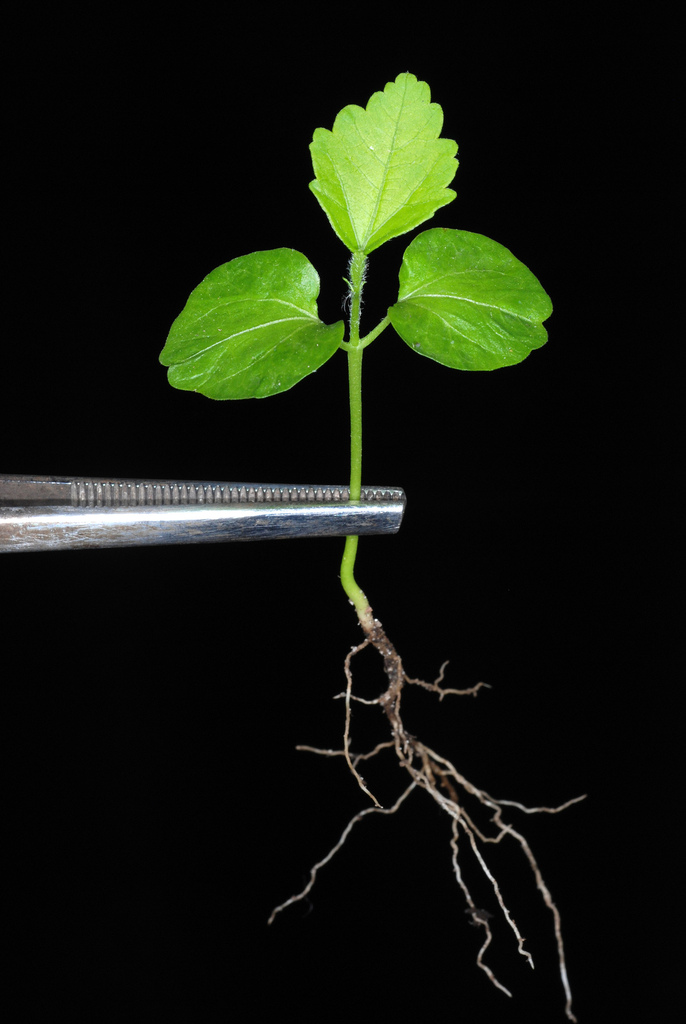
- Three lobed serrated leaves
- Large trumpet shaped flowers
- Prominent central stamen column
- Height
- 2 to 4m
- Spread
- 1.5 to 3m
- Leaves
- green, yellow, deciduous
- Flowers
- purple, pink, white, blue, 5 to 10cm
- Fruit
- brown, Autumn
Problems to watch for
- AphidsCommon
- Japanese BeetlesCommon
- Leaf SpotCommon
- ChlorosisUncommon
- Scale InsectsUncommon
- Sooty MoldUncommon
By symptom
Check your rose of sharon from a photo
Pocket Botanist looks at a photo of your plant and tells you what's wrong and what to try first.
Growing it
- Propagation
- cuttings, seed
- When to plant
- spring, autumn
- Overwintering
- Apply a layer of mulch around the base to protect roots from extreme temperature fluctuations. Prune back dead wood in late winter.
- In containers
- It grows well in large containers, provided they are at least 40 liters in volume.
Softwood cuttings
- Take 10cm cuttings in early summer.
- Remove lower leaves.
- Dip in rooting hormone.
- Place in moist potting mix.
- Keep in bright, indirect light until rooted.
Pair with drought tolerant perennials to maintain a low maintenance border.
Grows well with
- Lavender — They share similar sun and soil requirements.
- Coneflower — These perennials provide a nice color contrast in late summer.
Similar species
- Rose of Sharon — This is the same species, often sold under different common names.
Science
- Family
- Malvaceae
- Genus
- Hibiscus
- Order
- Malvales
- Class
- Magnoliopsida
- Native range
- Temperate regions of East Asia.
- Conservation
- This species is not of conservation concern and is widely naturalized in many regions.
It thrives in sunny, well drained sites and often self seeds in favorable conditions.
- Value to wildlife
- nectar source
- Pollinators
- bees, butterflies, hummingbirds
- Uses
- ornamental shrub, hedging, pollinator garden
Through the year
Ecological indicators
- Salinity
- 3/9
- Light
- 7/9
- Temperature
- 5/9
- Moisture
- 5/9
- Nutrients
- 5/9
- Soil reaction
- 5/9
Taxonomy resolved against GBIF.
Questions people ask
- Why is my hibiscus not blooming?
- It likely needs more direct sunlight to produce flowers.
- Should I prune it?
- Yes, prune in late winter or early spring to encourage more blooms.
Where the name comes from
The name Hibiscus comes from the Greek word for mallow, while syriacus suggests it originated in Syria, though it is actually native to Asia.
Good to know
- It is the national flower of South Korea.
- The flowers typically last only for a single day.
- It is remarkably tolerant of urban pollution.
Also in
Keep your rose of sharon growing
This page is a general guide. Save your plant in Pocket Botanist and you get care reminders timed for this plant, plus a care history that shows what worked.
This guide was generated with AI and checked against GBIF taxonomy. It is general information, not horticultural or veterinary advice. Read about how we build these guides.