 Pocket Botanist
Plant guide
prickly lettuce.
Lactuca serriola
Pronounced lak-TOO-kuh ser-ee-OH-luh
Also known as China lettuce


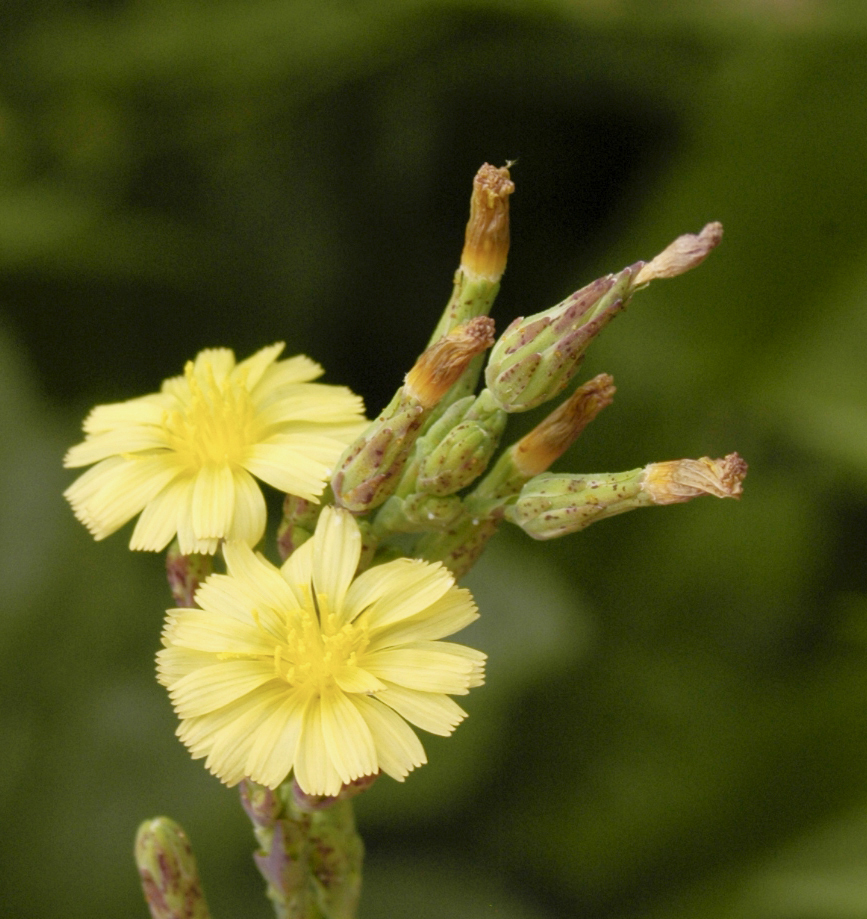
Prickly lettuce is a hardy annual or biennial herb that often grows in disturbed areas. It is known for its tall, upright stem and leaves that twist to align with the sun. You might recognize it as a wild relative of the common garden lettuce.
At a glance
- Care level
- Easy
- Plant type
- herbaceous annual
- Light
- full sun
- Indoor light
- Direct sun
- Water
- Every 7 to 14 days
- Mature size
- 6 feet
- Growth rate
- Fast
- Hardiness
- USDA 4 to 9
- Bloom time
- Mid to late summer
Care
This plant thrives in full sun and well drained soil with minimal intervention. Watch for excessive height in low light, which can cause the stem to lean or flop. It is very drought tolerant once established.
- Watering
- Water only when the top inch of soil feels dry to the touch.
- Feeding
- Fertilizing is typically unnecessary as this plant thrives in poor, disturbed soils.
- Pruning
- Remove spent flower stalks to prevent unwanted seed dispersal in your garden.
- Repotting
- This plant is rarely grown in containers and does not require repotting.
- Soil
- well draining sandy or loamy soil
- Soil pH
- 6.0 to 7.5
- Temperature
- -15 to 35°C
- Humidity
- 30 to 70%
- Drought tolerance
- High
- Lifespan
- Annual or biennial, typically 1 to 2 years.
- Deer and rabbits
- Moderate
Safety
- People
- The milky sap can cause contact dermatitis in sensitive individuals.
- Pets
- This plant is generally considered non toxic to cats and dogs.
- Children
- The milky sap is bitter and potentially irritating if ingested in large quantities, so keep away from small children.
- Contact allergens
- The milky latex sap may cause skin irritation upon contact.
- Airborne allergens
- Pollen can trigger allergic reactions in sensitive individuals during the flowering season.
- Edibility
- While young leaves are edible, older leaves become extremely bitter and contain high levels of latex that can cause digestive upset.
How to identify it
- stiff prickles along leaf midribs
- leaves twist to face sun
- milky white sap when cut
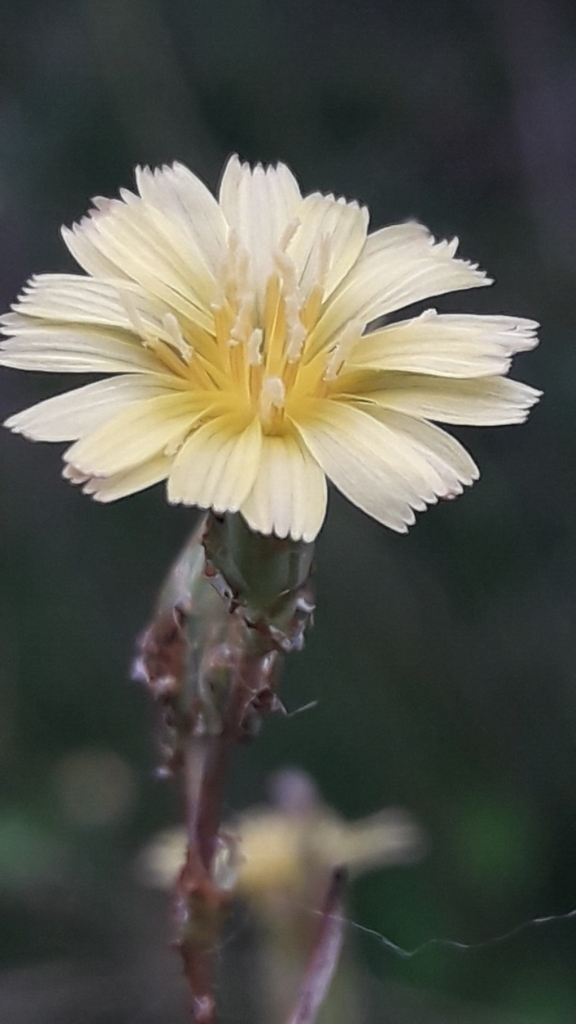
- small yellow dandelion like flowers
- deeply lobed or entire leaves
- Height
- 0.3 to 2m
- Spread
- 0.15 to 0.45m
- Leaves
- blue-green, grey-green, deciduous
- Flowers
- yellow, 1 to 2cm
- Fruit
- brown, tan, Autumn
Problems to watch for
- AphidsCommon
- BoltingCommon
- Downy MildewCommon
- Leaf MinersUncommon
- Powdery MildewUncommon
- Slugs and SnailsUncommon
- Tip BurnUncommon
- Tarnished Plant BugRare
By symptom
Check your prickly lettuce from a photo
Pocket Botanist looks at a photo of your plant and tells you what's wrong and what to try first.
Growing it
- Propagation
- seed
- When to plant
- spring, autumn
- Overwintering
- The plant typically dies back to the ground in winter, leaving seeds to germinate in the spring.
- In containers
- It is not recommended for containers as it has a deep taproot and spreads aggressively by seed.
Seed
- Collect mature seeds in late autumn once the flower heads turn fluffy.
- Sow seeds directly onto disturbed soil in early spring or autumn.
- Lightly cover with soil and keep moist until germination occurs.
This plant is best grown in wild meadow areas rather than formal garden beds due to its aggressive seeding habit.
Grows well with
- Common Yarrow — They share similar soil and light requirements in open fields.
- Common Chicory — Both are hardy, drought tolerant plants that thrive in similar disturbed habitats.
Similar species
- Prickly Lettuce — It shares a similar appearance and milky sap but has different leaf serration patterns.
Science
- Family
- Asteraceae
- Genus
- Lactuca
- Order
- Asterales
- Class
- Magnoliopsida
- Native range
- Europe, Western Asia, and Northern Africa.
- Conservation
- This species is considered an invasive weed in many regions outside its native range.
It is a pioneer species that quickly colonizes disturbed ground and waste areas.
- Value to wildlife
- nectar source, larval host plant
- Pollinators
- bees, butterflies
- Uses
- foraging, wildlife habitat
Through the year
Ecological indicators
- Salinity
- 2/9
- Light
- 8/9
- Nutrients
- 6/9
- Soil reaction
- 7/9
- Temperature
- 5/9
- Moisture
- 4/9
Taxonomy resolved against GBIF.
Questions people ask
- Is this plant edible?
- Young leaves are edible, but they become very bitter as the plant matures.
- Why is it called a compass plant?
- The leaves rotate to face north and south to avoid the intense sun.
Where the name comes from
The name Lactuca comes from the Latin word for milk, referring to the milky sap, while serriola refers to the serrated leaf edges.
Good to know
- It is the wild ancestor of the common garden lettuce.
- The plant produces a milky latex that was historically used in folk medicine.
- It is highly adaptable and thrives in disturbed soils and roadsides.
Also in
Keep your prickly lettuce growing
This page is a general guide. Save your plant in Pocket Botanist and you get care reminders timed for this plant, plus a care history that shows what worked.
This guide was generated with AI and checked against GBIF taxonomy. It is general information, not horticultural or veterinary advice. Read about how we build these guides.