 Pocket Botanist
Guía de plantas
lechuga espinosa.
Lactuca serriola
Pronunciación lak-TOO-kuh ser-ee-OH-luh
También se conoce como lechuga de China


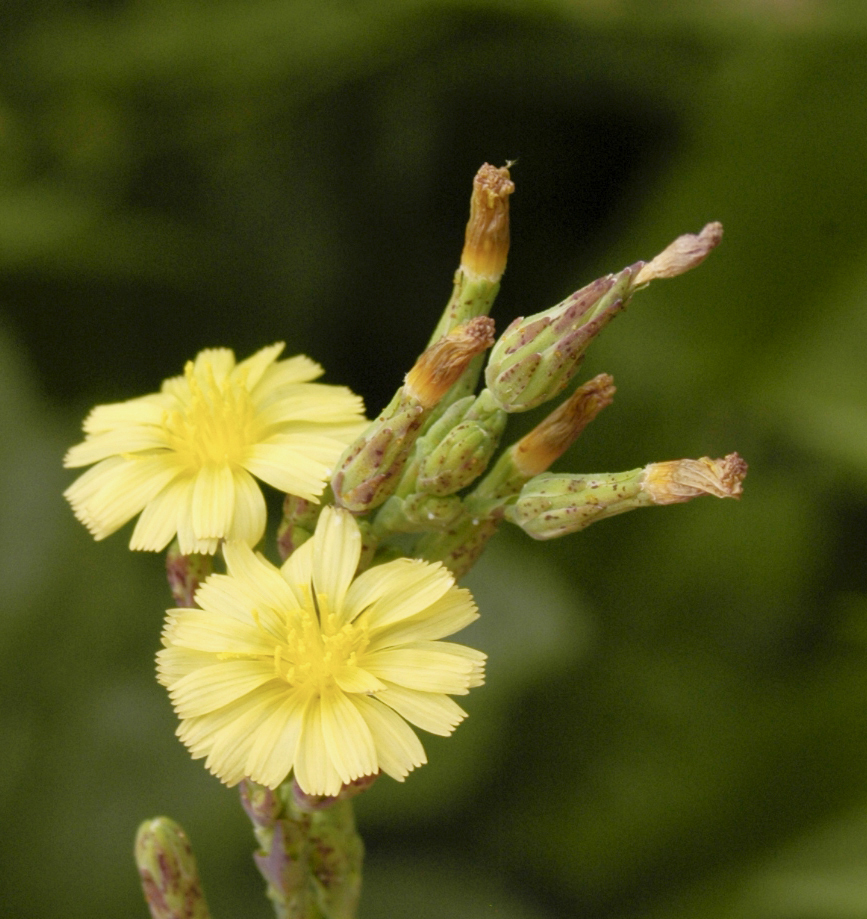
La lechuga espinosa es una hierba anual o bienal resistente que a menudo crece en áreas alteradas. Es conocida por su tallo alto y erguido y sus hojas que se tuercen para alinearse con el sol. Es posible que la reconozcas como un pariente silvestre de la lechuga común de jardín.
De un vistazo
- Nivel de cuidados
- Fácil
- Tipo de planta
- anual herbácea
- Luz
- pleno sol
- Luz en interior
- Sol directo
- Riego
- Cada 7 a 14 días
- Tamaño adulto
- 6 pies
- Ritmo de crecimiento
- Rápido
- Rusticidad
- USDA 4 a 9
- Floración
- Mediados a finales de verano
Cuidados
Esta planta prospera a pleno sol y en suelo bien drenado con una intervención mínima. Ten cuidado con la altura excesiva con poca luz, ya que puede hacer que el tallo se incline o se caiga. Tolera muy bien la sequía una vez establecida.
- Riego
- Riega solo cuando la pulgada superior de tierra se sienta seca al tacto.
- Abonado
- La fertilización generalmente no es necesaria ya que esta planta prospera en suelos pobres y alterados.
- Poda
- Retira los tallos de flores marchitos para evitar la dispersión no deseada de semillas en tu jardín.
- Trasplante
- Esta planta rara vez se cultiva en macetas y no requiere trasplante.
- Suelo
- suelo arenoso o limoso bien drenado
- pH del suelo
- 6.0 a 7.5
- Temperatura
- -15 a 35°C
- Humedad
- 30 a 70%
- Tolerancia a la sequía
- Alta
- Longevidad
- Anual o bienal, típicamente de 1 a 2 años.
- Resistencia a ciervos y conejos
- Moderada
Seguridad
- Personas
- La savia lechosa puede causar dermatitis de contacto en personas sensibles.
- Mascotas
- Esta planta generalmente se considera no tóxica para gatos y perros.
- Niños
- La savia lechosa es amarga y potencialmente irritante si se ingiere en grandes cantidades, así que manténgala alejada de los niños pequeños.
- Alérgenos por contacto
- La savia de látex lechoso puede causar irritación en la piel al contacto.
- Alérgenos en el aire
- El polen puede desencadenar reacciones alérgicas en personas sensibles durante la temporada de floración.
- Comestibilidad
- Si bien las hojas jóvenes son comestibles, las hojas más viejas se vuelven extremadamente amargas y contienen altos niveles de látex que pueden causar malestar digestivo.
Cómo identificarla
- espinas rígidas a lo largo de los nervios centrales de las hojas
- las hojas se tuercen para mirar al sol
- savia blanca lechosa al cortarla
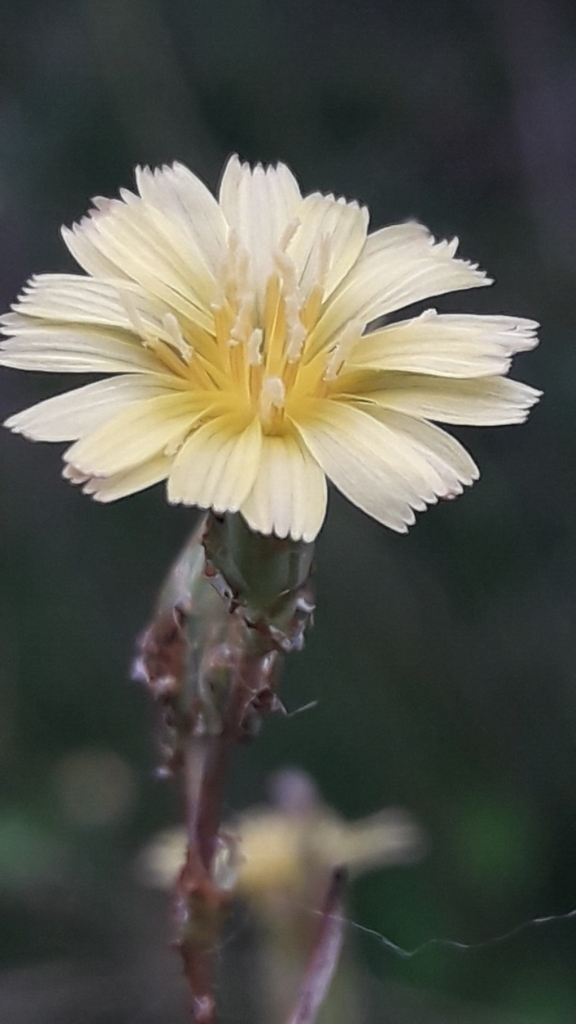
- flores pequeñas parecidas a dientes de león amarillas
- hojas profundamente lobuladas o enteras
- Altura
- 0,3 a 2m
- Anchura
- 0,15 a 0,45m
- Hojas
- verde azulado, verde grisáceo, caducifolio
- Flores
- amarillo, 1 a 2cm
- Frutos
- marrón, canela, Otoño
Problemas a vigilar
- MildiuComún
- PulgonesComún
- Subida a florComún
- Babosas y caracolesPoco común
- Minadores de hojasPoco común
- OídioPoco común
- Quemadura de las puntasPoco común
- Chinche LygusRara
- Mildiu velloso — Crecimiento fúngico que aparece como manchas amarillas en las hojas durante condiciones de humedad.
Por síntoma
Revisa tu lechuga espinosa con una foto
Pocket Botanist mira una foto de tu planta y te dice qué le pasa y qué probar primero.
Cómo cultivarla
- Propagación
- semilla
- Cuándo plantar
- primavera, otoño
- Cuidados en invierno
- La planta típicamente muere hasta el suelo en invierno, dejando las semillas para germinar en primavera.
- En maceta
- No se recomienda para macetas, ya que tiene una raíz pivotante profunda y se propaga agresivamente por semilla.
Semilla
- Recolecta semillas maduras a finales de otoño, una vez que las cabezas de las flores se vuelvan esponjosas.
- Siembra las semillas directamente sobre suelo alterado a principios de primavera u otoño.
- Cubre ligeramente con tierra y mantén húmedo hasta que ocurra la germinación.
Esta planta se cultiva mejor en áreas de praderas silvestres en lugar de parterres formales debido a su agresivo hábito de semillado.
Buenas compañeras
Especies parecidas
- Lactuca virosa — Comparte una apariencia similar y savia lechosa, pero tiene diferentes patrones de serración en las hojas.
Ciencia
- Familia
- Asteraceae
- Género
- Lactuca
- Orden
- Asterales
- Clase
- Magnoliopsida
- Distribución natural
- Europa, Asia Occidental y el Norte de África.
- Conservación
- Esta especie se considera una maleza invasora en muchas regiones fuera de su área de distribución nativa.
Es una especie pionera que coloniza rápidamente el suelo alterado y las áreas baldías.
- Valor para la fauna
- fuente de néctar, planta hospedadora para larvas
- Polinizadores
- abejas, mariposas
- Usos
- recolección, hábitat para la vida silvestre
A lo largo del año
Indicadores ecológicos
- Salinidad
- 2/9
- Luz
- 8/9
- Nutrientes
- 6/9
- Reacción del suelo
- 7/9
- Temperatura
- 5/9
- Humedad
- 4/9
Taxonomía cotejada con GBIF.
Lo que más preguntan
- ¿Es comestible esta planta?
- Las hojas jóvenes son comestibles, pero se vuelven muy amargas a medida que la planta madura.
- ¿Por qué se le llama planta brújula?
- Las hojas rotan para orientarse hacia el norte y el sur para evitar el sol intenso.
De dónde viene el nombre
El nombre Lactuca proviene de la palabra latina para leche, refiriéndose a la savia lechosa, mientras que serriola se refiere a los bordes dentados de las hojas.
Bueno saberlo
- Es el ancestro silvestre de la lechuga de jardín común.
- La planta produce un látex lechoso que históricamente se usaba en la medicina popular.
- Es muy adaptable y prospera en suelos alterados y bordes de carreteras.
También en
Que tu lechuga espinosa siga creciendo
Esta página es una guía general. Guarda tu planta en Pocket Botanist y tendrás recordatorios de cuidado pensados para esta planta, además de un historial de cuidados que muestra qué ha funcionado.
Esta guía se ha generado con IA y se ha cotejado con la taxonomía de GBIF. Es información general, no asesoramiento botánico ni veterinario. Descubre cómo elaboramos estas guías.