 Pocket Botanist
Guide botanique
laitue scariole.
Lactuca serriola
Prononciation lak-TOO-kuh ser-ee-OH-luh
Aussi appelée laitue sauvage


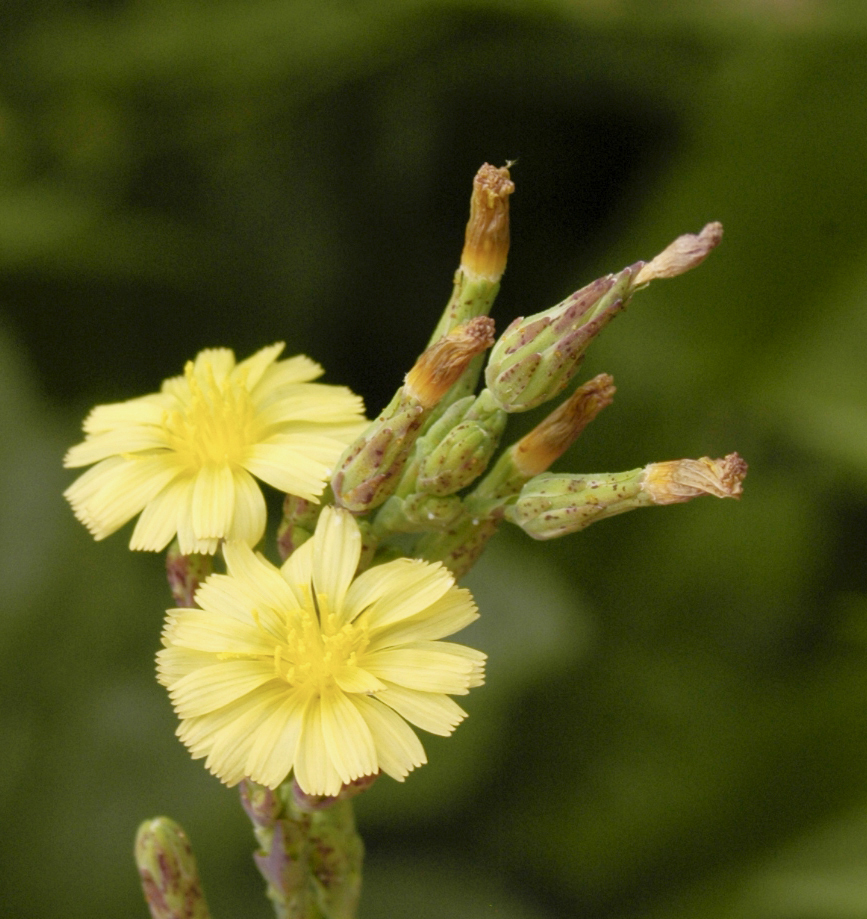
La laitue scariole est une herbe annuelle ou bisannuelle résistante qui pousse souvent dans les zones perturbées. Elle est connue pour sa tige haute et droite et ses feuilles qui s'orientent pour s'aligner avec le soleil. Vous pourriez la reconnaître comme une parente sauvage de la laitue de jardin commune.
En un coup d'œil
- Niveau d'entretien
- Facile
- Type de plante
- annuelle herbacée
- Lumière
- plein soleil
- Lumière en intérieur
- Soleil direct
- Arrosage
- Tous les 7 à 14 jours
- Taille adulte
- 6 pieds
- Croissance
- Rapide
- Rusticité
- USDA 4 à 9
- Floraison
- Mi à fin d'été
Entretien
Cette plante prospère en plein soleil et dans un sol bien drainé avec une intervention minimale. Surveillez une hauteur excessive en cas de faible luminosité, car cela peut faire pencher ou tomber la tige. Elle est très tolérante à la sécheresse une fois établie.
- Arrosage
- Arrosez seulement lorsque le premier centimètre de sol est sec au toucher.
- Engrais
- La fertilisation est généralement inutile car cette plante prospère dans les sols pauvres et perturbés.
- Taille
- Retirez les tiges florales fanées pour éviter la dispersion indésirable des graines dans votre jardin.
- Rempotage
- Cette plante est rarement cultivée en pots et ne nécessite pas de rempotage.
- Sol
- sol sableux ou limoneux bien drainé
- pH du sol
- 6,0 à 7,5
- Température
- -15 à 35°C
- Humidité
- 30 à 70%
- Résistance à la sécheresse
- Élevée
- Durée de vie
- Annuelle ou bisannuelle, généralement 1 à 2 ans.
- Résistance aux chevreuils et lapins
- Moyenne
Sécurité
- Humains
- La sève laiteuse peut provoquer une dermatite de contact chez les personnes sensibles.
- Animaux
- Cette plante est généralement considérée comme non toxique pour les chats et les chiens.
- Enfants
- La sève laiteuse est amère et potentiellement irritante si ingérée en grandes quantités, alors tenez-la à l'écart des jeunes enfants.
- Allergènes de contact
- La sève laiteuse de latex peut provoquer une irritation cutanée au contact.
- Allergènes aéroportés
- Le pollen peut déclencher des réactions allergiques chez les personnes sensibles pendant la saison de floraison.
- Comestibilité
- Bien que les jeunes feuilles soient comestibles, les feuilles plus âgées deviennent extrêmement amères et contiennent des niveaux élevés de latex qui peuvent provoquer des troubles digestifs.
Comment l'identifier
- épines rigides le long des nervures médianes des feuilles
- les feuilles s'orientent pour faire face au soleil
- sève blanc laiteux lorsqu'elle est coupée
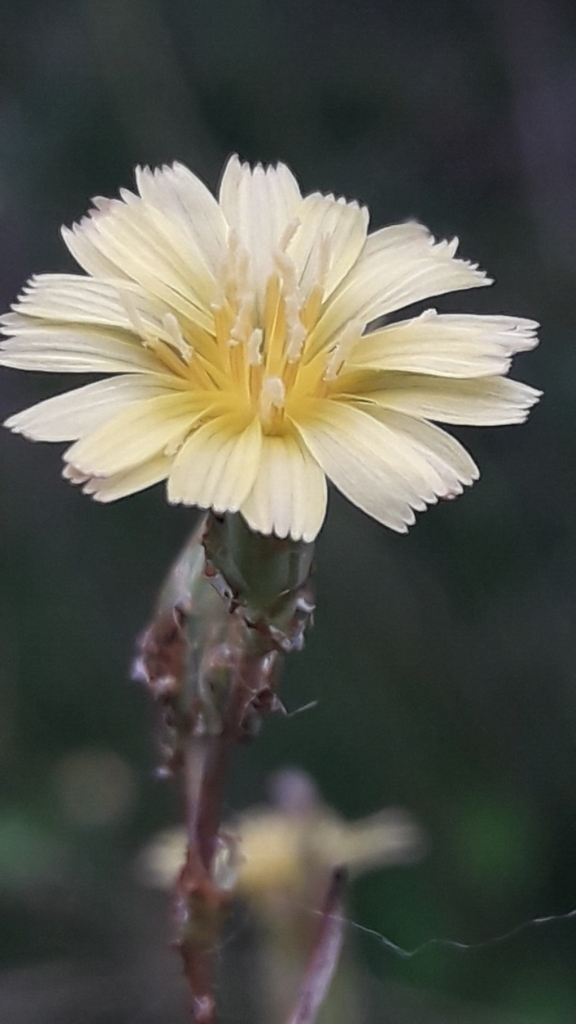
- petites fleurs jaunes semblables à celles du pissenlit
- feuilles profondément lobées ou entières
- Hauteur
- 0,3 à 2m
- Envergure
- 0,15 à 0,45m
- Feuilles
- blue-green, grey-green, deciduous
- Fleurs
- yellow, 1 à 2cm
- Fruits
- brown, tan, Autumn
Problèmes à surveiller
- MildiouCourant
- Montée en grainesCourant
- PuceronsCourant
- Brûlure de la pointe des feuillesPeu courant
- Limaces et escargotsPeu courant
- MineusesPeu courant
- OïdiumPeu courant
- Punaise terneRare
- Mildiou downy — Croissance fongique apparaissant sous forme de taches jaunes sur les feuilles par temps humide.
Par symptôme
Vérifie la santé de ta plante en photo
Pocket Botanist analyse une photo de ta plante et te dit ce qui ne va pas et quoi essayer en premier.
La cultiver
- Multiplication
- seed
- Quand planter
- spring, autumn
- Hivernage
- La plante meurt généralement jusqu'au sol en hiver, laissant les graines germer au printemps.
- En pot
- Il n'est pas recommandé pour les conteneurs car il possède une racine pivotante profonde et se propage agressivement par les graines.
Seed
- Collectez les graines mûres à la fin de l'automne une fois que les têtes florales deviennent duveteuses.
- Semez les graines directement sur un sol perturbé au début du printemps ou de l'automne.
- Couvrez légèrement de terre et gardez humide jusqu'à la germination.
Cette plante est mieux cultivée dans les prairies sauvages plutôt que dans les plates-bandes de jardin formelles en raison de son habitude de semer de manière agressive.
Bonnes associations
- Achillée millefeuille — Ils partagent des exigences similaires en matière de sol et de lumière dans les champs ouverts.
- Chicorée — Les deux sont des plantes robustes et tolérantes à la sécheresse qui prospèrent dans des habitats perturbés similaires.
Espèces similaires
- Lactuca virosa — Elle partage une apparence et une sève laiteuse similaires mais présente des motifs de dentelure des feuilles différents.
Science
- Famille
- Asteraceae
- Genre
- Lactuca
- Ordre
- Asterales
- Classe
- Magnoliopsida
- Région d'origine
- Europe, Asie occidentale et Afrique du Nord.
- Préservation
- Cette espèce est considérée comme une mauvaise herbe envahissante dans de nombreuses régions en dehors de son aire de répartition native.
C'est une espèce pionnière qui colonise rapidement les terrains perturbés et les friches.
- Intérêt pour la faune
- nectar source, larval host plant
- Pollinisateurs
- abeilles, papillons
- Utilisations
- foraging, wildlife habitat
Au fil des saisons
Repères écologiques
- Salinité
- 2/9
- Lumière
- 8/9
- Nutriments
- 6/9
- Réaction du sol
- 7/9
- Température
- 5/9
- Humidité
- 4/9
Taxonomie vérifiée avec le GBIF.
Ce qu'on demande souvent
- Cette plante est-elle comestible?
- Les jeunes feuilles sont comestibles, mais elles deviennent très amères à mesure que la plante mûrit.
- Pourquoi est-elle appelée plante boussole?
- Les feuilles tournent pour faire face au nord et au sud afin d'éviter le soleil intense.
D'où vient le nom
Le nom Lactuca vient du latin 'lait', faisant référence à la sève laiteuse, tandis que serriola fait référence aux bords dentelés des feuilles.
Bon à savoir
- C'est l'ancêtre sauvage de la laitue cultivée courante.
- La plante produit un latex laiteux qui était historiquement utilisé en médecine populaire.
- Elle est très adaptable et prospère dans les sols perturbés et au bord des routes.
Aussi dans
Garde ta plante en pleine forme
Cette page est un guide général. Enregistre ta plante dans Pocket Botanist et tu reçois des rappels d'entretien adaptés à cette plante, ainsi qu'un historique d'entretien qui montre ce qui a marché.
Ce guide a été généré par IA et vérifié avec la taxonomie du GBIF. Il s'agit d'informations générales, et non de conseils horticoles ou vétérinaires. Découvre comment nous concevons ces guides.