 Pocket Botanist
Guide botanique
Chicorée.
Cichorium intybus L.
Prononciation si-KOR-ee-um in-TY-bus
Aussi appelée Belgium Endive, Pissenlit, Barbeau, Chicorée sauvage, Chicorée, Chicorée


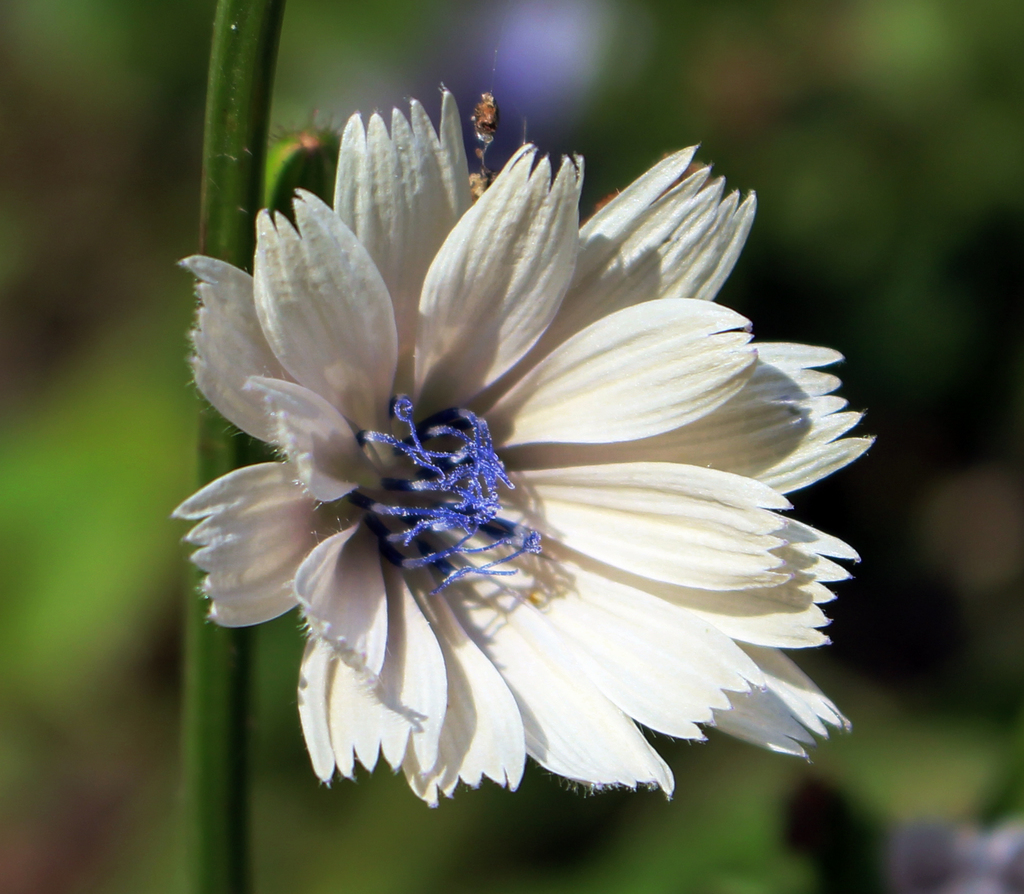
La chicorée est une plante herbacée vivace rustique, connue pour ses fleurs d'un bleu éclatant et ses racines comestibles. Elle pousse bien dans de nombreuses conditions et se trouve souvent au bord des routes. Vous aimerez la facilité avec laquelle elle pousse dans votre propre jardin.

En un coup d'œil
- Niveau d'entretien
- Facile
- Type de plante
- Herbe vivace
- Lumière
- Plein soleil
- Lumière en intérieur
- Soleil direct
- Arrosage
- Tous les 7 à 14 jours
- Taille adulte
- 1 à 1,5 mètre
- Croissance
- Moyenne
- Rusticité
- USDA 3 à 10
- Floraison
- Mi-été à début d'automne
Entretien
Plantez dans un sol bien drainé et assurez-vous qu'elle reçoive beaucoup de soleil. Surveillez le flétrissement pendant les fortes chaleurs et gardez le sol humide mais pas détrempé. Retirez les fleurs fanées si vous souhaitez prolonger la période de floraison.
- Arrosage
- Arrosez régulièrement jusqu'à l'établissement, puis laissez le sol sécher légèrement entre les arrosages.
- Engrais
- Appliquez un engrais équilibré une fois pendant la saison de croissance.
- Taille
- Taillez les tiges florales fanées pour garder la plante nette.
- Rempotage
- Rempotez si la plante devient à l'étroit dans son pot.
- Sol
- Sol limoneux bien drainé
- pH du sol
- 6,0 à 7,5
- Température
- -20 à 35°C
- Humidité
- 30 à 70%
- Résistance à la sécheresse
- Élevée
- Durée de vie
- Vivace, généralement 3 à 5 ans.
- Résistance aux chevreuils et lapins
- Moyenne
Signes qu'il faut rempoter
- Les racines sortent des trous de drainage.
- Croissance ralentie malgré des soins réguliers.
Sécurité
- Humains
- La plante est généralement considérée comme sûre, mais peut provoquer une dermatite de contact chez les personnes sensibles.
- Animaux
- La chicorée est généralement considérée comme non toxique pour les chats et les chiens.
- Enfants
- Il n'y a pas de problèmes de sécurité spécifiques pour les enfants, mais les tiges peuvent être légèrement rugueuses.
- Allergènes de contact
- La sève laiteuse peut provoquer une irritation cutanée ou des éruptions cutanées au contact.
- Allergènes aéroportés
- Le pollen de chicorée peut déclencher des symptômes de rhume des foins chez certaines personnes à la fin de l'été.
- Comestibilité
- Bien que les feuilles et les racines soient couramment consommées, il faut les consommer avec modération car une forte consommation peut provoquer une gêne digestive.
Comment l'identifier
- Fleurs bleu vif ressemblant à des marguerites
- Feuilles profondément lobées ressemblant à celles du pissenlit
- Tiges rigides et ramifiées
- Longue racine pivotante charnue
- Hauteur
- 0,3 à 1,5m
- Envergure
- 0,3 à 0,6m
- Feuilles
- vert, caduc
- Fleurs
- bleu, blanc, 3 à 5cm
Problèmes à surveiller
- Limaces et escargotsCourant
- Montée en grainesCourant
- PuceronsCourant
- RouilleCourant
- Jaunisse de l'asterPeu courant
- OïdiumPeu courant
- Pourriture des racinesPeu courant
Par symptôme
Vérifie la santé de ta plante en photo
Pocket Botanist analyse une photo de ta plante et te dit ce qui ne va pas et quoi essayer en premier.
La cultiver
- Multiplication
- semis
- Quand planter
- printemps, automne
- Hivernage
- Le feuillage disparaît en hiver, mais la racine pivotante reste résistante et repoussera au printemps.
- En pot
- La chicorée pousse bien dans des conteneurs profonds, d'au moins 30 cm de profondeur, pour accueillir sa longue racine pivotante.
Semis
- Semez les graines directement dans le jardin au printemps.
- Recouvrez légèrement de terre.
- Gardez la zone humide jusqu'à la germination.
Plantez la chicorée en plein soleil pour assurer la meilleure production de fleurs et le développement des racines.
Bonnes associations
- Carotte — Ils partagent des exigences de sol similaires.
- Fenouil de Florence — Ils poussent bien ensemble dans les jardins d'herbes ensoleillés.
Espèces similaires
- Endive — C'est un proche parent culinaire souvent cultivé pour les salades.
Science
- Famille
- Asteraceae
- Genre
- Cichorium
- Ordre
- Asterales
- Classe
- Magnoliopsida
- Région d'origine
- Europe, Asie occidentale et Afrique du Nord.
- Préservation
- Cette plante est largement naturalisée et ne pose aucun problème de conservation.
Elle prospère dans les sols perturbés et les bords de route où elle peut surpasser d'autres espèces grâce à sa profonde racine pivotante.
- Intérêt pour la faune
- source de nectar
- Pollinisateurs
- abeilles, papillons
- Utilisations
- légumes culinaires, substitut de café, ornementale, jardin pour pollinisateurs
Au fil des saisons
Repères écologiques
- Nutriments
- 5/9
- Humidité
- 4/9
- Salinité
- 3/9
- Réaction du sol
- 7/9
- Lumière
- 8/9
- Température
- 5/9
Taxonomie vérifiée avec le GBIF.
Ce qu'on demande souvent
- La chicorée est-elle une mauvaise herbe ?
- Elle est souvent considérée comme une mauvaise herbe dans les pâturages et les bords de route, bien qu'elle soit cultivée intentionnellement pour l'alimentation.
- Comment récolter les racines ?
- On les déterre à la fin de l'automne, lorsque la plante a fini de fleurir.
D'où vient le nom
Le nom Cichorium vient du mot grec kichore, tandis que intybus dérive du latin pour endive.
Bon à savoir
- Les fleurs de chicorée s'ouvrent généralement le matin et se ferment dans l'après-midi.
- La plante était historiquement utilisée comme remède populaire pour la santé du foie.
- C'est un proche parent de l'endive et de la chicorée.
Aussi dans
Garde ta plante en pleine forme
Cette page est un guide général. Enregistre ta plante dans Pocket Botanist et tu reçois des rappels d'entretien adaptés à cette plante, ainsi qu'un historique d'entretien qui montre ce qui a marché.
Ce guide a été généré par IA et vérifié avec la taxonomie du GBIF. Il s'agit d'informations générales, et non de conseils horticoles ou vétérinaires. Découvre comment nous concevons ces guides.