 Pocket Botanist
Pflanzenratgeber
Prickly Lettuce.
Lactuca serriola
Aussprache LAK-too-kuh ser-ee-OH-luh
Auch bekannt als China lettuce, Compass Plant, Compassplant


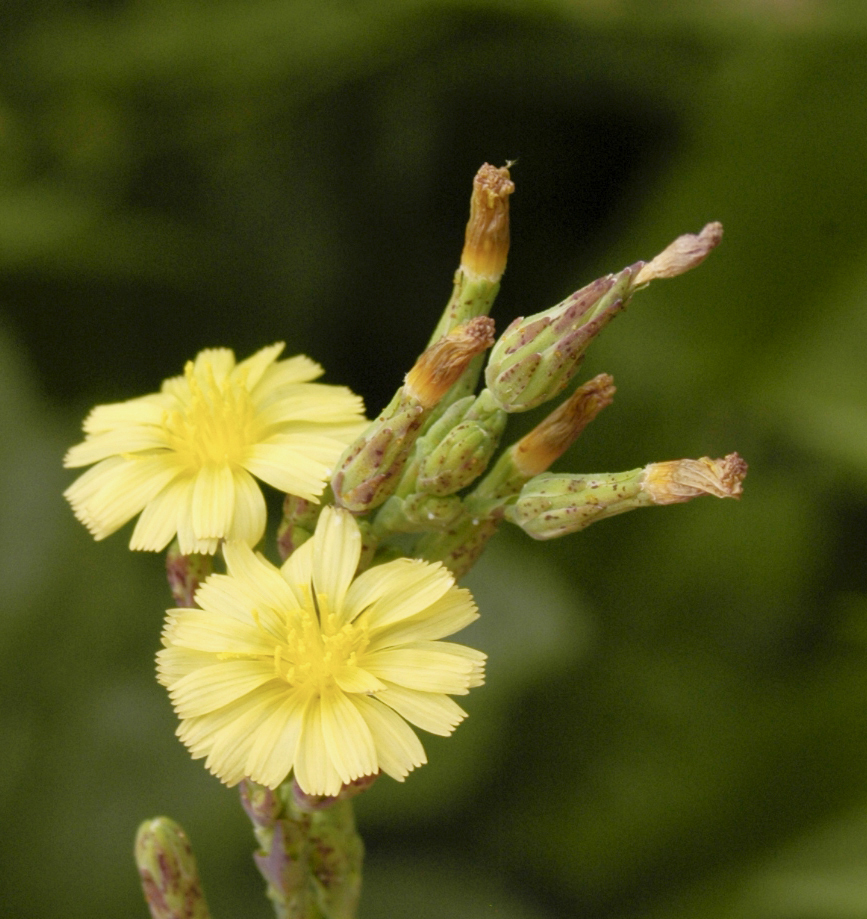
Prickly lettuce is an annual or biennial plant native to Eurasia and North Africa. It's known for its spiny leaves and ability to grow in disturbed areas. This plant is an ancestor of cultivated lettuce varieties.
Auf einen Blick
- Care level
- Easy
- Plant type
- Annual or Biennial
- Light
- Full sun
- Indoor light
- direct
- Water
- Every 7 to 14 days
- Mature size
- Up to 6 feet tall
- Growth rate
- fast
- Hardiness
- USDA 3 to 10
- Bloom time
- Summer
Pflege
This plant is very low maintenance and thrives in well-drained soil. It readily self-seeds, so it can spread quickly in favorable conditions. Deadheading can help control its spread if desired.
- Watering
- Water when the top inch of soil feels dry; drought tolerant once established.
- Feeding
- Does not require regular fertilizing; can grow in poor soil.
- Pruning
- Prune to maintain shape or remove spent flower stalks to prevent excessive seeding.
- Repotting
- Typically grown as an annual or biennial; not usually repotted.
- Soil
- Well-drained soil
- Soil pH
- Any
- Temperature
- -18 to 35°C
- Humidity
- 20 to 50%
Sicherheit
- Edibility
- While young leaves can be eaten, they become very bitter with age. Best to avoid consuming mature plants.
So erkennst du die Pflanze
- Spiny, toothed leaves
- Tall, erect stem
- Yellow, dandelion-like flowers
- Milky sap when cut
- Often has a basal rosette
- Height
- 0.6 to 1.8m
- Spread
- 0.3 to 0.6m
- Leaves
- Green, Blue-green, Annual or Biennial
- Flowers
- Yellow, 1 to 2cm
Häufige Probleme
- Aphids — Small, sap-sucking insects that can cluster on new growth.
- Powdery Mildew — A white, powdery fungal growth on leaves, common in humid conditions.
Standort und Pflege
- Propagation
- Seed
- When to plant
- Spring, Fall
As a fast-growing annual, it doesn't have many specific companion planting benefits in a traditional garden guild.
Ähnliche Arten
- Garden Lettuce — Shares a common ancestor and general leaf shape, though garden lettuce lacks the spiny margins and bitterness.
- Wild Lettuce — Similar in growth habit and milky sap, but typically has less spiny leaves and is known for different properties.
Botanisches
- Family
- Asteraceae
- Genus
- Lactuca
- Order
- Asterales
- Class
- Magnoliopsida
- Native range
- Europe, North Africa, Western Asia
It thrives in open, disturbed habitats like roadsides, fields, and waste areas, often colonizing bare ground quickly.
- Value to wildlife
- nectar source
- Pollinators
- bees, butterflies, moths
- Uses
- Wildflower, Attracts pollinators
Im Jahresverlauf
Ökologische Zeigerwerte
- Salinity
- 2/9
- Soil reaction
- 6/9
- Light
- 8/9
- Temperature
- 7/9
- Moisture
- 3/9
- Nutrients
- 6/9
Taxonomie abgeglichen mit GBIF.
Häufige Fragen
- Is prickly lettuce edible?
- Young leaves can be eaten, but they quickly become very bitter. It's generally not recommended for consumption.
- Will prickly lettuce spread aggressively?
- Yes, it readily self-seeds and can spread quickly in disturbed areas or gardens.
- What do the flowers look like?
- They are small, yellow, and resemble dandelion flowers.
- Does it need special soil?
- No, it's adaptable and grows in a variety of well-drained soils.
Woher der Name kommt
The common name 'Prickly Lettuce' comes from the sharp, spiny edges of its leaves. The scientific name 'Lactuca' is Latin for 'milk', referring to the milky sap, and 'serriola' is derived from 'serra', Latin for 'saw', referencing the leaf margins.
Gut zu wissen
- It's thought to be one of the wild ancestors of modern garden lettuce.
- The leaves tend to twist and point downwards, acting like a compass needle in the sun.
- It can grow quite tall, sometimes reaching over six feet.
Geht es deiner prickly lettuce nicht gut?
Diese Seite bietet allgemeine Infos. Pocket Botanist erkennt Probleme anhand eines Fotos deiner echten Pflanze, passt das Gießen an dein Licht und deinen Standort an und erinnert dich an die Pflege.
Dieser Ratgeber wurde mit KI erstellt und mit der GBIF-Taxonomie abgeglichen. Er dient zur allgemeinen Information und ersetzt keine gärtnerische oder tierärztliche Beratung. Hier erfährst du, wie wir diese Ratgeber erstellen.