 Pocket Botanist
Plant guide
Shepherd's purse.
Capsella bursa-pastoris
Pronounced kap-SEL-uh BUR-suh pas-TOR-is
Also known as Case Weed, Common Shepherd's-purse



Scan with your phone's camera to get the app
Or go to pocketbotanist.app/get on your phone
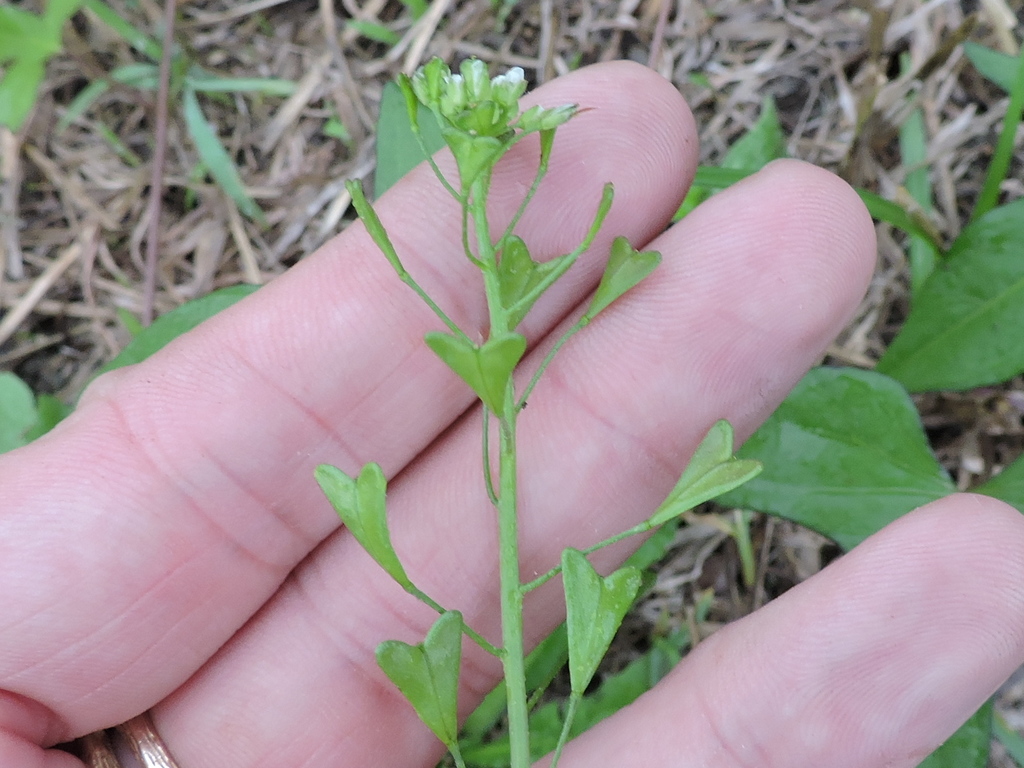
Shepherd's purse is a common, hardy annual weed that is often found growing in disturbed soil. It is known for its unique, heart shaped seed pods that resemble little pouches. You will find it blooming throughout much of the year in temperate climates.

At a glance
- Care level
- Easy
- Plant type
- Annual herb
- Light
- Full sun to partial shade
- Indoor light
- Direct sun
- Water
- Every 3 to 7 days
- Mature size
- 1.5 feet
- Growth rate
- Fast
- Hardiness
- USDA 3 to 9
- Bloom time
- Early spring to late autumn
Care
This plant is quite resilient and typically thrives without any human intervention. Keep an eye out for overcrowding if you are letting it grow in a garden bed. It prefers cool weather and will often go to seed quickly once temperatures rise.
- Watering
- Keep the soil consistently moist but not waterlogged for best growth.
- Feeding
- This plant generally does not require supplemental fertilizer.
- Pruning
- Remove spent flower stalks if you want to prevent it from spreading seeds.
- Repotting
- As an annual, this plant completes its life cycle in one season and does not need repotting.
- Soil
- Well draining soil
- Soil pH
- 6.0 to 7.5
- Temperature
- -15 to 30°C
- Humidity
- 40 to 80%
- Drought tolerance
- Moderate
Safety
- People
- This plant is generally considered non-toxic to humans.
- Children
- The small seed pods could pose a minor choking hazard if ingested in large quantities by small children.
- Contact allergens
- Some individuals may experience mild skin irritation from handling the foliage.
- Airborne allergens
- The pollen can cause mild respiratory irritation in sensitive individuals.
- Edibility
- While the leaves are edible, avoid harvesting from areas treated with herbicides or polluted soil as this plant readily accumulates contaminants.
How to identify it
- Heart shaped flat seed pods
- Basal rosette of lobed leaves
- Small white four petaled flowers
- Slender upright flowering stems
- Height
- 0.1 to 0.5m
- Spread
- 0.05 to 0.2m
- Leaves
- green, blue-green, deciduous
- Flowers
- white, 0.2 to 0.4cm
- Fruit
- green, brown, Spring to autumn
Problems to watch for
- AphidsCommon
- Downy MildewCommon
- Flea BeetlesUncommon
- White RustUncommon
Check your shepherd's purse from a photo
Pocket Botanist looks at a photo of your plant and tells you what's wrong and what to try first.
Scan with your phone's camera to get the app
Or go to pocketbotanist.app/get on your phone
Growing it
- Propagation
- seed
- When to plant
- spring, autumn
Because it is a prolific self-seeder, keep it away from areas where you want a permanent, non-weedy landscape.
Grows well with
Similar species
- Field Pennycress · It has similar white flowers and is also a common agricultural weed.
Science
- Family
- Brassicaceae
- Genus
- Capsella
- Order
- Brassicales
- Class
- Magnoliopsida
- Native range
- Europe and parts of Western Asia, now naturalized globally.
- Conservation
- This plant is a widespread, common weed and is not of conservation concern.
It thrives in disturbed soil and open areas, quickly colonizing bare ground through prolific seed production.
- Value to wildlife
- nectar source, early season forage
- Pollinators
- bees, butterflies, beetles
- Uses
- culinary greens, traditional herbal medicine, wildlife forage
Through the year
Ecological indicators
- Salinity
- 2/9
- Soil reaction
- 6/9
- Light
- 7/9
- Temperature
- 5/9
- Moisture
- 5/9
- Nutrients
- 6/9
Taxonomy resolved against GBIF.
Questions people ask
- Is shepherd's purse a weed?
- Yes, it is widely considered a common garden and agricultural weed.
- Can I eat it?
- Yes, the young leaves are edible and have a peppery taste similar to arugula.
Where the name comes from
The name Capsella bursa-pastoris translates to little box of the shepherd's purse, referring to the shape of the seed pods.
Good to know
- Shepherd's purse is one of the most widely distributed plants in the world.
- The plant can produce multiple generations of seeds in a single growing season.
- It is a member of the Brassicaceae family, making it a relative of mustard and cabbage.
- The seeds can remain viable in the soil for several years.
Keep your shepherd's purse growing
This page is a general guide. Save your plant in Pocket Botanist and you get care reminders timed for this plant, plus a care history that shows what worked.
Scan with your phone's camera to get the app
Or go to pocketbotanist.app/get on your phone
This guide was generated with AI on and checked against GBIF taxonomy. It is general information, not horticultural or veterinary advice. Read about how we build these guides.