 Pocket Botanist
Plant guide
Sweet Alyssum.
Lobularia maritima (L.) Desv.
Pronounced lob-yoo-LAIR-ee-uh muh-RIT-ih-muh
Also known as Sweet Alison, Sweet Alyssum, Sweet-alice



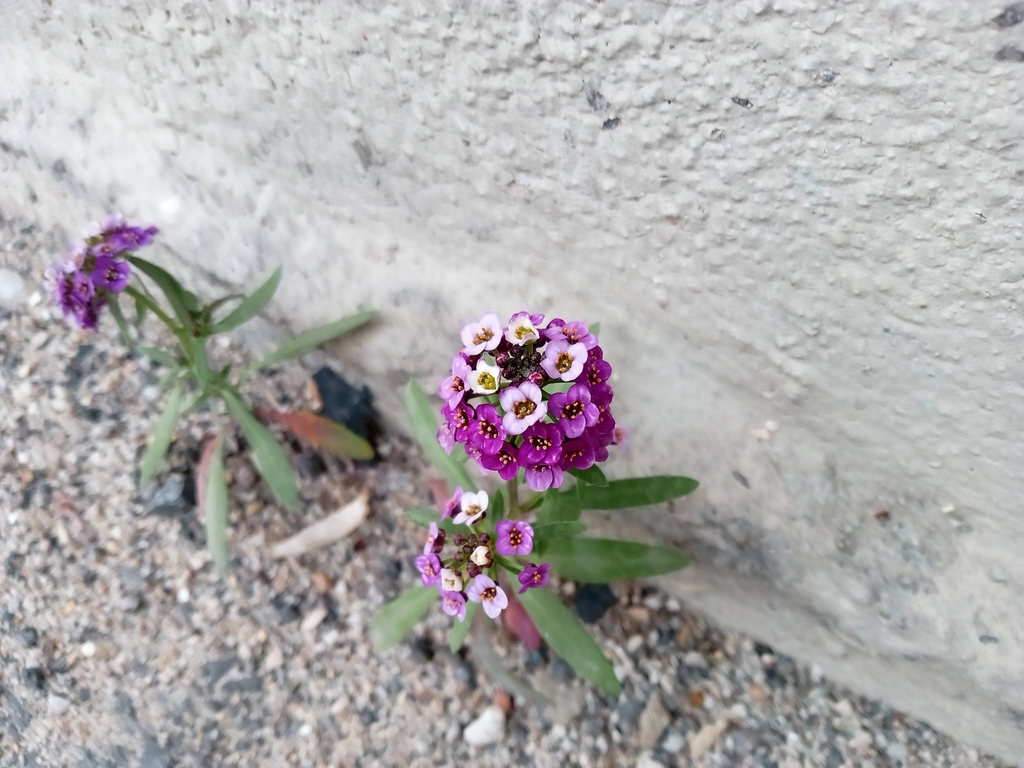
Sweet Alyssum is a charming, low growing plant that produces masses of tiny, honey scented flowers. It is a favorite for borders and containers because it blooms so profusely. You will love how it fills in gaps with its delicate, carpet like growth.
At a glance
- Care level
- Easy
- Plant type
- Annual
- Light
- Full sun to partial shade
- Indoor light
- Direct sun
- Water
- Every 2 to 4 days
- Mature size
- 6 to 12 inches tall
- Growth rate
- Fast
- Hardiness
- USDA 9 to 11
- Bloom time
- Late spring to frost
Care
Keep the soil consistently moist but never soggy to encourage continuous blooming. If the plant gets leggy in midsummer, trim it back to stimulate a fresh flush of flowers. Watch for wilting, which indicates the plant needs a drink immediately.
- Watering
- Water whenever the top inch of soil feels dry to the touch.
- Feeding
- Apply a balanced liquid fertilizer once a month to support heavy blooming.
- Pruning
- Shear back the plant by one third if it becomes leggy or stops flowering.
- Repotting
- Since this is typically grown as an annual, repotting is usually not necessary.
- Soil
- Well draining, fertile soil
- Soil pH
- 6.0 to 7.5
- Temperature
- 5 to 30°C
- Humidity
- 40 to 70%
- Drought tolerance
- Moderate
- Lifespan
- Annual, or short-lived perennial in frost-free climates.
- Fragrance
- Strong
- Deer and rabbits
- Moderate
Signs it needs repotting
- Roots growing out of the drainage holes.
- Water running straight through the pot without soaking in.
- Stunted growth despite regular feeding.
Safety
- People
- This plant is not considered toxic to humans.
- Children
- The small flowers could be a choking hazard if ingested by very young children.
- Contact allergens
- Some individuals may experience mild skin irritation from handling the foliage.
- Airborne allergens
- The pollen can trigger mild hay fever symptoms in sensitive individuals during peak bloom.
- Edibility
- While the flowers are edible, they are often grown for ornamental use and may have been treated with pesticides.
How to identify it
- Tiny four petaled flowers
- Strong honey like fragrance
- Narrow lance shaped leaves
- Low growing mat forming habit
- Height
- 0.1 to 0.3m
- Spread
- 0.2 to 0.4m
- Leaves
- gray-green, semi-evergreen
- Flowers
- white, purple, pink, 0.5 to 1cm
Problems to watch for
- AphidsCommon
- Downy MildewCommon
- Root RotUncommon
- Slugs and SnailsUncommon
By symptom
Check your sweet alyssum from a photo
Pocket Botanist looks at a photo of your plant and tells you what's wrong and what to try first.
Growing it
- Propagation
- seed, cuttings
- When to plant
- spring, early autumn
- Overwintering
- In cold climates, it is treated as an annual and discarded after frost. In mild zones, cut it back to maintain a tidy shape.
- In containers
- It is excellent for containers and hanging baskets, requiring a pot at least 15 cm wide.
Seed
- Sow seeds directly on the soil surface in spring.
- Press seeds lightly into the soil without covering, as they need light to germinate.
- Keep the soil consistently moist until seedlings emerge.
Plant sweet alyssum near brassica crops to attract hoverflies, which prey on aphids.
Grows well with
- Pansy — They share similar cool-season preferences and look lovely together in containers.
- Petunia — The mounding habit of alyssum complements the trailing nature of petunias.
Similar species
- Basket of Gold — It is another low-growing, yellow-flowered member of the mustard family.
Science
- Family
- Brassicaceae
- Genus
- Lobularia
- Order
- Brassicales
- Class
- Magnoliopsida
- Native range
- Mediterranean region
- Conservation
- This plant is not of conservation concern and is widely naturalized in many regions.
It is a resilient plant that often colonizes rocky or sandy coastal soils where other plants struggle.
- Value to wildlife
- nectar source, attracts beneficial predatory insects
- Pollinators
- bees, butterflies
- Uses
- ground cover, container filler, edging, pollinator garden
Through the year
Ecological indicators
- Light
- 7/9
- Soil reaction
- 6/9
- Nutrients
- 4/9
- Salinity
- 4/9
- Temperature
- 6/9
- Moisture
- 5/9
Taxonomy resolved against GBIF.
Questions people ask
- Does it need deadheading?
- Shearing it back after the first flush of blooms encourages a fresh wave of flowers.
- Can I grow it in shade?
- It prefers full sun but will tolerate light shade, though it may bloom less profusely.
Where the name comes from
Lobularia refers to the small, pod-like fruits, while maritima reflects its natural habitat along coastal areas.
Good to know
- The name Lobularia comes from the Latin word for a small pod.
- It is a member of the mustard family, Brassicaceae.
- It thrives in cooler weather and often slows down during the peak heat of summer.
- It is an excellent companion for vegetable gardens to draw in pollinators.
Keep your sweet alyssum growing
This page is a general guide. Save your plant in Pocket Botanist and you get care reminders timed for this plant, plus a care history that shows what worked.
This guide was generated with AI and checked against GBIF taxonomy. It is general information, not horticultural or veterinary advice. Read about how we build these guides.