 Pocket Botanist

Check these first
- Inspect the undersides of every leaf for small insects or eggs.
- Look for green caterpillars resting along the leaf veins.
- Check for sticky residue on the foliage.
Likely causes
Cabbage loopers
Most likelyHow to tell: You will see large, irregular holes chewed into the leaves and small green caterpillars hiding on the undersides.
What to do: Pick the caterpillars off by hand in the early morning or evening. You can also cover your plants with a lightweight floating row cover to keep moths from laying eggs.
Aphids
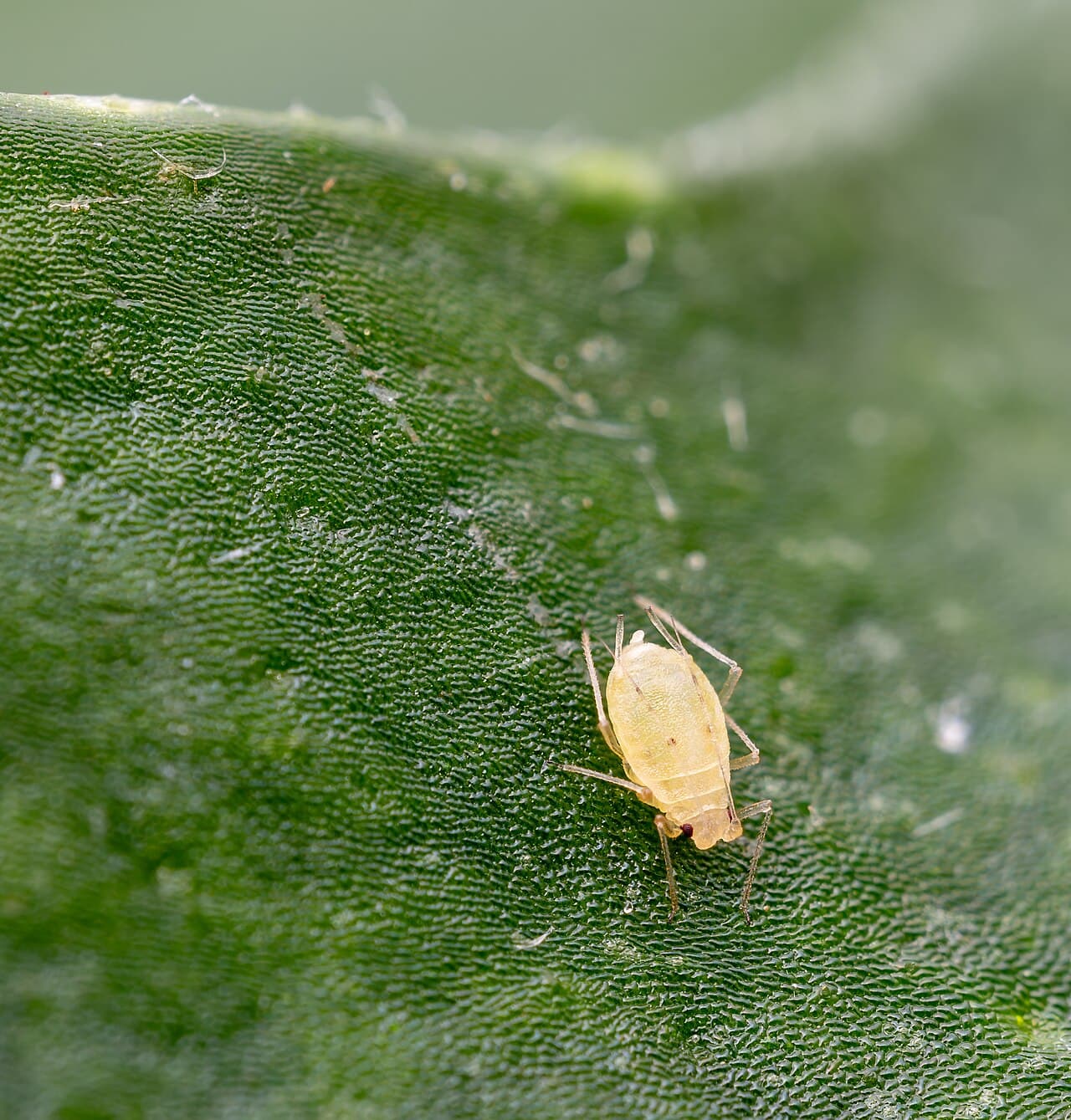
Most likelyHow to tell: These tiny, soft bodied insects cluster in large groups on the undersides of leaves or near the stems. They cause leaves to look distorted or sticky.
What to do: Spray the leaves with a strong stream of water from your hose to knock them off. If the infestation is heavy, apply insecticidal soap according to the label directions.
Find out what's wrong with your kale
The list above covers the usual causes. Pocket Botanist looks at a photo of your actual plant and tells you the likely cause, how serious it is, and what to try first. Identification and a health check are free.



Scan with your phone's camera to get the app
Or go to pocketbotanist.app/get on your phone
When to worry
Small amounts of damage are normal for outdoor kale, but you should act if the plant stops growing or the leaves become heavily skeletonized.
Stopping it coming back
Use floating row covers early in the season to prevent moths from landing on your plants. Keep the area around your kale free of weeds that might harbor pests.
Kale: pests? Check yours with a photo
Every plant is a little different. Take a photo of your kale and Pocket Botanist tells you which cause is most likely, how serious it is, and what to try first. A few checks a day are free. Save the plant and you get care reminders timed for it.
Scan with your phone's camera to get the app
Or go to pocketbotanist.app/get on your phone
Get the app · Or check it from a photo now, free
Questions people ask
- Are the leaves safe to eat if they have holes?
- Yes, just wash the leaves thoroughly to remove any remaining insects or debris. You can trim away the heavily damaged parts before cooking.
- Do I need to use harsh chemicals?
- No, physical removal and gentle soaps are usually enough for kale. Avoid heavy pesticides since you are eating the leaves.
Guides to these causes
More problems with Kale
- Why are my kale leaves turning yellow?
- Why is my kale plant drooping?
- Why is my kale plant wilting and the roots look mushy?
- Why is my kale growing tall and thin?
- Why are the edges of my kale leaves turning brown?
- Why is my kale dropping its leaves?
- Why are there spots on my kale leaves?
- Why are my kale leaves curling?
This article was generated with AI on from the plant’s care profile and is general information, not horticultural advice. Read about how we build these guides.