 Pocket Botanist

Check these first
- Turn the leaves over. Most pests feed on the undersides and along the stems, where they're easy to miss.
- Feel for sticky leaves, or a shiny film on whatever sits below the plant. That's honeydew, left by aphids, scale insects and mealybugs.
- Look for fine webbing between leaves and stems. It's a sign of spider mites, which love warm, dry air.
- Check new shoots and buds for clusters of small green, black or white insects.
- Keep a new or affected plant away from your others until you're sure it's clear.
Most common causes
The causes our guides to 1,475 plants name most often.
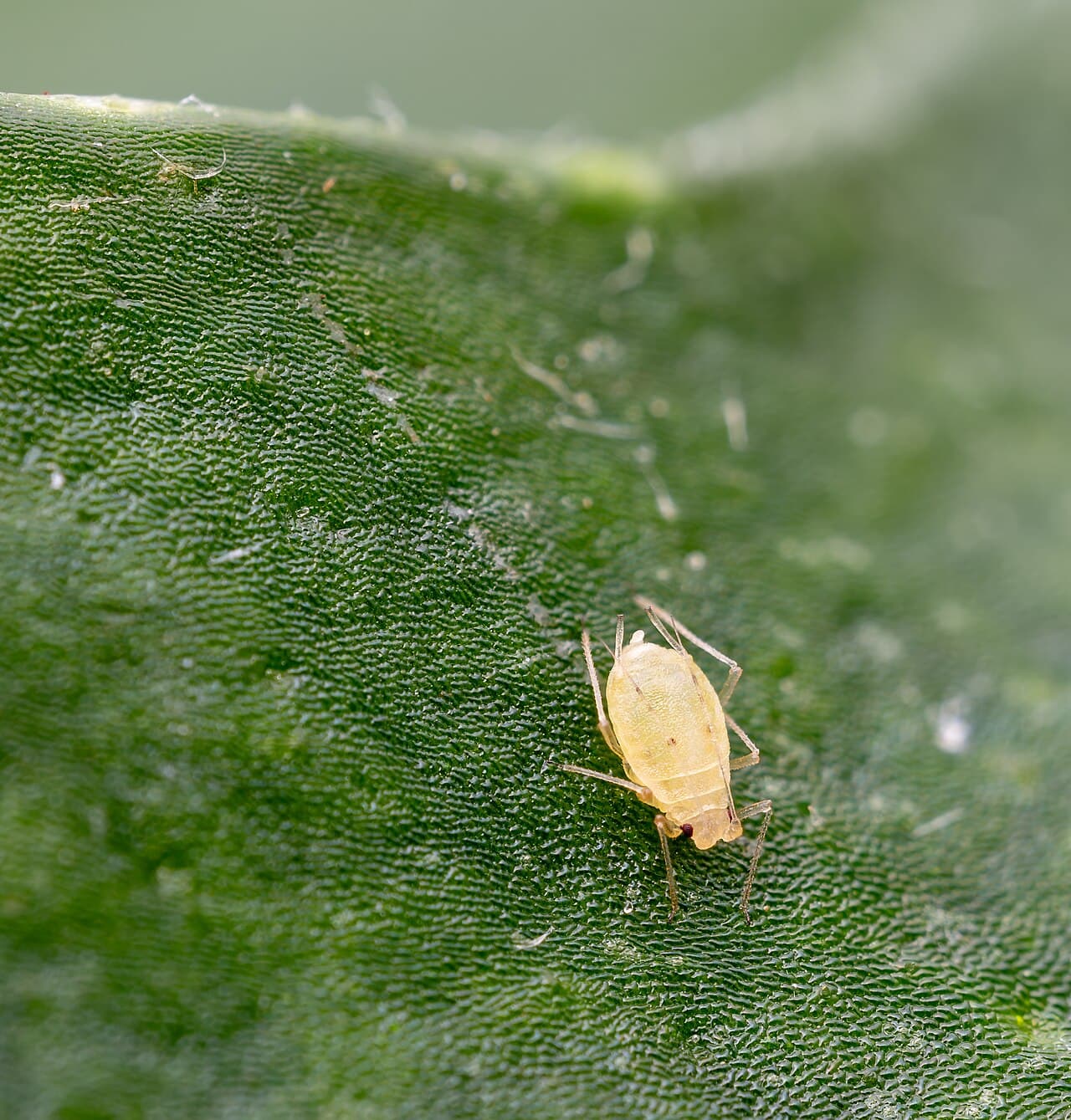
Aphids
Named for 863 plantsHow to tell: You will see clusters of tiny green or black insects on the new growth and undersides of leaves. They often leave behind a sticky residue called honeydew.
What to do: Spray the plant with a strong stream of water to knock them off. If they persist, apply insecticidal soap once a week until they are gone.
Spider mites
Named for 504 plantsHow to tell: Look for fine webbing between the stems and tiny yellow stippling on the leaves.
What to do: Increase the humidity around the plant by misting it. Wipe the leaves with a damp cloth to remove the mites.
Scale insects
Named for 313 plantsHow to tell: These look like small, hard brown bumps attached to the stems or leaf veins that do not move.
What to do: Scrape them off gently with a soft brush or fingernail. For larger issues, apply horticultural oil during the dormant season to smother the eggs.
Mealybugs
Named for 211 plantsHow to tell: You see small, white, cottony masses in the leaf joints or undersides of leaves.
What to do: Dip a cotton swab in rubbing alcohol and dab it directly onto the pests to kill them. Repeat this every few days until you no longer see any bugs.
Slugs and snails
Named for 102 plantsHow to tell: Irregular holes in leaves and shiny slime trails left on the soil or foliage.
What to do: Handpick the pests in the evening when they are active. You can also place shallow dishes of beer near the base to trap them.
Poor air circulation
Named for 53 plantsHow to tell: The plant is in a stagnant, humid corner where pests thrive.
What to do: Move your plant to a spot with better airflow. Keep the leaves clean by wiping them with a damp cloth occasionally.
Low humidity
Named for 52 plantsHow to tell: The edges of the leaves look dry and the plant seems stressed.
What to do: Increase humidity by placing the plant on a pebble tray filled with water. You can also mist the leaves daily to keep the air around the plant moist.
Environmental stress
Named for 47 plantsHow to tell: The plant is weak from low light, making it more attractive to pests.
What to do: Move your plant to a spot with bright indirect light. A healthy plant is much better at resisting pest attacks.
Not sure what you're seeing? Try the free photo health check.
Plants most prone to this
Our guides rate it likely for 1,100 plants. Here are 48 of them, A to Z.
- Abal Palm
- American elderberry
- Ashwagandha
- Bear Paw
- Black eyed susan vine
- Blue cypress
- Broad buckler fern
- Calathea 'Cobra'
- Carolina horsenettle
- Chinese elm
- Clary sage
- Common groundsel
- Common vetch
- Crimson Clover
- Dendrobium Orchid
- Eared willow
- English oak
- Field Poppy
- Fool's watercress
- Geiger tree
- Golden Pothos
- Gypsywort
- Honesty
- Jacaranda
- Jasmine
- Kohuhu
- Lily
- Male fern
- Mint
- Mountain Laurel
- Obedient plant
- Parlor palm
- Perilla
- Pomegranate
- Purple toadflax
- Red Osier Dogwood
- Rubber Plant
- Scotch broom
- Siberian tea
- Snake Gourd
- Spider Plant
- Sticky monkeyflower
- Sweet pepperbush
- Thimbleberry
- Tulip
- Watercress
- White Trillium
- Winter Squash
Find your plant
Every plant guide links to its own pages on that plant's problems. Find yours in the A to Z:
Other symptoms
Pest, disease and disorder guides
How often do the guides name each cause, across every symptom? See what goes wrong with plants, counted.
The causes on this page are drawn from our plant guides, which are generated with AI from each plant's care profile. They are general information, not horticultural advice. Read about how we build these guides.