 Pocket Botanist
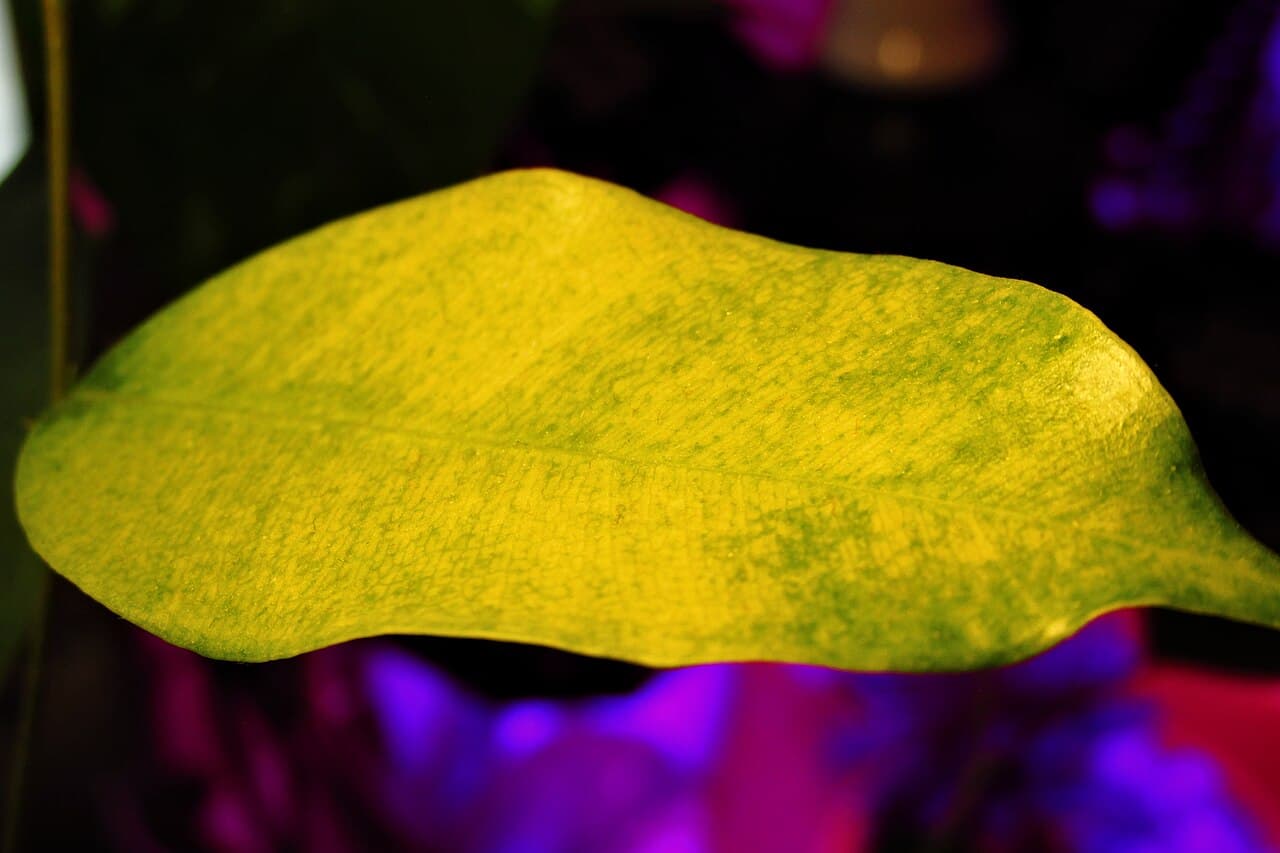

Check these first
- Push a finger into the soil up to the second knuckle. Soil that's still wet days after watering points to overwatering; dust-dry soil points to thirst.
- Notice which leaves turn yellow first. A few old, lower leaves yellowing one at a time is often normal aging, or a sign the plant is short of nitrogen. Yellow new growth, especially with green veins, points to iron or another trace nutrient.
- Look at the light. A plant far from a window, or one moved to a darker spot, often yellows its lower leaves.
- Think back over the last few weeks. A repot, a move or a cold draft can yellow a few leaves while the plant settles.
- Turn a few leaves over and check for tiny insects, fine webbing or sticky patches.
Most common causes
The causes our guides to 1,629 plants name most often.
Overwatering
Named for 1,184 plantsHow to tell: The leaves turn yellow and feel soft or mushy to the touch.
What to do: Let the top inch of soil dry out completely before watering again. Ensure your pot has drainage holes so excess water can escape.
Nutrient deficiency
Named for 729 plantsHow to tell: Older leaves turn yellow while the veins remain green.
What to do: Apply a balanced liquid fertilizer diluted to half strength. Do this once a month during the growing season.
Insufficient light
Named for 220 plantsHow to tell: The leaves lose their vibrant color and turn pale yellow. The plant may also look stretched out.
What to do: Move the plant to a spot with brighter, indirect light. A window with morning sun is usually perfect.
Underwatering
Named for 129 plantsHow to tell: The leaves turn yellow, feel crispy, and the edges start to curl.
What to do: Water the plant thoroughly until water runs out of the drainage holes. Maintain a consistent schedule so the soil stays slightly damp.
Nitrogen deficiency
Named for 103 plantsHow to tell: The older leaves turn pale yellow while the plant growth slows down significantly.
What to do: Apply a balanced, nitrogen rich fertilizer in early spring. Follow the package instructions for application rates to avoid burning the roots.
Iron chlorosis
Named for 95 plantsHow to tell: The leaves turn yellow while the veins remain green.
What to do: Test your soil pH, as high alkalinity prevents iron uptake. Apply a chelated iron supplement to the soil according to the package instructions.
Poor drainage
Named for 94 plantsHow to tell: The soil stays soggy for days after watering and the leaves turn a dull, pale yellow.
What to do: Improve soil drainage by amending the area with organic matter like compost. If the plant is in a pot, ensure it has drainage holes and use a well draining potting mix.
Improper watering
Named for 64 plantsHow to tell: The leaves turn yellow and may feel soft or mushy if the soil is too wet. If the soil is bone dry, the leaves may turn yellow and crispy.
What to do: Adjust your watering to ensure the soil stays moist but not soggy. Ensure your pot has excellent drainage to prevent water from pooling at the roots.
Not sure what you're seeing? Try the free photo health check.
Plants most prone to this
Our guides rate it likely for 653 plants. Here are 48 of them, A to Z.
- Abal Palm
- Aloe Vera
- Asparagus fern
- Bay Laurel
- Bigleaf Hydrangea
- Blue dicks
- Boxwood
- Caladium
- Cardamom
- Chinese elm
- Cilantro
- Common Bean
- Creeping Buttonweed
- Daffodil
- Dragon tree
- Elephant Bush
- Fiddle Leaf Fig
- French tamarisk
- Geranium
- Golden-scaled male fern
- Hardy Fuchsia
- Horned melon
- Jade vine
- Joseph's coat
- Labrador Tea
- Lettuce
- Maidenhair fern
- Mint
- Nasturtium
- Oat
- Pak Choi
- Peace Lily
- Pincushion Protea
- Poppy anemone
- Purple Shamrock
- Rocket
- Sage
- Shepherd's purse
- Snake Gourd
- Spinach
- Starfruit
- Sunflower
- Tamanu
- Tobacco
- Umbrella Tree
- Water Spinach
- White Spruce
- Wood sorrel
Find your plant
Every plant guide links to its own pages on that plant's problems. Find yours in the A to Z:
Other symptoms
Pest, disease and disorder guides
How often do the guides name each cause, across every symptom? See what goes wrong with plants, counted.
The causes on this page are drawn from our plant guides, which are generated with AI from each plant's care profile. They are general information, not horticultural advice. Read about how we build these guides.