 Pocket Botanist
Plant guide
Bigleaf Maple.
Acer macrophyllum
Pronounced AY-ser mak-ro-FIL-um
Also known as Bigleaf Maple, Oregon maple, Pacific maple, big-leaf maple, big-leaved maple, broad-leaved maple, canyon maple


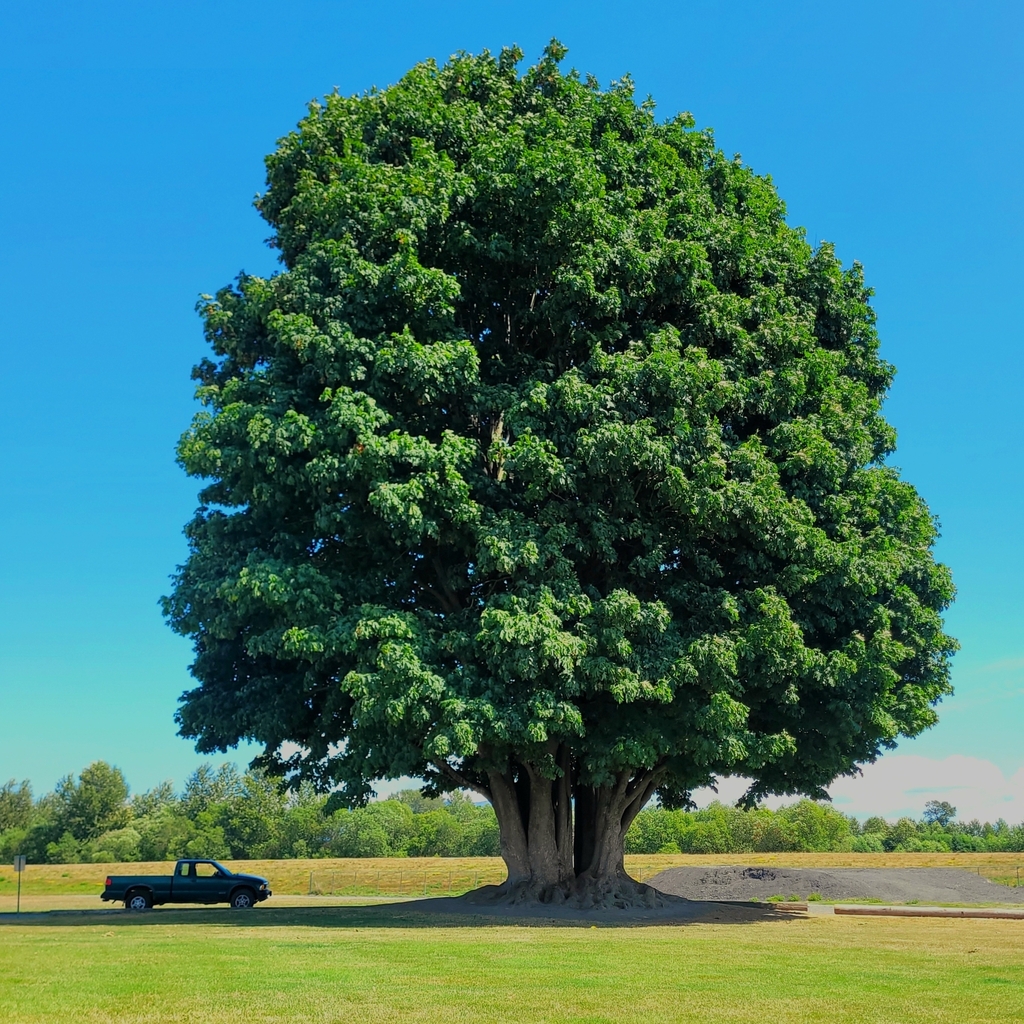
The Bigleaf Maple is a majestic native tree known for its massive, hand shaped leaves. It thrives in moist, temperate forests along the Pacific coast. These trees provide wonderful shade and support local wildlife.
At a glance
- Care level
- Easy
- Plant type
- Deciduous tree
- Light
- Partial shade to full sun
- Indoor light
- Bright indirect
- Water
- Every 7 to 14 days
- Mature size
- 15 to 30 meters
- Growth rate
- Fast
- Hardiness
- USDA 6 to 9
- Bloom time
- Early to mid spring
Care
Keep the soil consistently moist, especially during the first few years of establishment. Watch for leaf scorch in intense summer heat and ensure the tree has plenty of space to spread. Prune only to remove dead or crossing branches during the dormant season.
- Watering
- Water deeply during dry spells to maintain soil moisture.
- Feeding
- Apply a balanced organic fertilizer in early spring.
- Pruning
- Prune during winter dormancy to maintain structure.
- Repotting
- Repotting is generally not applicable for mature landscape trees.
- Soil
- Deep, moist, well draining soil
- Soil pH
- Slightly acidic to neutral
- Temperature
- -20 to 35°C
- Humidity
- 40 to 80%
- Drought tolerance
- Moderate
- Lifespan
- Perennial, typically 100 to 200 years.
- Deer and rabbits
- Moderate
Safety
- People
- There is no significant toxicity to humans, though the sap can be sticky.
- Children
- The large, heavy branches can be brittle and prone to dropping, so avoid planting near play areas.
- Contact allergens
- The sap may cause mild skin irritation in sensitive individuals.
- Airborne allergens
- Pollen can trigger seasonal allergies during the spring bloom.
- Edibility
- The seeds are edible after roasting, but the raw foliage and other parts are not considered food.
How to identify it
- Extremely large, five lobed leaves
- Deeply furrowed, grayish brown bark
- Winged seeds called samaras
- Yellowish green hanging flower clusters
- Height
- 15 to 30m
- Spread
- 10 to 20m
- Leaves
- green, yellow, deciduous
- Flowers
- yellow, green, 0.5 to 1cm
- Fruit
- brown, Autumn
Problems to watch for
- AphidsCommon
- Leaf ScorchCommon
- Tar SpotCommon
- Verticillium WiltCommon
- CankerUncommon
- Powdery MildewUncommon
- Root RotUncommon
- Scale InsectsUncommon
By symptom
Check your bigleaf maple from a photo
Pocket Botanist looks at a photo of your plant and tells you what's wrong and what to try first.
Growing it
- Propagation
- seed, cuttings
- When to plant
- Autumn, Spring
- Overwintering
- No special winter care is needed as it is fully hardy in its native range. Simply ensure the soil remains well drained during wet winters.
- In containers
- This tree is far too large for containers and should only be planted in the ground.
Seed
- Collect samaras in autumn when brown.
- Store in a cool, dry place.
- Sow in pots outdoors in late winter for spring germination.
Plant shade tolerant native shrubs beneath the canopy to mimic the natural forest structure.
Grows well with
- Sword fern — They share the same moist, shaded forest floor requirements.
- Red huckleberry — It naturally grows in the understory of these maples.
Similar species
- Vine maple — It is a smaller relative that also thrives in the Pacific Northwest.
Science
- Family
- Sapindaceae
- Genus
- Acer
- Order
- Sapindales
- Class
- Magnoliopsida
- Native range
- Pacific Coast of North America from Alaska to California.
- Conservation
- This species is common and not of conservation concern.
It thrives in moist, rich soils and often dominates riparian corridors in its native range.
- Value to wildlife
- larval host plant, nesting site
- Pollinators
- bees
- Uses
- shade tree, timber, erosion control
Through the year
Ecological indicators
- Soil reaction
- 6/9
- Light
- 5/9
- Temperature
- 5/9
- Moisture
- 7/9
- Nutrients
- 6/9
- Salinity
- 1/9
Taxonomy resolved against GBIF.
Questions people ask
- How fast does it grow?
- It is a fast growing tree that can add several feet of height per year in ideal conditions.
- Can I plant it near my house?
- No, its massive size and wide root system make it unsuitable for small yards or near foundations.
Where the name comes from
The name macrophyllum means large leaf in Latin, referring to its massive foliage. Bigleaf maple is the common name for the same reason.
Good to know
- It produces the largest leaves of any maple species.
- The wood is highly valued for furniture and musical instruments.
- Indigenous peoples traditionally used the bark for cordage and baskets.
Keep your bigleaf maple growing
This page is a general guide. Save your plant in Pocket Botanist and you get care reminders timed for this plant, plus a care history that shows what worked.
This guide was generated with AI and checked against GBIF taxonomy. It is general information, not horticultural or veterinary advice. Read about how we build these guides.