 Pocket Botanist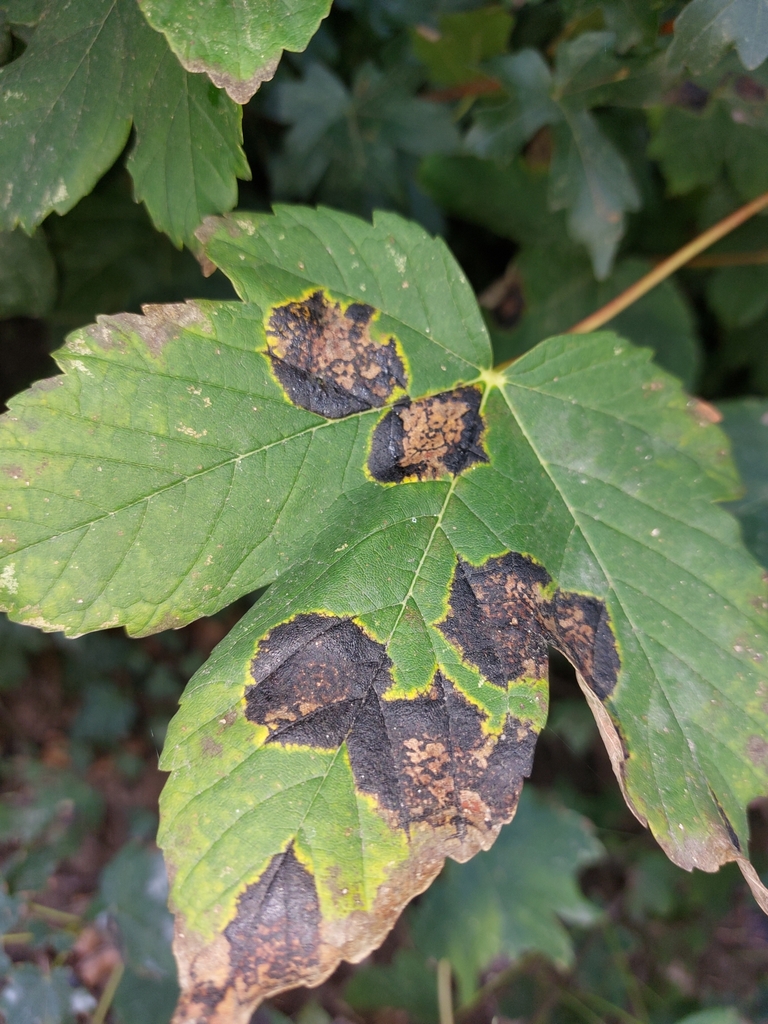
Symptoms by part
Leaves
Small yellow or light green spots appear in early stages, which eventually develop into raised, shiny black fungal structures that resemble drops of tar.
Causes
- Prolonged periods of wet, cool weather during the spring when new leaves are emerging.
- High humidity levels that allow fungal spores to travel and settle on leaf surfaces.
- Presence of infected leaf debris from the previous year left on the ground near the tree.
Could be confused with
- Insect galls · Galls are usually more irregular in shape and texture, often appearing as bumps or spikes rather than flat, ink like spots.
- Leaf scorch · Scorch causes browning along the edges of leaves due to heat or drought, whereas tar spot creates defined, circular black patches.
Treatment
- Rake up and remove all fallen leaves from beneath the tree in the autumn to eliminate the primary source of overwintering spores.
- Dispose of collected leaves by burning them or placing them in municipal green waste bins rather than composting them at home.
- Prune away low hanging branches if the tree is in a crowded area to improve air circulation around the canopy.
Without chemicals
- Raking and destroying fallen leaves.
- Improving air circulation through selective pruning of crowded branches.
Preventing it
- Keep the area beneath the tree clear of leaf litter throughout the winter.
- Ensure the tree is not overcrowded by other plants to allow for better airflow.
- Water the tree at the base rather than overhead to keep foliage dry.
Season
The warm growing season, specifically during spring and early summer.
Spread risk
Low
Severity
Low
When to act
Take action by clearing debris in the autumn to reduce the spore load for the following year. Because the disease is cosmetic, you do not need to remove or replace the tree.
Think it's Tar Spot?
This guide covers the general picture. Pocket Botanist looks at your actual plant from a photo and tells you what's really going on, how serious it is, and what to try first. Identification and a health check are free.


Questions people ask
- Will tar spot kill my maple tree?
- No, tar spot is almost exclusively a cosmetic issue and will not kill your tree or cause significant long term damage.
- Should I use a fungicide to treat the black spots?
- Chemical fungicides are generally unnecessary because the damage is minor and does not impact the overall vitality of the tree.
- Can I put the infected leaves in my compost pile?
- It is best to avoid composting infected leaves, as home compost piles often do not reach high enough temperatures to kill the fungal spores.
Plants it affects
This guide was generated with AI and is general information, not horticultural advice. Read about how we build these guides.