 Pocket Botanist
Guide botanique
Érable à grandes feuilles.
Acer macrophyllum
Prononciation AY-ser mak-ro-FIL-um
Aussi appelée Érable à grandes feuilles, Érable de l'Oregon, Érable du Pacifique, érable à large feuille, érable à grandes feuilles, broad-leaved maple, érable des canyons


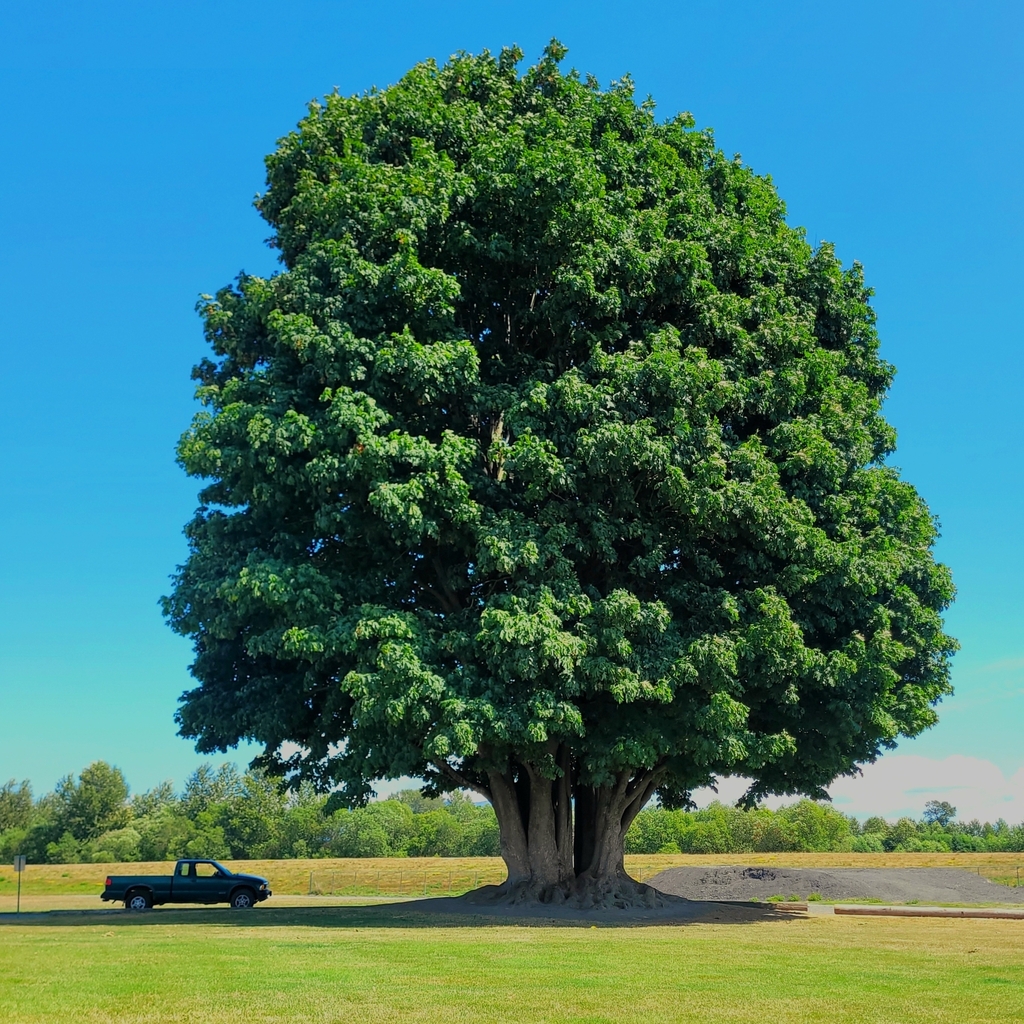
L'érable à grandes feuilles est un arbre majestueux indigène, connu pour ses feuilles massives en forme de main. Il prospère dans les forêts tempérées humides le long de la côte Pacifique. Ces arbres offrent une ombre merveilleuse et soutiennent la faune locale.
En un coup d'œil
- Niveau d'entretien
- Facile
- Type de plante
- Arbre à feuilles caduques
- Lumière
- Mi-ombre à plein soleil
- Lumière en intérieur
- Lumière vive indirecte
- Arrosage
- Tous les 7 à 14 jours
- Taille adulte
- 15 à 30 mètres
- Croissance
- Rapide
- Rusticité
- USDA 6 à 9
- Floraison
- Début à mi-printemps
Entretien
Gardez le sol constamment humide, surtout pendant les premières années de sa croissance. Surveillez les brûlures des feuilles lors des fortes chaleurs estivales et assurez-vous que l'arbre a amplement d'espace pour s'étendre. Taillez seulement pour enlever les branches mortes ou qui se croisent pendant la saison de dormance.
- Arrosage
- Arrosez abondamment pendant les périodes sèches pour maintenir l'humidité du sol.
- Engrais
- Appliquez un engrais organique équilibré au début du printemps.
- Taille
- Taillez pendant la dormance hivernale pour maintenir la structure.
- Rempotage
- Le rempotage n'est généralement pas applicable pour les arbres paysagers matures.
- Sol
- Sol profond, humide et bien drainé
- pH du sol
- Légèrement acide à neutre
- Température
- -20 à 35°C
- Humidité
- 40 à 80%
- Résistance à la sécheresse
- Moyenne
- Durée de vie
- Vivace, typiquement 100 à 200 ans.
- Résistance aux chevreuils et lapins
- Moyenne
Sécurité
- Humains
- Il n'y a pas de toxicité significative pour l'homme, bien que la sève puisse être collante.
- Enfants
- Les grosses branches lourdes peuvent être cassantes et sujettes à la chute, il faut donc éviter de planter près des aires de jeux.
- Allergènes de contact
- La sève peut provoquer une légère irritation cutanée chez les personnes sensibles.
- Allergènes aéroportés
- Le pollen peut déclencher des allergies saisonnières pendant la floraison printanière.
- Comestibilité
- Les graines sont comestibles après torréfaction, mais le feuillage cru et les autres parties ne sont pas considérés comme de la nourriture.
Comment l'identifier
- Feuilles extrêmement grandes à cinq lobes
- Écorce grisâtre-brun profondément furrowed
- Graines ailées appelées samares
- Grappes de fleurs pendantes verdâtres
- Hauteur
- 15 à 30m
- Envergure
- 10 à 20m
- Feuilles
- vert, jaune, caduc
- Fleurs
- jaune, vert, 0,5 à 1cm
- Fruits
- brun, Automne
Problèmes à surveiller
- Brûlures du feuillageCourant
- PuceronsCourant
- Taches goudronneuses de l'érableCourant
- VerticillioseCourant
- ChancrePeu courant
- CochenillesPeu courant
- OïdiumPeu courant
- Pourriture des racinesPeu courant
Par symptôme
Vérifie la santé de ta plante en photo
Pocket Botanist analyse une photo de ta plante et te dit ce qui ne va pas et quoi essayer en premier.
La cultiver
- Multiplication
- semence, bouturage
- Quand planter
- Automne, Printemps
- Hivernage
- Aucun soin hivernal spécial n'est nécessaire car il est entièrement rustique dans son aire de répartition native. Assurez simplement que le sol reste bien drainé pendant les hivers humides.
- En pot
- Cet arbre est beaucoup trop grand pour les conteneurs et ne doit être planté qu'en pleine terre.
Semence
- Récoltez les samares en automne lorsqu'elles sont brunes.
- Conservez dans un endroit frais et sec.
- Semez en pots à l'extérieur à la fin de l'hiver pour une germination au printemps.
Plantez des arbustes indigènes tolérants à l'ombre sous la canopée pour imiter la structure naturelle de la forêt.
Bonnes associations
- Polystic à feuilles de sabre — Ils partagent les mêmes exigences en matière de sol forestier humide et ombragé.
- Vaccinium parvifolium — Il pousse naturellement dans le sous-bois de ces érables.
Espèces similaires
- Acer circinatum — C'est un parent plus petit qui prospère également dans le Nord-Ouest Pacifique.
Science
- Famille
- Sapindaceae
- Genre
- Acer
- Ordre
- Sapindales
- Classe
- Magnoliopsida
- Région d'origine
- Côte Pacifique de l'Amérique du Nord, de l'Alaska à la Californie.
- Préservation
- Cette espèce est commune et ne suscite aucune préoccupation en matière de conservation.
Il prospère dans les sols humides et riches et domine souvent les corridors riverains dans son aire de répartition native.
- Intérêt pour la faune
- plante hôte larvaire, site de nidification
- Pollinisateurs
- abeilles
- Utilisations
- arbre d'ombrage, bois d'œuvre, lutte contre l'érosion
Au fil des saisons
Repères écologiques
- Réaction du sol
- 6/9
- Lumière
- 5/9
- Température
- 5/9
- Humidité
- 7/9
- Nutriments
- 6/9
- Salinité
- 1/9
Taxonomie vérifiée avec le GBIF.
Ce qu'on demande souvent
- Quelle est la vitesse de sa croissance ?
- C'est un arbre à croissance rapide qui peut gagner plusieurs pieds de hauteur par an dans des conditions idéales.
- Puis-je le planter près de ma maison ?
- Non, sa taille massive et son large système racinaire le rendent inadapté aux petites cours ou aux fondations.
D'où vient le nom
Le nom macrophyllum signifie grande feuille en latin, faisant référence à son feuillage massif. L'érable à grandes feuilles est le nom commun pour la même raison.
Bon à savoir
- Il produit les plus grandes feuilles de toutes les espèces d'érables.
- Le bois est très apprécié pour les meubles et les instruments de musique.
- Les peuples autochtones utilisaient traditionnellement l'écorce pour fabriquer de la corde et des paniers.
Garde ta plante en pleine forme
Cette page est un guide général. Enregistre ta plante dans Pocket Botanist et tu reçois des rappels d'entretien adaptés à cette plante, ainsi qu'un historique d'entretien qui montre ce qui a marché.
Ce guide a été généré par IA et vérifié avec la taxonomie du GBIF. Il s'agit d'informations générales, et non de conseils horticoles ou vétérinaires. Découvre comment nous concevons ces guides.