 Pocket Botanist
Plant guide
Bugleweed.
Ajuga reptans L.
Pronounced uh-JOO-guh REP-tanz
Also known as Ajuga, Blue Bugle, Bugle, Bugleherb, Bugleweed, Carpet Bugleweed, Common Bugle


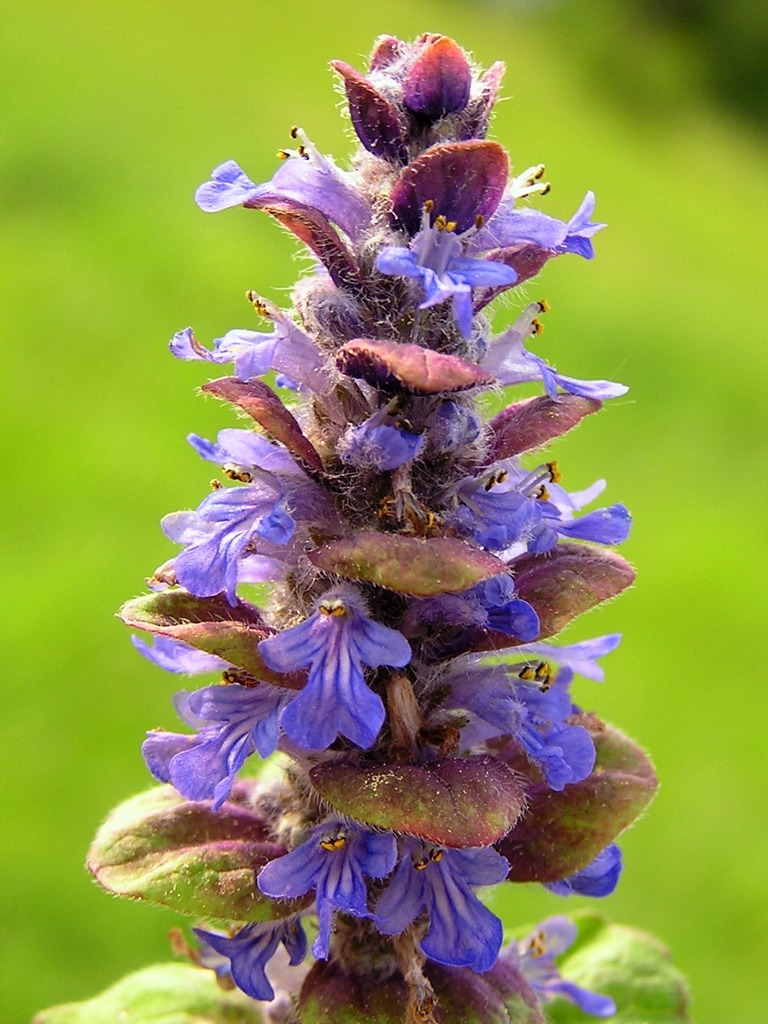
Bugleweed is a fantastic, low growing groundcover that spreads quickly to fill in empty spots in your garden. It produces lovely spikes of blue or purple flowers in the spring that bees absolutely adore. You will find it is a hardy little plant that handles shade quite well.
At a glance
- Care level
- Easy
- Plant type
- Perennial groundcover
- Light
- Partial shade to full shade
- Indoor light
- Medium light
- Water
- Every 3 to 7 days
- Mature size
- 6 to 9 inches tall
- Growth rate
- Fast
- Hardiness
- USDA 3 to 9
- Bloom time
- Mid to late spring
Care
Keep the soil consistently moist but not waterlogged to help it spread effectively. Watch for wilting during hot spells, which indicates it needs more water. You can easily divide the clumps in spring or fall to manage its spread.
- Watering
- Keep the soil evenly moist, especially during dry summer periods.
- Feeding
- Apply a balanced liquid fertilizer once in early spring to encourage growth.
- Pruning
- Trim back after flowering if you want to tidy up the appearance or control its spread.
- Repotting
- If growing in a container, move to a larger pot once the roots fill the current space.
- Soil
- Well draining, humus rich soil
- Soil pH
- 6.0 to 7.0
- Temperature
- -30 to 35°C
- Humidity
- 40 to 70%
Safety
- People
- The plant is generally considered non-toxic to humans, but ingestion is not recommended.
- Pets
- This plant is generally considered non toxic to cats and dogs.
- Children
- While not highly toxic, it is best to keep small children from eating the leaves to avoid potential stomach upset.
- Contact allergens
- Some individuals may experience mild skin irritation from handling the foliage.
- Airborne allergens
- There are no significant reports of respiratory allergies associated with this plant.
- Edibility
- This plant is not considered edible and should not be consumed.
How to identify it
- Low growing mat forming habit
- Oval shaped dark green leaves
- Spikes of blue purple flowers
- Spreads via creeping stolons
- Height
- 0.05 to 0.15m
- Spread
- 0.3 to 0.6m
- Leaves
- green, bronze, purple, semi-evergreen
- Flowers
- blue, purple, white, 1 to 2cm
Problems to watch for
- AphidsCommon
- Root RotCommon
- Powdery MildewUncommon
- Slugs and SnailsUncommon
Check your bugleweed from a photo
Pocket Botanist looks at a photo of your plant and tells you what's wrong and what to try first.
Growing it
- Propagation
- division, seed, cuttings
- When to plant
- spring, autumn
Pair with taller shade plants to create a layered look that keeps the ground cool and moist.
Grows well with
- Hosta — They share similar shade and moisture requirements.
- Ferns — The contrasting textures look lovely together in a woodland setting.
Similar species
- Lamium — Another low growing ground cover that thrives in similar light conditions.
Science
- Family
- Lamiaceae
- Genus
- Ajuga
- Order
- Lamiales
- Class
- Magnoliopsida
- Native range
- Europe, western Asia, and northern Africa.
- Conservation
- This plant is not of conservation concern and is widely naturalized in many regions.
It naturally inhabits moist meadows and woodland edges where it uses its stolons to colonize open ground.
- Value to wildlife
- nectar source
- Pollinators
- bees, butterflies
- Uses
- ground cover, rock gardens, erosion control
Through the year
Ecological indicators
- Moisture
- 6/9
- Salinity
- 2/9
- Soil reaction
- 5/9
- Light
- 4/9
- Temperature
- 5/9
- Nutrients
- 5/9
Taxonomy resolved against GBIF.
Questions people ask
- Will it take over my garden?
- Yes, it spreads quickly by runners and can become invasive in ideal conditions.
- Can I mow it?
- It tolerates occasional light mowing, but it is best left to form a low carpet.
Where the name comes from
The genus name Ajuga is derived from the Greek word a-jugos, meaning unyoked, while the species name reptans refers to its creeping habit.
Good to know
- It is commonly known as bugleweed or carpet bugle.
- The plant forms a dense mat that effectively crowds out most weeds.
- It thrives in both sun and shade, though foliage color is often more intense in partial sun.
Also in
Keep your bugleweed growing
This page is a general guide. Save your plant in Pocket Botanist and you get care reminders timed for this plant, plus a care history that shows what worked.
This guide was generated with AI and checked against GBIF taxonomy. It is general information, not horticultural or veterinary advice. Read about how we build these guides.