 Pocket Botanist
Plant guide
Spotted dead-nettle.
Lamium maculatum
Pronounced LAY-mee-um mak-yoo-LAY-tum
Also known as Spotted Dead-nettle, Spotted dead nettle


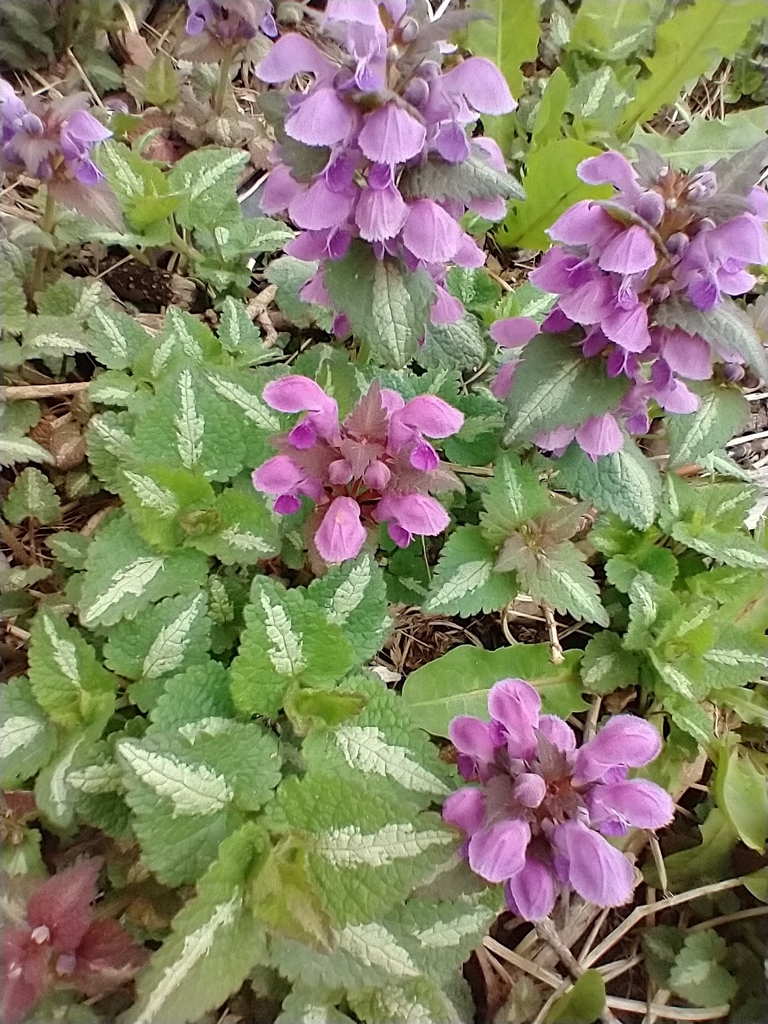
This charming groundcover is a favorite for brightening up shady spots in the garden. It features lovely heart shaped leaves with a distinct silver stripe down the center. You will enjoy its delicate, hooded flowers that bloom from spring through early summer.
At a glance
- Care level
- Easy
- Plant type
- Perennial groundcover
- Light
- Partial shade to full shade
- Indoor light
- Medium light
- Water
- Every 3 to 7 days
- Mature size
- 8 inches tall by 24 inches wide
- Growth rate
- Fast
- Hardiness
- USDA 3 to 8
- Bloom time
- Mid to late spring
Care
Keep the soil consistently moist but never soggy to prevent root issues. Watch for wilting during hot spells, which signals it needs a drink. Trim back leggy stems to encourage a fuller, more compact appearance.
- Watering
- Water when the top inch of soil feels dry to the touch.
- Feeding
- Apply a balanced liquid fertilizer during the active growing season.
- Pruning
- Shear back after the first flush of flowers to promote new growth.
- Repotting
- Divide the plant every few years to maintain vigor and prevent overcrowding.
- Soil
- Humus rich, well draining soil
- Soil pH
- 6.0 to 7.5
- Temperature
- -25 to 30°C
- Humidity
- 40 to 70%
- Drought tolerance
- Low
- Lifespan
- Perennial, typically 3 to 5 years.
- Deer and rabbits
- High
Signs it needs repotting
- Roots growing out of the drainage holes.
- Water running straight through the pot without soaking in.
- Stunted growth during the active season.
Safety
- People
- The plant is generally considered non-toxic to humans.
- Pets
- This plant is generally considered non toxic to cats and dogs.
- Children
- The plant is not known to be a danger to children, but ingestion should always be discouraged.
- Contact allergens
- Some individuals may experience mild skin irritation from the foliage hairs.
- Airborne allergens
- There are no notable respiratory allergens associated with this plant.
- Edibility
- This plant is not considered edible and should be avoided for consumption.
How to identify it
- Heart shaped leaves with silver variegation
- Square stems typical of mint family
- Hooded flowers in pink, purple, or white
- Low growing trailing habit
- Height
- 0.15 to 0.25m
- Spread
- 0.3 to 0.9m
- Leaves
- green, silver, white, semi-evergreen
- Flowers
- pink, purple, white, 1 to 2cm
Problems to watch for
- Powdery MildewCommon
- Slugs and SnailsCommon
- AphidsUncommon
- Root RotUncommon
By symptom
Check your spotted dead-nettle from a photo
Pocket Botanist looks at a photo of your plant and tells you what's wrong and what to try first.
Growing it
- Propagation
- division, cuttings
- When to plant
- spring, autumn
- Overwintering
- In colder climates, the foliage may die back significantly. Simply clear away any mushy or dead stems in early spring to make room for new growth.
- In containers
- It works well in hanging baskets or mixed containers, provided the soil remains consistently moist.
Division
- 1. Dig up a clump in spring or autumn.
- 2. Gently pull the root mass apart into smaller sections.
- 3. Replant the sections immediately in moist soil.
Plant in groups to create a dense carpet that effectively shades out competing weeds.
Grows well with
- Hosta — They share similar shade and moisture requirements.
- Ferns — The textures of the foliage contrast beautifully in shady beds.
- Bleeding Heart — It provides a lovely backdrop for the delicate flowers of the bleeding heart.
Similar species
- Yellow Archangel — It is a related species but often considered more invasive.
Science
- Family
- Lamiaceae
- Genus
- Lamium
- Order
- Lamiales
- Class
- Magnoliopsida
- Native range
- Europe and western Asia.
- Conservation
- This plant is not of conservation concern and is widely cultivated.
It thrives in moist, shaded woodland floors where it forms dense mats that suppress weeds.
- Value to wildlife
- early season nectar source
- Pollinators
- bees
- Uses
- ground cover, container filler, shade garden accent
Through the year
Ecological indicators
- Salinity
- 1/9
- Light
- 3/9
- Temperature
- 4/9
- Moisture
- 6/9
- Nutrients
- 5/9
- Soil reaction
- 5/9
Taxonomy resolved against GBIF.
Questions people ask
- Is it invasive?
- It can be aggressive in ideal conditions, but it is generally easy to manage by pulling.
- Does it need full sun?
- No, it prefers partial to full shade and may scorch in hot, direct sun.
Where the name comes from
The name Lamium comes from the Greek word for throat, referring to the shape of the flowers. Maculatum means spotted, describing the leaf markings.
Good to know
- It is commonly known as spotted deadnettle.
- The name deadnettle refers to its resemblance to stinging nettle, but it lacks the stinging hairs.
- It spreads quickly via creeping stems that root where they touch the soil.
Also in
Keep your spotted dead-nettle growing
This page is a general guide. Save your plant in Pocket Botanist and you get care reminders timed for this plant, plus a care history that shows what worked.
This guide was generated with AI and checked against GBIF taxonomy. It is general information, not horticultural or veterinary advice. Read about how we build these guides.