 Pocket Botanist
Guide botanique
Lamier maculé.
Lamium maculatum
Prononciation LAY-mee-um mak-yoo-LAY-tum
Aussi appelée Lamier maculé, Lamier tacheté


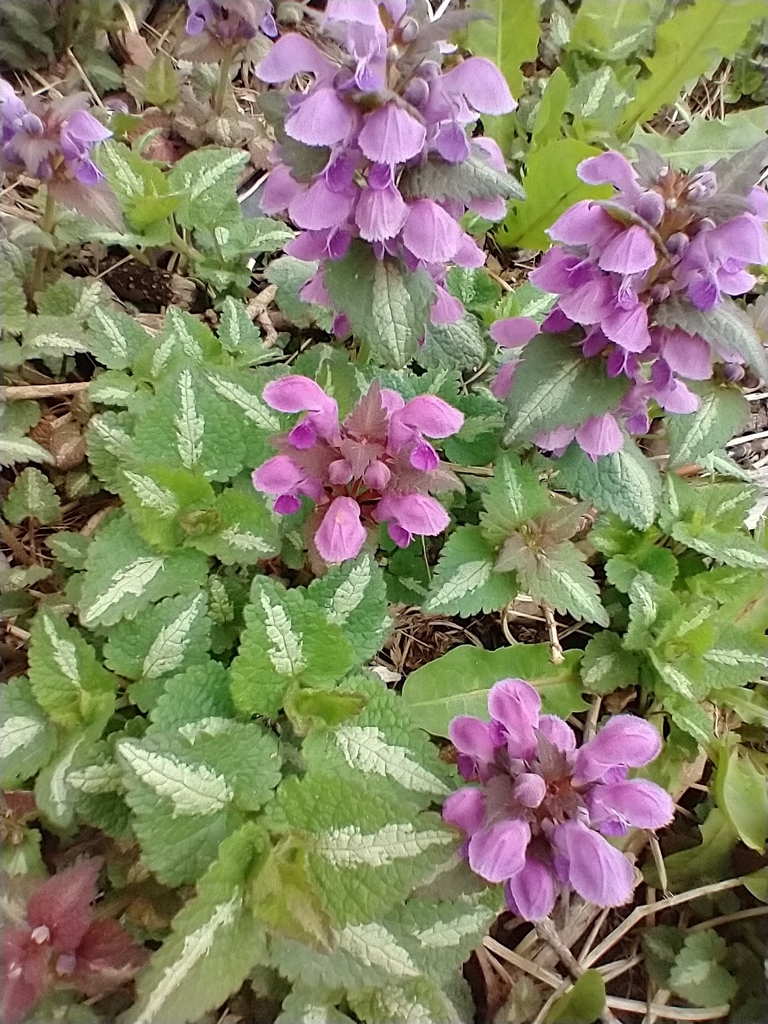
Ce charmant couvre-sol est idéal pour égayer les endroits ombragés du jardin. Il présente de jolies feuilles en forme de cœur avec une bande argentée distincte au centre. Vous apprécierez ses délicates fleurs capuchonnées qui fleurissent du printemps au début de l'été.
En un coup d'œil
- Niveau d'entretien
- Facile
- Type de plante
- Couvre-sol vivace
- Lumière
- Mi-ombre à ombre complète
- Lumière en intérieur
- Lumière moyenne
- Arrosage
- Tous les 3 à 7 jours
- Taille adulte
- 20 cm de haut sur 60 cm de large
- Croissance
- Rapide
- Rusticité
- USDA 3 à 8
- Floraison
- Milieu à fin du printemps
Entretien
Gardez le sol constamment humide, mais jamais détrempé, pour éviter les problèmes de racines. Surveillez le flétrissement pendant les périodes chaudes, signe qu'il a besoin d'un arrosage. Taillez les tiges qui s'allongent pour encourager une apparence plus pleine et plus compacte.
- Arrosage
- Arrosez lorsque le premier centimètre de terreau est sec au toucher.
- Engrais
- Appliquez un engrais liquide équilibré pendant la saison de croissance active.
- Taille
- Tondez après la première floraison pour favoriser une nouvelle croissance.
- Rempotage
- Divisez la plante tous les quelques années pour maintenir sa vigueur et éviter la surpopulation.
- Sol
- Sol riche en humus, bien drainé
- pH du sol
- 6.0 à 7.5
- Température
- -25 à 30°C
- Humidité
- 40 à 70%
- Résistance à la sécheresse
- Faible
- Durée de vie
- Vivace, généralement 3 à 5 ans.
- Résistance aux chevreuils et lapins
- Élevée
Signes qu'il faut rempoter
- Les racines sortent des trous de drainage.
- L'eau traverse le pot sans l'absorber.
- Croissance ralentie pendant la saison active.
Sécurité
- Humains
- La plante est généralement considérée comme non toxique pour l'homme.
- Animaux
- Cette plante est généralement considérée comme non toxique pour les chats et les chiens.
- Enfants
- La plante n'est pas connue pour être un danger pour les enfants, mais l'ingestion doit toujours être découragée.
- Allergènes de contact
- Certaines personnes peuvent ressentir une légère irritation cutanée due aux poils du feuillage.
- Allergènes aéroportés
- Il n'y a pas d'allergènes respiratoires notables associés à cette plante.
- Comestibilité
- Cette plante n'est pas considérée comme comestible et doit être évitée pour la consommation.
Comment l'identifier
- Feuilles en forme de cœur avec une panachure argentée
- Tiges carrées typiques de la famille de la menthe
- Fleurs capuchonnées roses, violettes ou blanches
- Habitude rampante à faible croissance
- Hauteur
- 0,15 à 0,25m
- Envergure
- 0,3 à 0,9m
- Feuilles
- vert, argenté, blanc, semi-persistant
- Fleurs
- rose, violet, blanc, 1 à 2cm
Problèmes à surveiller
- Limaces et escargotsCourant
- OïdiumCourant
- Pourriture des racinesPeu courant
- PuceronsPeu courant
- Mildiou poudreux — Une croissance fongique blanche apparaît sur les feuilles pendant les périodes de forte humidité et de mauvaise circulation de l'air.
- Limaces — Ces mollusques se nourrissent du feuillage, laissant des trous déchiquetés.
Par symptôme
Vérifie la santé de ta plante en photo
Pocket Botanist analyse une photo de ta plante et te dit ce qui ne va pas et quoi essayer en premier.
La cultiver
- Multiplication
- division, bouturage
- Quand planter
- printemps, automne
- Hivernage
- Dans les climats plus froids, le feuillage peut mourir considérablement. Il suffit de nettoyer les tiges molles ou mortes au début du printemps pour faire place à une nouvelle croissance.
- En pot
- Elle fonctionne bien dans les paniers suspendus ou les contenants mixtes, à condition que le sol reste constamment humide.
Division
- 1. Dégagez une touffe au printemps ou à l'automne.
- 2. Séparez délicatement la masse racinaire en sections plus petites.
- 3. Replantez immédiatement les sections dans un sol humide.
Plantez en groupes pour créer un tapis dense qui étouffe efficacement les mauvaises herbes concurrentes.
Bonnes associations
- Hosta — Ils partagent des exigences similaires en matière d'ombre et d'humidité.
- Polystichum — Les textures du feuillage contrastent magnifiquement dans les parterres ombragés.
- Lamprocapnos spectabilis — Elle offre une belle toile de fond aux fleurs délicates du cœur saignant.
Espèces similaires
- Lamier jaune — C'est une espèce apparentée mais souvent considérée comme plus envahissante.
Science
- Famille
- Lamiaceae
- Genre
- Lamium
- Ordre
- Lamiales
- Classe
- Magnoliopsida
- Région d'origine
- Europe et Asie occidentale.
- Préservation
- Cette plante n'est pas une préoccupation pour la conservation et est largement cultivée.
Elle prospère sur les sols humides et ombragés des sous-bois où elle forme des tapis denses qui suppriment les mauvaises herbes.
- Intérêt pour la faune
- source de nectar en début de saison
- Pollinisateurs
- abeilles
- Utilisations
- couvre-sol, remplissage de pot, accent pour jardin d'ombre
Au fil des saisons
Repères écologiques
- Salinité
- 1/9
- Lumière
- 3/9
- Température
- 4/9
- Humidité
- 6/9
- Nutriments
- 5/9
- Réaction du sol
- 5/9
Taxonomie vérifiée avec le GBIF.
Ce qu'on demande souvent
- Est-elle envahissante ?
- Elle peut être agressive dans des conditions idéales, mais elle est généralement facile à gérer en la retirant à la main.
- A-t-elle besoin de plein soleil ?
- Non, elle préfère l'ombre partielle à complète et peut brûler en plein soleil chaud.
D'où vient le nom
Le nom Lamium vient du mot grec pour gorge, faisant référence à la forme des fleurs. Maculatum signifie tacheté, décrivant les marques sur les feuilles.
Bon à savoir
- Il est communément appelé ortie morte tachetée.
- Le nom ortie morte fait référence à sa ressemblance avec l'ortie piquante, mais elle n'a pas les poils urticants.
- Elle se propage rapidement par des tiges rampantes qui s'enracinent au contact du sol.
Aussi dans
Garde ta plante en pleine forme
Cette page est un guide général. Enregistre ta plante dans Pocket Botanist et tu reçois des rappels d'entretien adaptés à cette plante, ainsi qu'un historique d'entretien qui montre ce qui a marché.
Ce guide a été généré par IA et vérifié avec la taxonomie du GBIF. Il s'agit d'informations générales, et non de conseils horticoles ou vétérinaires. Découvre comment nous concevons ces guides.