 Pocket Botanist
Plant guide
Yellow Archangel.
Lamium galeobdolon
Pronounced LAY-mee-um gal-ee-OB-do-lon
Also known as Yellow Archangel, golden archangel, golden dead-nettle, yellow dead-nettle



Scan with your phone's camera to get the app
Or go to pocketbotanist.app/get on your phone

Yellow Archangel is a vigorous, spreading groundcover that brings a splash of color to shady spots. It is a hardy perennial that forms dense mats of foliage. You will love how quickly it fills in bare areas under trees or shrubs.
At a glance
- Care level
- Easy
- Plant type
- Perennial groundcover
- Light
- Partial shade to full shade
- Indoor light
- Medium light
- Water
- Every 5 to 10 days
- Mature size
- 12 to 18 inches
- Growth rate
- Fast
- Hardiness
- USDA 4 to 9
- Bloom time
- Mid to late spring
Care
Keep the soil consistently moist but not waterlogged to help this plant thrive. Watch for wilting leaves as a sign it needs a drink, and keep an eye on its spread since it can become quite aggressive in the garden. Prune it back if it starts wandering into areas where you do not want it.
- Watering
- Water whenever the top inch of soil feels dry to the touch.
- Feeding
- Apply a balanced liquid fertilizer every two months during the active growing season.
- Pruning
- Trim back long runners throughout the season to maintain the desired shape and prevent overgrowth.
- Repotting
- Move to a larger container once the roots begin to circle the bottom of the pot.
- Soil
- Moist, well draining soil
- Soil pH
- 6.0 to 7.5
- Temperature
- -34 to 30°C
- Humidity
- 40 to 70%
- Drought tolerance
- Moderate
- Lifespan
- Perennial, typically 5 to 10 years.
- Deer and rabbits
- High
Signs it needs repotting
- Roots growing out of the drainage holes.
- Water running through the pot too quickly.
- The plant looks crowded and stops spreading.
Safety
- People
- The plant is not considered toxic to humans, but it is not intended for food.
- Pets
- This plant is generally considered non toxic to cats and dogs.
- Children
- No specific risks to children are noted, but it is best to discourage ingestion of any non-food garden plant.
- Contact allergens
- The foliage may cause mild skin irritation in sensitive individuals upon direct contact.
- Airborne allergens
- There are no significant reports of respiratory allergies associated with this plant.
- Edibility
- This plant is generally not considered edible and should be avoided for consumption.
How to identify it
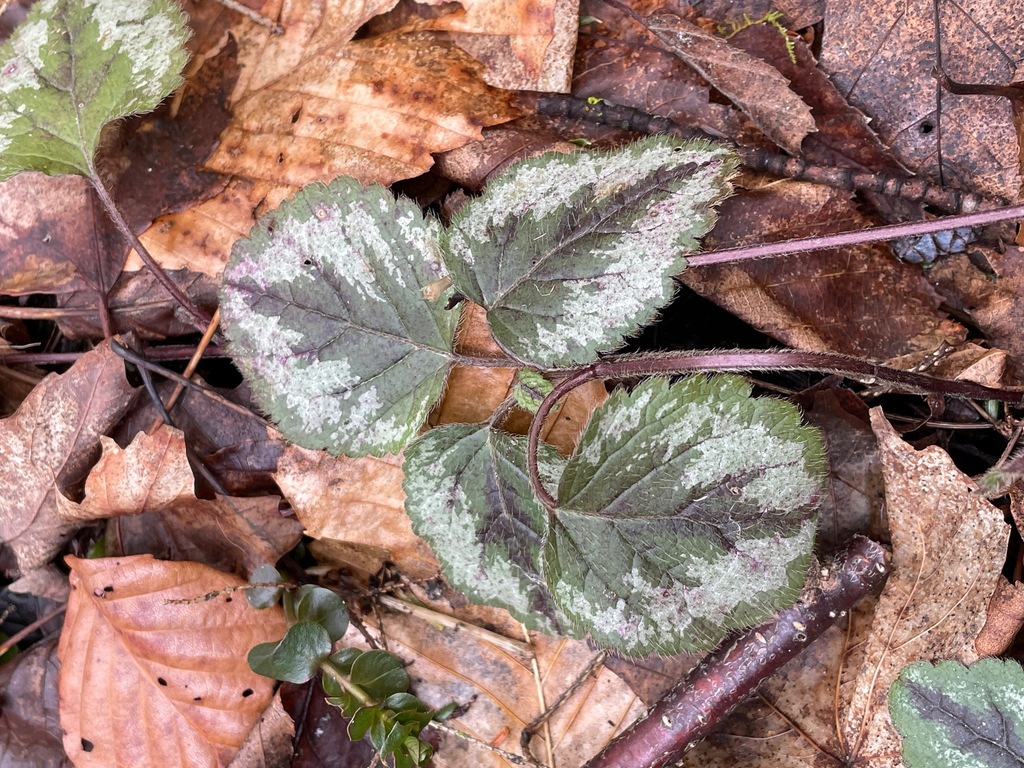
- Opposite, ovate, serrated green leaves
- Silver variegation on leaf surfaces
- Clusters of yellow, hooded flowers
- Square stems typical of mint family
- Height
- 0.15 to 0.3m
- Spread
- 0.3 to 0.9m
- Leaves
- green, silver, semi-evergreen
- Flowers
- yellow, 1 to 2cm
Problems to watch for
- Powdery MildewCommon
- Slugs and SnailsCommon
- AphidsUncommon
- Root RotUncommon
Check your yellow archangel from a photo
Pocket Botanist looks at a photo of your plant and tells you what's wrong and what to try first.
Scan with your phone's camera to get the app
Or go to pocketbotanist.app/get on your phone
Growing it
- Propagation
- division, cuttings
- When to plant
- spring, autumn
- Overwintering
- The plant is hardy and requires no special winter protection in most climates.
- In containers
- It grows well in containers but requires a wide pot to accommodate its spreading habit.
Division
- 1. Dig up a clump in spring or autumn.
- 2. Use a spade to divide the root mass into smaller sections.
- 3. Replant the sections immediately in moist soil.
Plant this in contained areas to prevent it from spreading into unwanted parts of your garden.
Grows well with
Similar species
- Spotted Deadnettle · It is a less aggressive relative with similar foliage habits.
Science
- Family
- Lamiaceae
- Genus
- Lamium
- Order
- Lamiales
- Class
- Magnoliopsida
- Native range
- Europe and Western Asia.
- Conservation
- It is considered an invasive species in many parts of North America and should be managed carefully.
It thrives in damp, shaded woodland environments where it outcompetes other ground cover plants.
- Value to wildlife
- early season nectar source
- Pollinators
- bees
- Uses
- ground cover, shade garden filler, erosion control
Through the year
Ecological indicators
- Salinity
- 1/9
- Soil reaction
- 6/9
- Light
- 3/9
- Temperature
- 5/9
- Moisture
- 6/9
- Nutrients
- 5/9
Taxonomy resolved against GBIF.
Questions people ask
- Is it invasive?
- Yes, it is considered highly invasive in many regions and can escape into natural woodlands.
- Does it need full sun?
- No, it prefers partial to full shade and may scorch in hot, direct sun.
Where the name comes from
The name Lamium comes from the Greek word for throat, referring to the shape of the flowers. Galeobdolon refers to the unpleasant smell the plant emits when crushed.
Good to know
- It is often called yellow archangel.
- The variegated forms are more popular in gardens than the plain green species.
- It spreads rapidly via underground runners.
Also in
Keep your yellow archangel growing
This page is a general guide. Save your plant in Pocket Botanist and you get care reminders timed for this plant, plus a care history that shows what worked.
Scan with your phone's camera to get the app
Or go to pocketbotanist.app/get on your phone
This guide was generated with AI on and checked against GBIF taxonomy. It is general information, not horticultural or veterinary advice. Read about how we build these guides.