 Pocket Botanist
Guide botanique
Bugle.
Ajuga reptans L.
Prononciation uh-JOO-guh REP-tanz
Aussi appelée Ajuga, Bugle, Bugle, Bugle, Bugle, Bugle rampant, Bugle commun


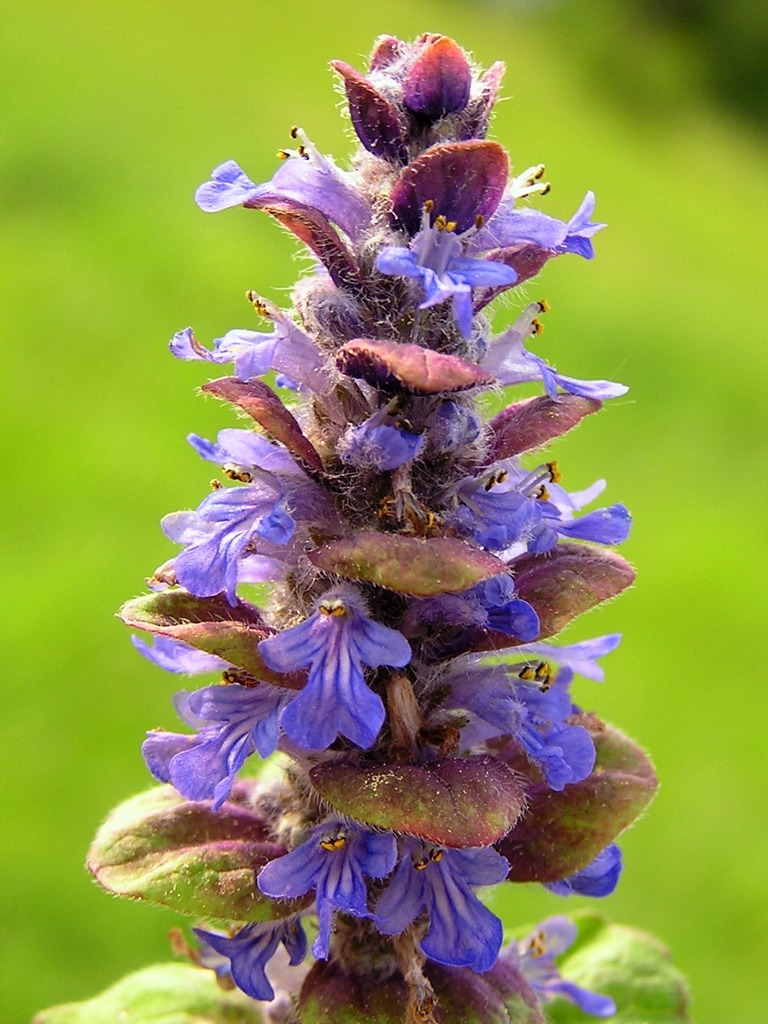
L'bugle rampante est un couvre-sol fantastique, à croissance lente, qui s'étend rapidement pour combler les espaces vides de votre jardin. Il produit de belles hampes de fleurs bleues ou violettes au printemps que les abeilles adorent. C'est une petite plante rustique qui supporte bien l'ombre.
En un coup d'œil
- Niveau d'entretien
- Facile
- Type de plante
- Couvre-sol vivace
- Lumière
- Mi-ombre à ombre complète
- Lumière en intérieur
- Lumière moyenne
- Arrosage
- Tous les 3 à 7 jours
- Taille adulte
- 6 to 9 inches tall
- Croissance
- Rapide
- Rusticité
- USDA 3 à 9
- Floraison
- Mi à fin du printemps
Entretien
Gardez le sol uniformément humide, mais pas détrempé, pour qu'il s'étende bien. Surveillez le flétrissement pendant les périodes chaudes, signe qu'il a besoin de plus d'eau. Vous pouvez facilement diviser les touffes au printemps ou à l'automne pour contrôler son expansion.
- Arrosage
- Gardez le sol uniformément humide, surtout pendant les périodes sèches en été.
- Engrais
- Appliquez un engrais liquide équilibré une fois au début du printemps pour favoriser la croissance.
- Taille
- Taillez après la floraison si vous souhaitez soigner son apparence ou contrôler son expansion.
- Rempotage
- Si vous cultivez en pot, transplantez dans un pot plus grand une fois que les racines remplissent l'espace actuel.
- Sol
- Sol bien drainé, riche en humus
- pH du sol
- 6.0 to 7.0
- Température
- -30 à 35°C
- Humidité
- 40 à 70%
Sécurité
- Humains
- La plante est généralement considérée comme non toxique pour l'homme, mais l'ingestion n'est pas recommandée.
- Animaux
- Cette plante est généralement considérée comme non toxique pour les chats et les chiens.
- Enfants
- Bien que peu toxique, il est préférable d'empêcher les jeunes enfants de manger les feuilles pour éviter d'éventuels maux d'estomac.
- Allergènes de contact
- Certaines personnes peuvent ressentir une légère irritation cutanée en manipulant le feuillage.
- Allergènes aéroportés
- Il n'y a pas de rapports significatifs d'allergies respiratoires associées à cette plante.
- Comestibilité
- Cette plante n'est pas considérée comme comestible et ne doit pas être consommée.
Comment l'identifier
- Port tapissant à croissance basse
- Feuilles ovales vert foncé
- Hampes de fleurs bleu violacé
- S'étend par des stolons rampants
- Hauteur
- 0,05 à 0,15m
- Envergure
- 0,3 à 0,6m
- Feuilles
- vert, bronze, pourpre, semi-persistant
- Fleurs
- bleu, pourpre, blanc, 1 à 2cm
Problèmes à surveiller
- Pourriture des racinesCourant
- PuceronsCourant
- Limaces et escargotsPeu courant
- OïdiumPeu courant
- Pourriture du collet — Décomposition fongique survenant dans un sol mal drainé ou trop humide.
Par symptôme
Vérifie la santé de ta plante en photo
Pocket Botanist analyse une photo de ta plante et te dit ce qui ne va pas et quoi essayer en premier.
La cultiver
- Multiplication
- division, semis, bouturage
- Quand planter
- printemps, automne
Associez-la à des plantes d'ombre plus hautes pour créer un aspect en couches qui garde le sol frais et humide.
Bonnes associations
- Hosta — Ils partagent des exigences similaires en matière d'ombre et d'humidité.
- Polystichum — Les textures contrastées sont très jolies ensemble dans un décor de sous-bois.
Espèces similaires
- Lamier maculé — Une autre couvre-sol bas qui prospère dans des conditions de lumière similaires.
Science
- Famille
- Lamiaceae
- Genre
- Ajuga
- Ordre
- Lamiales
- Classe
- Magnoliopsida
- Région d'origine
- Europe, Asie occidentale et Afrique du Nord.
- Préservation
- Cette plante n'est pas préoccupante en matière de conservation et est largement naturalisée dans de nombreuses régions.
Elle habite naturellement les prairies humides et les lisières de bois où elle utilise ses stolons pour coloniser le sol nu.
- Intérêt pour la faune
- source de nectar
- Pollinisateurs
- abeilles, papillons
- Utilisations
- couvre-sol, jardins de rocaille, lutte contre l'érosion
Au fil des saisons
Repères écologiques
- Humidité
- 6/9
- Salinité
- 2/9
- Réaction du sol
- 5/9
- Lumière
- 4/9
- Température
- 5/9
- Nutriments
- 5/9
Taxonomie vérifiée avec le GBIF.
Ce qu'on demande souvent
- Va-t-elle envahir mon jardin ?
- Oui, elle se propage rapidement par ses stolons et peut devenir envahissante dans des conditions idéales.
- Puis-je la tondre ?
- Elle tolère une tonte légère occasionnelle, mais il est préférable de la laisser former un tapis bas.
D'où vient le nom
Le nom du genre Ajuga est dérivé du mot grec a-jugos, signifiant non attelé, tandis que le nom de l'espèce reptans fait référence à son port rampant.
Bon à savoir
- Elle est communément appelée herbe aux écus ou bourrache rampante.
- La plante forme un tapis dense qui étouffe efficacement la plupart des mauvaises herbes.
- Elle prospère à la fois au soleil et à l'ombre, bien que la couleur du feuillage soit souvent plus intense à mi-ombre.
Aussi dans
Garde ta plante en pleine forme
Cette page est un guide général. Enregistre ta plante dans Pocket Botanist et tu reçois des rappels d'entretien adaptés à cette plante, ainsi qu'un historique d'entretien qui montre ce qui a marché.
Ce guide a été généré par IA et vérifié avec la taxonomie du GBIF. Il s'agit d'informations générales, et non de conseils horticoles ou vétérinaires. Découvre comment nous concevons ces guides.