 Pocket Botanist
Plant guide
Mint.
Mentha
Pronounced MEN-thuh
Also known as Mint, Mints


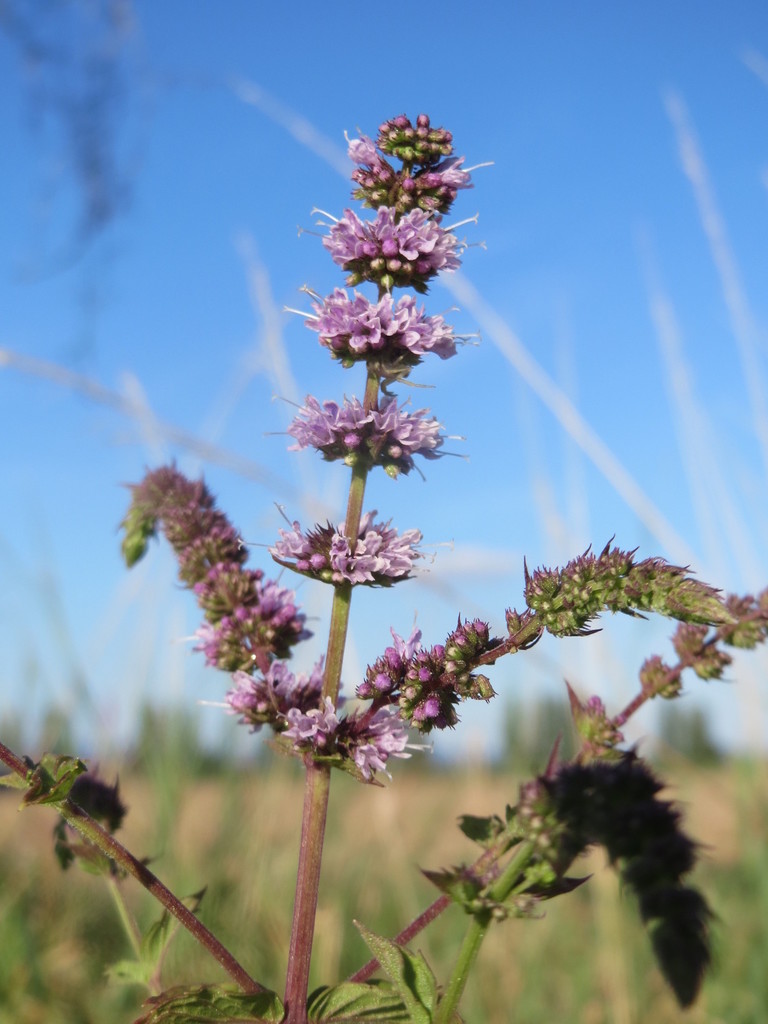
Mint is a vigorous, aromatic herb that spreads quickly through underground runners. It thrives in moist, cool conditions and is a favorite for culinary use. Because it grows so aggressively, it is best kept in containers to prevent it from taking over your garden.

At a glance
- Care level
- Easy
- Plant type
- Perennial herb
- Light
- Partial shade to full sun
- Indoor light
- Bright indirect
- Water
- Every 2 to 4 days
- Mature size
- 60cm tall, indefinite spread
- Growth rate
- Fast
- Hardiness
- USDA 3 to 9
- Bloom time
- Mid to late summer
Care
Keep the soil consistently moist and pinch back the stems regularly to encourage a bushy shape. Watch for signs of rust or powdery mildew on the leaves, which can happen if air circulation is poor. If the plant becomes root-bound in a pot, it will quickly lose vigor.
- Watering
- Keep the soil consistently moist but not waterlogged.
- Feeding
- Use a balanced liquid fertilizer during the active growing season.
- Pruning
- Regularly harvest or pinch back stems to encourage dense growth.
- Repotting
- Repot when the plant becomes root-bound or growth slows significantly.
- Soil
- Moist, well-draining, nutrient-rich soil
- Soil pH
- 6.0 to 7.0
- Temperature
- -20 to 35°C
- Humidity
- 40 to 70%
- Drought tolerance
- Low
- Lifespan
- Perennial, typically 3 to 5 years before needing division.
- Fragrance
- Strong
- Deer and rabbits
- High
Signs it needs repotting
- Roots growing out of the drainage holes.
- Plant growth slows down significantly.
- Soil dries out very quickly.
Safety
- People
- Mint is generally considered non-toxic to humans.
- Pets
- Mint is generally considered non-toxic to cats and dogs, though large ingestions may cause mild stomach upset.
- Children
- The strong menthol scent can be overwhelming for very young children, but the plant is not inherently dangerous to handle.
- Contact allergens
- Some people may experience mild skin irritation from contact with fresh mint oils.
- Airborne allergens
- Mint pollen is not a major allergen, though some individuals may be sensitive to the strong aromatic oils.
- Edibility
- While generally safe, excessive consumption of certain mint oils can cause digestive distress.
How to identify it
- Opposite, serrated, aromatic leaves
- Square stems typical of mint family
- Small, tubular flowers in spikes
- Spreading habit via underground stolons
- Height
- 0.3 to 0.9m
- Spread
- 0.6 to 3m
- Leaves
- green, dark green, deciduous
- Flowers
- lavender, pink, white, 0.2 to 0.5cm
Problems to watch for
- AphidsCommon
- Mint RustCommon
- Powdery MildewUncommon
- Root RotUncommon
- Spider MitesUncommon
- Verticillium WiltUncommon
By symptom
Check your mint from a photo
Pocket Botanist looks at a photo of your plant and tells you what's wrong and what to try first.
Growing it
- Propagation
- division, cuttings, seed
- When to plant
- spring, early autumn
- Overwintering
- In cold climates, the foliage will die back to the ground. You can mulch the base to protect the roots, and new growth will emerge in the spring.
- In containers
- Mint is perfect for containers, just ensure the pot has drainage and is at least 30 cm wide.
Division
- 1. Dig up a section of the root mass.
- 2. Use a clean knife to separate the roots.
- 3. Replant the sections in moist soil.
Cuttings
- 1. Take a 10 cm cutting from a healthy stem.
- 2. Place the cutting in a glass of water.
- 3. Once roots appear, transplant into soil.
Always plant mint in its own container to keep it from choking out your other herbs.
Grows well with
Similar species
- Catnip — It shares a similar growth habit and square stem but has a different effect on cats.
- Lemon Balm — This is a member of the same family with a distinct citrus scent.
Science
- Family
- Lamiaceae
- Genus
- Mentha
- Order
- Lamiales
- Class
- Magnoliopsida
- Native range
- Temperate regions of Europe, Asia, and North America.
- Conservation
- Mint is widespread and not of conservation concern.
Mint thrives in moist, disturbed soil and spreads rapidly to colonize open areas.
- Value to wildlife
- nectar source, attracts beneficial insects
- Pollinators
- bees, butterflies, moths
- Uses
- culinary herb, tea, ground cover, aromatic garden
Through the year
Ecological indicators
- Salinity
- 2/9
- Soil reaction
- 6/9
- Light
- 6/9
- Temperature
- 5/9
- Moisture
- 7/9
- Nutrients
- 6/9
Taxonomy resolved against GBIF.
Questions people ask
- Why is my mint taking over the garden?
- Mint spreads via vigorous underground runners that are hard to stop once established.
- Can I grow mint in a pot?
- Yes, it is actually recommended to grow mint in containers to prevent it from spreading into unwanted areas.
Where the name comes from
The name Mentha comes from the Greek nymph Minthe, who was transformed into the plant. The common name mint is a direct derivation of this ancient Greek root.
Good to know
- Mint has been used for centuries as a breath freshener.
- There are over 25 species of mint.
- The plant is famous for its cooling sensation caused by menthol.
Also in
Keep your mint growing
This page is a general guide. Save your plant in Pocket Botanist and you get care reminders timed for this plant, plus a care history that shows what worked.
This guide was generated with AI and checked against GBIF taxonomy. It is general information, not horticultural or veterinary advice. Read about how we build these guides.