 Pocket Botanist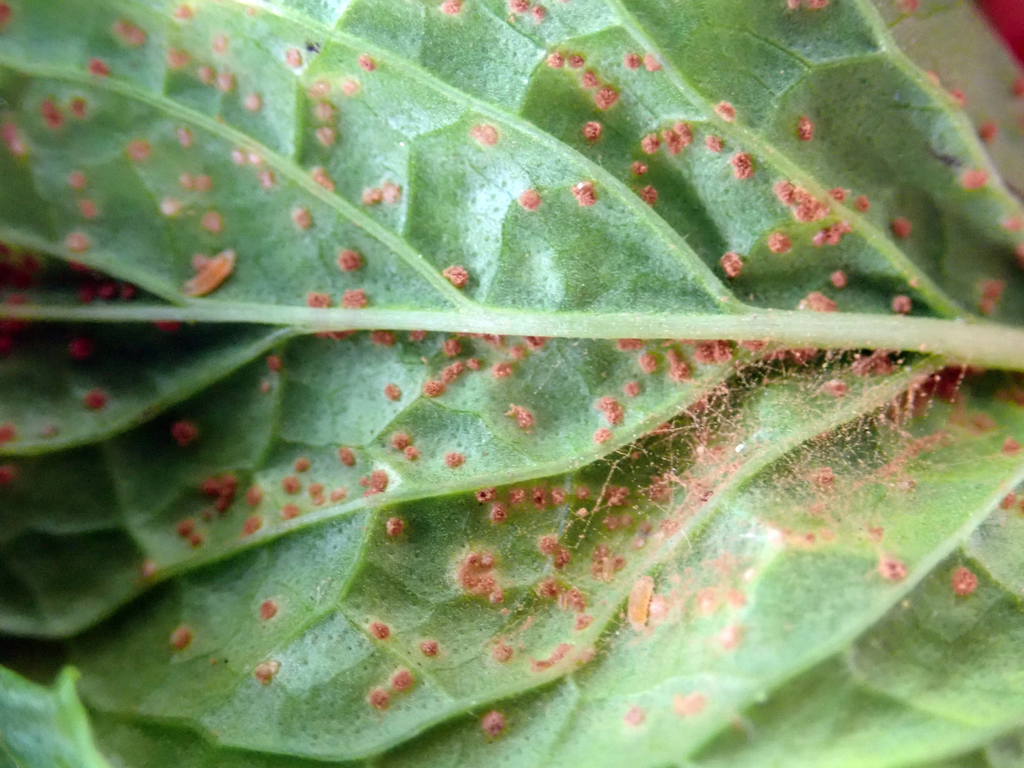
Symptoms by part
Leaves
Small, bright orange or yellow powdery spots appear on the undersides of leaves, sometimes accompanied by yellowing or distortion on the upper surface.
Causes
- High humidity levels around the foliage.
- Poor air circulation within dense plant patches.
- Prolonged periods of leaf wetness from overhead watering.
- Cool to mild temperatures during the growing season.
Could be confused with
- Leaf Spot · Leaf spot typically creates dark, necrotic lesions with defined borders rather than the raised, powdery orange pustules characteristic of rust.
- Powdery Mildew · Powdery mildew appears as a white, dusty coating on the leaf surface, whereas rust is distinctly orange and erupts from within the leaf tissue.
Treatment
- Cut the entire plant back to the soil line immediately upon seeing the first orange spots to remove the source of spores.
- Bag and dispose of all infected plant debris in the household trash rather than composting it.
- Thin out the remaining mint patch to improve airflow and reduce humidity around the base of the stems.
- Apply sulfur to the remaining healthy foliage to inhibit further fungal growth, follow the label.
Without chemicals
- Prune plants heavily to increase ventilation.
- Water only at the base of the plant to keep leaves dry.
- Remove and destroy all infected plant material promptly.
- Divide and replant mint in a new location with better sun exposure and airflow.
Chemical options
- Sulfur, apply as a dust or spray to foliage to prevent spore germination, follow the label.
Preventing it
- Space plants widely to ensure good air movement.
- Avoid overhead watering to keep foliage dry.
- Start new patches with healthy, disease free cuttings.
- Clear away all dead plant material from the garden bed at the end of the season.
Season
The warm growing season, especially during damp or humid stretches.
Spread risk
High
Severity
Moderate
When to act
Act as soon as you spot the first orange pustules to prevent the fungus from spreading to the entire patch. If the infection covers more than half of the plant, it is best to cut it back completely or remove the plant entirely to protect nearby mint.
Think it's Mint Rust?
This guide covers the general picture. Pocket Botanist looks at your actual plant from a photo and tells you what's really going on, how serious it is, and what to try first. Identification and a health check are free.


Questions people ask
- Can I still eat mint that has rust on it?
- It is best to avoid eating leaves that show signs of rust, as the fungal spores can cause irritation or digestive upset.
- Will my mint come back healthy next year?
- If you clear away all infected debris and ensure the new growth has better airflow, your mint will often return healthy the following season.
Plants it affects
This guide was generated with AI and is general information, not horticultural advice. Read about how we build these guides.