 Pocket Botanist
Guide botanique
Menthe.
Mentha
Prononciation MEN-thuh
Aussi appelée Menthe, Menthes


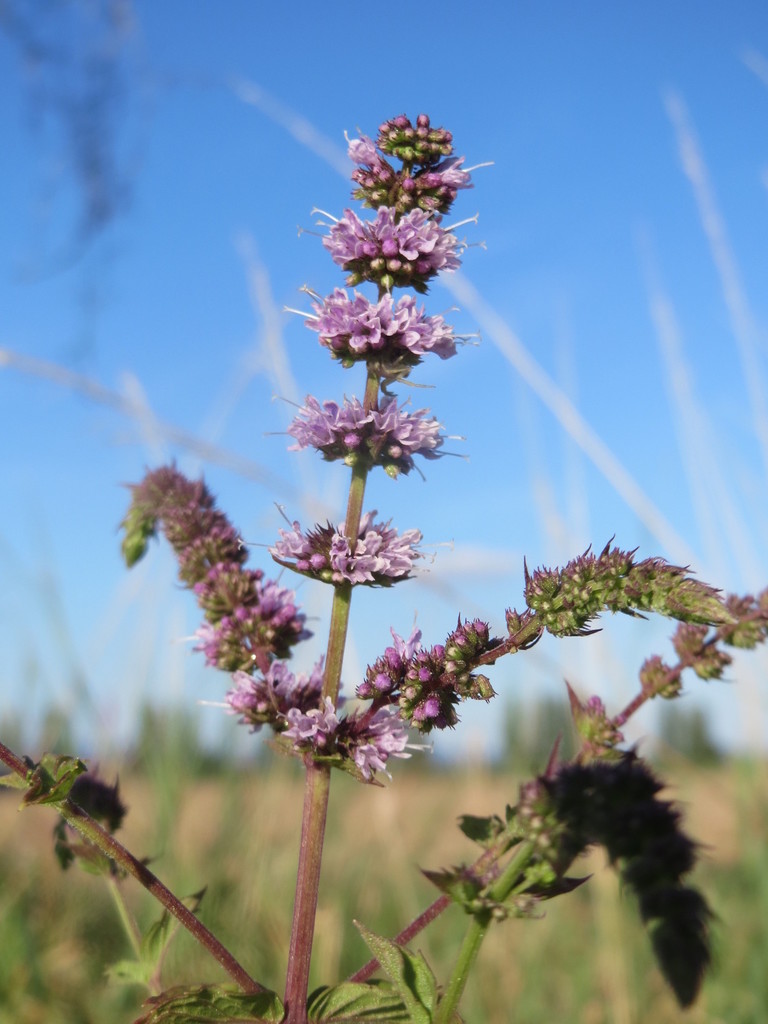
La menthe est une herbe aromatique vigoureuse qui se propage rapidement par ses stolons souterrains. Elle prospère dans des conditions fraîches et humides et est un favori pour un usage culinaire. Comme elle pousse très agressivement, il est préférable de la conserver en pots pour l'empêcher de prendre le dessus sur votre jardin.

En un coup d'œil
- Niveau d'entretien
- Facile
- Type de plante
- Herbe vivace
- Lumière
- Mi-ombre à plein soleil
- Lumière en intérieur
- Lumière vive indirecte
- Arrosage
- Tous les 2 à 4 jours
- Taille adulte
- 60 cm de haut, étalement indéfini
- Croissance
- Rapide
- Rusticité
- USDA 3 à 9
- Floraison
- Mi à fin de l'été
Entretien
Gardez le sol constamment humide et pincez régulièrement les tiges pour encourager une forme touffue. Surveillez les signes de rouille ou d'oïdium sur les feuilles, qui peuvent survenir si la circulation de l'air est médiocre. Si la plante devient à l'étroit dans son pot, elle perdra rapidement de sa vigueur.
- Arrosage
- Gardez le sol constamment humide mais pas détrempé.
- Engrais
- Utilisez un engrais liquide équilibré pendant la saison de croissance active.
- Taille
- Récoltez ou pincez régulièrement les tiges pour encourager une croissance dense.
- Rempotage
- Rempotez lorsque la plante devient à l'étroit dans son pot ou que la croissance ralentit considérablement.
- Sol
- Sol humide, bien drainé et riche en nutriments
- pH du sol
- 6,0 à 7,0
- Température
- -20 à 35°C
- Humidité
- 40 à 70%
- Résistance à la sécheresse
- Faible
- Durée de vie
- Vivace, généralement 3 à 5 ans avant de nécessiter une division.
- Parfum
- Fort
- Résistance aux chevreuils et lapins
- Élevée
Signes qu'il faut rempoter
- Des racines sortent des trous de drainage.
- La croissance de la plante ralentit considérablement.
- Le sol sèche très rapidement.
Sécurité
- Humains
- La menthe est généralement considérée comme non toxique pour l'homme.
- Animaux
- La menthe est généralement considérée comme non toxique pour les chats et les chiens, bien que de grosses ingestions puissent provoquer de légers maux d'estomac.
- Enfants
- L'odeur forte de menthol peut être écrasante pour les très jeunes enfants, mais la plante n'est pas intrinsèquement dangereuse à manipuler.
- Allergènes de contact
- Certaines personnes peuvent ressentir une légère irritation cutanée au contact des huiles essentielles de menthe fraîche.
- Allergènes aéroportés
- Le pollen de menthe n'est pas un allergène majeur, bien que certaines personnes puissent être sensibles aux huiles aromatiques fortes.
- Comestibilité
- Bien que généralement sans danger, la consommation excessive de certaines huiles de menthe peut provoquer une gêne digestive.
Comment l'identifier
- Feuilles opposées, dentées et aromatiques
- Tiges carrées typiques de la famille de la menthe
- Petites fleurs tubulaires en épis
- Habitude d'étalement via des stolons souterrains
- Hauteur
- 0,3 à 0,9m
- Envergure
- 0,6 à 3m
- Feuilles
- vert, vert foncé, caduque
- Fleurs
- lavande, rose, blanc, 0,2 à 0,5cm
Problèmes à surveiller
- PuceronsCourant
- Rouille de la mentheCourant
- OïdiumPeu courant
- Pourriture des racinesPeu courant
- TétranyquesPeu courant
- VerticilliosePeu courant
Par symptôme
Vérifie la santé de ta plante en photo
Pocket Botanist analyse une photo de ta plante et te dit ce qui ne va pas et quoi essayer en premier.
La cultiver
- Multiplication
- division, bouturage, semis
- Quand planter
- printemps, début de l'automne
- Hivernage
- Dans les climats froids, le feuillage disparaît jusqu'au sol. Vous pouvez pailler la base pour protéger les racines, et de nouvelles pousses émergeront au printemps.
- En pot
- La menthe est parfaite pour les conteneurs, assurez-vous simplement que le pot a un drainage et mesure au moins 30 cm de large.
Division
- 1. Dégagez une partie de la masse racinaire.
- 2. Utilisez un couteau propre pour séparer les racines.
- 3. Replantez les sections dans un sol humide.
Bouturage
- 1. Prenez une bouture de 10 cm d'une tige saine.
- 2. Placez la bouture dans un verre d'eau.
- 3. Une fois les racines apparues, transplantez dans le sol.
Plantez toujours la menthe dans son propre conteneur pour l'empêcher d'étouffer vos autres herbes.
Bonnes associations
- Tomate — La menthe est souvent plantée près des tomates pour aider à dissuader certains ravageurs du jardin.
- Chou frisé — L'odeur forte de la menthe peut aider à masquer l'odeur du chou pour les insectes affamés.
Espèces similaires
- Nepeta cataria — Elle partage un port similaire et une tige carrée mais a un effet différent sur les chats.
- Mélisse citronnelle — C'est un membre de la même famille avec un parfum distinct d'agrumes.
Science
- Famille
- Lamiaceae
- Genre
- Mentha
- Ordre
- Lamiales
- Classe
- Magnoliopsida
- Région d'origine
- Régions tempérées d'Europe, d'Asie et d'Amérique du Nord.
- Préservation
- La menthe est répandue et ne présente pas de préoccupation pour la conservation.
La menthe prospère dans les sols humides et perturbés et se propage rapidement pour coloniser les zones ouvertes.
- Intérêt pour la faune
- source de nectar, attire les insectes bénéfiques
- Pollinisateurs
- abeilles, papillons, papillons de nuit
- Utilisations
- herbe culinaire, thé, couvre-sol, jardin aromatique
Au fil des saisons
Repères écologiques
- Salinité
- 2/9
- Réaction du sol
- 6/9
- Lumière
- 6/9
- Température
- 5/9
- Humidité
- 7/9
- Nutriments
- 6/9
Taxonomie vérifiée avec le GBIF.
Ce qu'on demande souvent
- Pourquoi ma menthe envahit-elle le jardin ?
- La menthe se propage par des stolons souterrains vigoureux qui sont difficiles à arrêter une fois établis.
- Puis-je cultiver de la menthe en pot ?
- Oui, il est même recommandé de cultiver la menthe en conteneur pour l'empêcher de se propager dans des zones indésirables.
D'où vient le nom
Le nom Mentha vient de la nymphe grecque Minthe, transformée en plante. Le nom commun "menthe" est une dérivation directe de cette ancienne racine grecque.
Bon à savoir
- La menthe est utilisée depuis des siècles comme rafraîchisseur d'haleine.
- Il existe plus de 25 espèces de menthe.
- La plante est célèbre pour sa sensation de fraîcheur causée par le menthol.
Aussi dans
Garde ta plante en pleine forme
Cette page est un guide général. Enregistre ta plante dans Pocket Botanist et tu reçois des rappels d'entretien adaptés à cette plante, ainsi qu'un historique d'entretien qui montre ce qui a marché.
Ce guide a été généré par IA et vérifié avec la taxonomie du GBIF. Il s'agit d'informations générales, et non de conseils horticoles ou vétérinaires. Découvre comment nous concevons ces guides.