 Pocket Botanist
Pflanzenratgeber
Butternut Squash.
Cucurbita moschata
Aussprache koo-KUR-bi-tuh mos-KAH-tuh
Auch bekannt als Calabaza, Dickinson pumpkin, Kentucky field pumpkin, Large cheese pumpkin, Long Island cheese pumpkin, Neck pumpkin, Seminole pumpkin, Spanish gourd



Butternut squash is a popular winter squash known for its sweet, nutty flavor and smooth texture. These vining plants produce tan, bell shaped fruits that store well throughout the colder months. They are a staple in many home gardens and kitchens alike.
Auf einen Blick
- Pflegestufe
- Mittel
- Pflanzenart
- Annual vegetable
- Licht
- Full sun
- Licht im Innenraum
- Direkte Sonne
- Gießen
- Alle 2 bis 4 Tage
- Endgröße
- 10 to 15 feet long vines
- Wachstum
- Schnell
- Winterhärte
- USDA 3 bis 11
- Blütezeit
- Mid summer to early autumn
Pflege
Provide plenty of space for the vines to spread and ensure the soil stays consistently moist. Watch for powdery mildew on the leaves and harvest when the stem turns woody and brown. Consistent heat is key for fruit development.
- Gießen
- Keep the soil evenly moist but avoid wetting the leaves to prevent fungal issues.
- Düngen
- Apply a balanced fertilizer once the plants start to bloom.
- Schneiden
- Trim back excessive vine growth if the plant is taking over your garden space.
- Umtopfen
- These are annuals and are typically grown directly in the garden soil.
- Boden
- Rich, well draining loam
- Boden-pH
- 6.0 to 6.8
- Temperatur
- 15 bis 35°C
- Luftfeuchtigkeit
- 40 bis 70%
- Trockenheitstoleranz
- Mittel
- Lebensdauer
- Annual, one growing season
- Wildverbiss-Resistenz
- Gering
Sicherheit
- Menschen
- The plant is non toxic, though some wild varieties may contain cucurbitacins that cause bitterness and digestive upset.
- Kinder
- The large, rough leaves can be abrasive to sensitive skin, and the heavy fruits may pose a crushing hazard if they fall.
- Kontaktallergene
- Handling the fuzzy stems and leaves may cause mild skin irritation in sensitive individuals.
- Allergene in der Luft
- Pollen is generally heavy and sticky, posing little risk for airborne allergies.
- Essbarkeit
- Always cook the flesh thoroughly before consumption to ensure proper digestion.
So erkennst du die Pflanze
- Bell shaped tan skin
- Bright orange sweet flesh
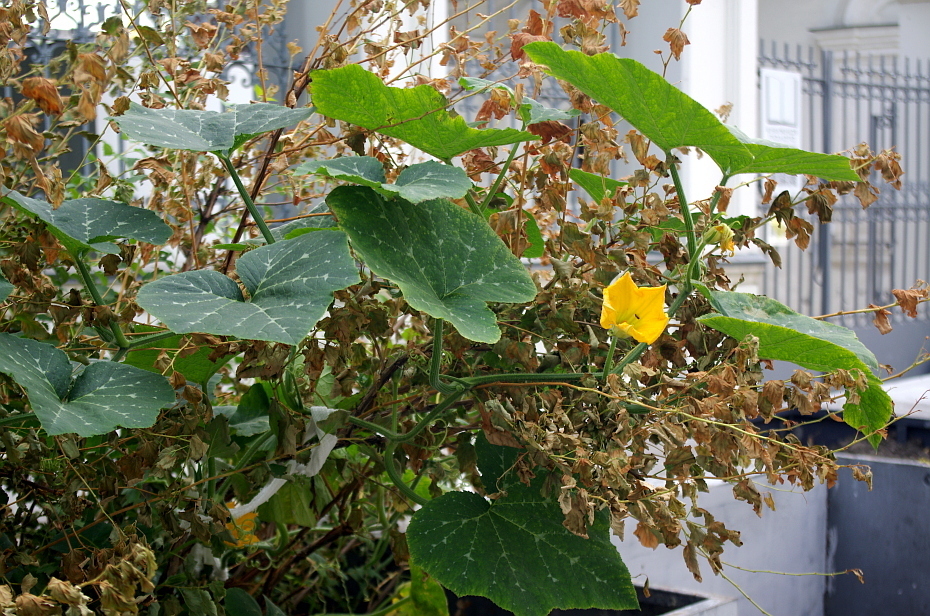
- Large heart shaped leaves
- Yellow trumpet shaped flowers
- Vining growth habit
- Höhe
- 0,3 bis 0,6m
- Breite
- 2 bis 6m
- Blätter
- green, deciduous
- Blüten
- yellow, 5 bis 10cm
- Früchte
- tan, orange, green, Late summer to autumn
Häufige Probleme
- Powdery mildew — A white fungal growth that appears on the surface of leaves during humid weather.
- Squash vine borer — Larvae tunnel into the main stem, causing the plant to wilt and collapse suddenly.
Standort und Pflege
- Vermehrung
- seed
- Pflanzzeit
- spring
- Überwinterung
- The plant dies after the first frost, so remove all debris to prevent disease carryover.
- Im Kübel
- They are generally too large for containers, though dwarf varieties may grow in a 20 liter pot.
Direct Sowing
- 1. Wait until all danger of frost has passed.
- 2. Plant seeds 2 cm deep in warm, fertile soil.
- 3. Space mounds 1 meter apart to allow for vining.
Planting these in a traditional three sisters arrangement maximizes space and soil health.
Gute Pflanzpartner
- Mais — Corn provides a natural trellis for the squash to climb.
- Kapuzinerkresse — Nasturtiums act as a trap crop for certain pests.
- Gartenbohne — Beans fix nitrogen in the soil, which helps the squash grow.
Fernhalten von
- Potato — Potatoes compete for soil nutrients and space.
Ähnliche Arten
- Courgette — They share similar growth habits but have different fruit characteristics.
- Cucurbita maxima — These are also vining winter squashes but require different growing conditions.
Botanisches
- Familie
- Cucurbitaceae
- Gattung
- Cucurbita
- Ordnung
- Cucurbitales
- Klasse
- Magnoliopsida
- Ursprüngliche Heimat
- Central and South America
- Artenschutz
- Not of conservation concern as it is widely cultivated globally.
It thrives in warm, sunny environments with rich soil and ample space to sprawl.
- Nutzen für Wildtiere
- nectar source
- Bestäuber
- Bienen, Schmetterlinge
- Verwendung
- culinary, ornamental, storage crop
Im Jahresverlauf
Ökologische Zeigerwerte
- Salzgehalt
- 2/9
- Bodenreaktion
- 6/9
- Licht
- 8/9
- Temperatur
- 7/9
- Feuchtigkeit
- 6/9
- Nährstoffe
- 7/9
Taxonomie abgeglichen mit GBIF.
Häufige Fragen
- When should I harvest?
- Harvest when the rind is hard and the stem begins to dry or turn corky.
- Why are my fruits rotting?
- Excessive moisture or poor air circulation often leads to fruit rot.
Woher der Name kommt
The name Cucurbita comes from the Latin word for gourd, while moschata refers to the faint musky scent of the fruit.
Gut zu wissen
- These squash are known for their excellent resistance to vine borers compared to other species.
- The fruits can often be stored for several months in a cool, dry place.
- They are a staple in many traditional dishes across the Americas.
Probleme mit Butternut Squash?
Diese Seite bietet allgemeine Infos. Pocket Botanist erkennt Probleme anhand eines Fotos deiner echten Pflanze, passt das Gießen an dein Licht und deinen Standort an und erinnert dich an die Pflege.
Dieser Ratgeber wurde mit KI erstellt und mit der GBIF-Taxonomie abgeglichen. Er dient zur allgemeinen Information und ersetzt keine gärtnerische oder tierärztliche Beratung. Hier erfährst du, wie wir diese Ratgeber erstellen.