 Pocket Botanist
Plant guide
Maize.
Zea mays
Pronounced ZEE-uh mayz
Also known as Corn, Indian Corn



Scan with your phone's camera to get the app
Or go to pocketbotanist.app/get on your phone

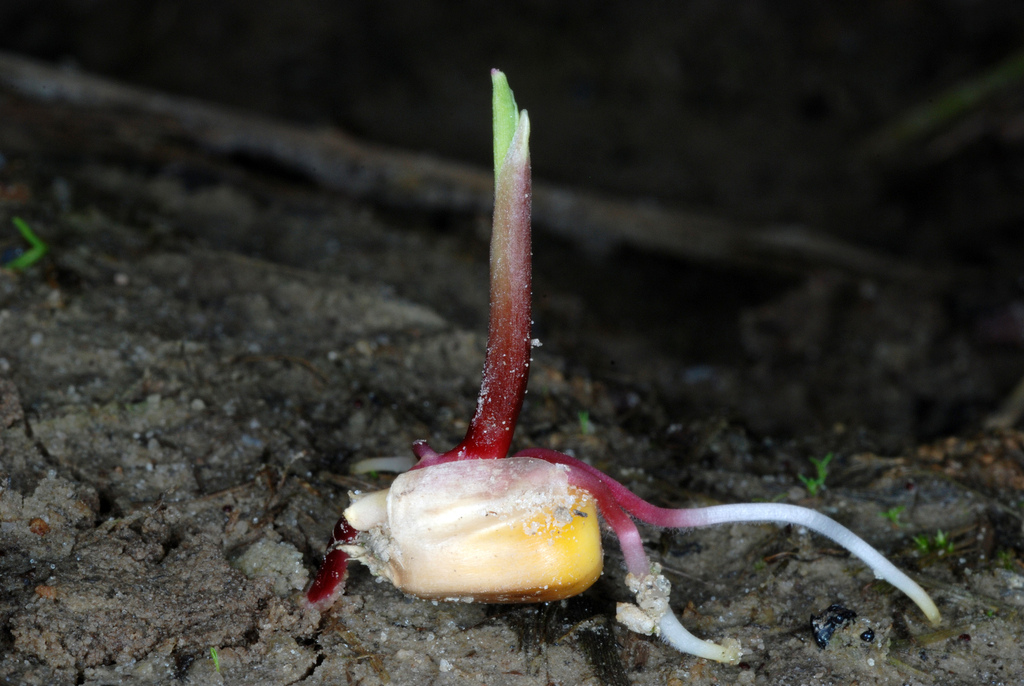
Maize is a tall, fast growing cereal grain that thrives in warm weather. It is a staple crop grown globally for its edible kernels. You will need plenty of space and full sun to get a good harvest.
At a glance
- Care level
- Easy
- Plant type
- Annual grass
- Light
- Full sun
- Indoor light
- Direct sun
- Water
- Every 2 to 4 days
- Mature size
- 200 to 300 cm
- Growth rate
- Fast
- Hardiness
- USDA 3 to 11
- Bloom time
- Mid to late summer
Care
Plant seeds directly in warm soil once frost danger has passed. Keep the soil consistently moist and provide plenty of nitrogen for vigorous growth. Watch for wilting leaves as a sign that the plant needs more water during hot spells.
- Watering
- Keep the soil evenly moist throughout the growing season, especially during silk formation.
- Feeding
- Apply a balanced nitrogen rich fertilizer every three weeks to support rapid vegetative growth.
- Pruning
- Pruning is generally not required, though you can remove dead lower leaves if they become unsightly.
- Repotting
- Maize is an annual plant and is not typically repotted.
- Soil
- Well draining, fertile, loamy soil
- Soil pH
- 5.8 to 7.0
- Temperature
- 15 to 35°C
- Humidity
- 40 to 70%
- Drought tolerance
- Low
- Lifespan
- Annual, one growing season
- Deer and rabbits
- Low
Signs it needs repotting
- Roots circling the bottom of the pot.
- Stunted growth despite regular feeding.
Safety
- People
- The plant is non-toxic to humans.
- Children
- The tall stalks can be unstable, so ensure children do not climb or pull on them.
- Contact allergens
- The leaves have fine hairs that can cause minor skin irritation.
- Airborne allergens
- Corn pollen is wind-borne and can trigger seasonal allergies in sensitive individuals.
- Edibility
- Raw corn is safe, but ensure it is not treated with pesticides before consumption.
How to identify it
- Tall, sturdy, unbranched grass stalks
- Long, broad, alternate green leaves
- Male flowers form a terminal tassel
- Female flowers develop into ears
- Kernels arranged in rows on cobs
- Height
- 1.5 to 3m
- Spread
- 0.3 to 0.6m
- Leaves
- green, deciduous
- Flowers
- yellow, white, red, purple, 5 to 20cm
- Fruit
- yellow, white, blue, red, black, Late summer to early autumn
Problems to watch for
- Corn EarwormCommon
- Corn SmutCommon
- CutwormsUncommon
- Root RotUncommon
- RustUncommon
- Stem BorersUncommon
Check your maize from a photo
Pocket Botanist looks at a photo of your plant and tells you what's wrong and what to try first.
Scan with your phone's camera to get the app
Or go to pocketbotanist.app/get on your phone
Growing it
- Propagation
- seed
- When to plant
- spring
- Overwintering
- Corn is an annual and will die after the first frost, so simply clear the stalks from the garden.
- In containers
- Corn is generally not recommended for containers unless you use a dwarf variety in a pot at least 45 cm deep.
Direct Sowing
- Wait until soil is warm.
- Plant seeds 3 cm deep.
- Space seeds 20 cm apart in blocks.
Planting corn, beans, and squash together is a classic technique known as the Three Sisters.
Grows well with
Keep away from
- Tomato · They share similar pests like the corn earworm which can devastate both crops.
Similar species
- Sorghum · It is another tall grass used for grain and fodder.
Science
- Family
- Poaceae
- Genus
- Zea
- Order
- Poales
- Class
- Liliopsida
- Native range
- Mexico and Central America
- Conservation
- Not of conservation concern as it is a widely cultivated crop.
It is a highly productive grass that thrives in full sun with consistent moisture.
- Value to wildlife
- pollen source
- Pollinators
- bees, beetles
- Uses
- culinary, ornamental, livestock feed
Through the year
Ecological indicators
- Salinity
- 2/9
- Soil reaction
- 6/9
- Light
- 8/9
- Temperature
- 7/9
- Moisture
- 6/9
- Nutrients
- 8/9
Taxonomy resolved against GBIF.
Questions people ask
- Can I grow corn in a pot?
- Yes, but you need a very large container and a dwarf variety.
- Why is my corn not producing ears?
- Corn requires wind pollination, so it must be planted in blocks rather than single rows.
Where the name comes from
The name Zea comes from the Greek word for cereal, while mays is derived from the Taino word for the plant.
Good to know
- Corn is grown on every continent except Antarctica.
- Each silk on an ear of corn is attached to an individual kernel.
- Corn was originally domesticated in southern Mexico.
Keep your maize growing
This page is a general guide. Save your plant in Pocket Botanist and you get care reminders timed for this plant, plus a care history that shows what worked.
Scan with your phone's camera to get the app
Or go to pocketbotanist.app/get on your phone
This guide was generated with AI on and checked against GBIF taxonomy. It is general information, not horticultural or veterinary advice. Read about how we build these guides.