 Pocket Botanist
Plant guide
Sorghum.
Sorghum bicolor
Pronounced SOR-gum BY-kuh-ler
Also known as Creole Corn, Forage Sorghum, Great Millet, Guinea Corn, Rhodesian Sudan grass, Sorghum, Sorghums



Scan with your phone's camera to get the app
Or go to pocketbotanist.app/get on your phone
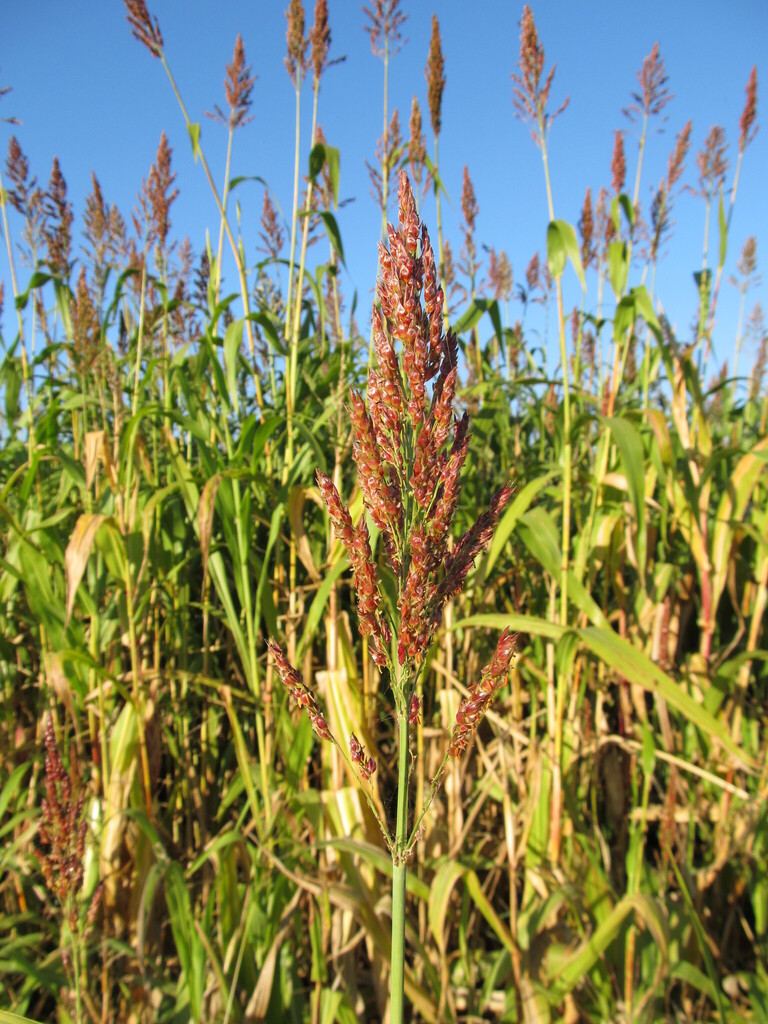
Sorghum is a sturdy, grass-like crop that thrives in warm climates. It is widely grown for its grain and forage value. You will find it is quite resilient once it gets established in the garden.

At a glance
- Care level
- Easy
- Plant type
- Annual grass
- Light
- Full sun
- Indoor light
- Direct sun
- Water
- Every 3 to 7 days
- Mature size
- 6 to 10 feet
- Growth rate
- Fast
- Hardiness
- USDA 9 to 11
- Bloom time
- Mid to late summer
Care
Plant these in a spot that gets plenty of sun and keep the soil consistently moist during the early growth stages. Watch for yellowing leaves, which might mean the soil is too wet or lacks nutrients. It is a very straightforward plant to manage if you provide enough warmth.
- Watering
- Keep the soil evenly moist but not waterlogged during the peak growing season.
- Feeding
- Apply a balanced fertilizer once a month to support its rapid growth.
- Pruning
- Pruning is usually not necessary unless you are harvesting the grain or removing dead foliage.
- Repotting
- This plant is typically grown as an annual in the ground and does not require repotting.
- Soil
- Well-draining, loamy soil
- Soil pH
- 5.5 to 7.5
- Temperature
- 15 to 35°C
- Humidity
- 40 to 70%
Safety
- People
- The plant is generally safe for consumption as a grain, but young foliage can be toxic to livestock.
- Pets
- Sorghum can be toxic to pets if they ingest large amounts of the leaves, especially when the plant is young or stressed.
- Children
- The tall, sturdy stalks can be a tripping hazard or cause minor scratches if children run through dense plantings.
- Contact allergens
- Handling the foliage may cause mild skin irritation in sensitive individuals due to fine hairs.
- Airborne allergens
- The pollen can trigger seasonal allergies in susceptible people during the flowering stage.
- Edibility
- Sorghum leaves and shoots can contain cyanogenic glycosides that pose a risk if consumed in large quantities, especially when young.
How to identify it
- Tall, thick, cane-like stems
- Broad, flat, lance-shaped leaves
- Dense, terminal seed panicles
- Fibrous, deep-reaching root system
- Height
- 0.6 to 4m
- Spread
- 0.3 to 0.9m
- Leaves
- green, deciduous
- Flowers
- green, yellow, red, 0.5 to 1cm
- Fruit
- brown, red, white, yellow, Autumn
Problems to watch for
- AnthracnoseCommon
- Sorghum MidgeCommon
- Stem BorersCommon
- AphidsUncommon
- Root RotUncommon
- SmutUncommon
Check your sorghum from a photo
Pocket Botanist looks at a photo of your plant and tells you what's wrong and what to try first.
Scan with your phone's camera to get the app
Or go to pocketbotanist.app/get on your phone
Growing it
- Propagation
- seed
- When to plant
- Spring
Plant legumes like cowpeas alongside sorghum to naturally boost soil nitrogen levels for better yields.
Grows well with
Keep away from
- Sudangrass · They share similar pests and diseases, leading to increased pressure when planted together.
Similar species
- Sudangrass · It is a close relative often used for forage rather than grain.
- Johnsongrass · It is a related perennial grass that is considered an invasive weed in many areas.
Science
- Family
- Poaceae
- Genus
- Sorghum
- Order
- Poales
- Class
- Liliopsida
- Native range
- Northeastern Africa
- Conservation
- Not of conservation concern as it is a widely cultivated agricultural crop.
It is a drought tolerant C4 grass that thrives in hot, arid environments where other grains fail.
- Value to wildlife
- provides cover for birds, seed source for birds
- Pollinators
- bees, butterflies
- Uses
- grain production, forage, syrup production, ornamental grass
Through the year
Ecological indicators
- Salinity
- 4/9
- Soil reaction
- 6/9
- Light
- 8/9
- Temperature
- 8/9
- Moisture
- 4/9
- Nutrients
- 6/9
Taxonomy resolved against GBIF.
Questions people ask
- Can I grow sorghum in a pot?
- Yes, but you need a very large container to support its height and root system.
- Does it need full sun?
- It thrives best in full, direct sunlight.
Where the name comes from
The name Sorghum comes from the Italian word sorgo, which traces back to the Latin surgere, meaning to rise. The species name bicolor refers to the two colors often seen in the grain or glumes.
Good to know
- Sorghum is the fifth most important cereal crop globally.
- It is naturally gluten free.
- Some varieties are grown specifically for their sweet stalks to make molasses.
- It originated in northeastern Africa.
Also in
Keep your sorghum growing
This page is a general guide. Save your plant in Pocket Botanist and you get care reminders timed for this plant, plus a care history that shows what worked.
Scan with your phone's camera to get the app
Or go to pocketbotanist.app/get on your phone
This guide was generated with AI on and checked against GBIF taxonomy. It is general information, not horticultural or veterinary advice. Read about how we build these guides.