 Pocket Botanist
Symptoms by part
Fruit
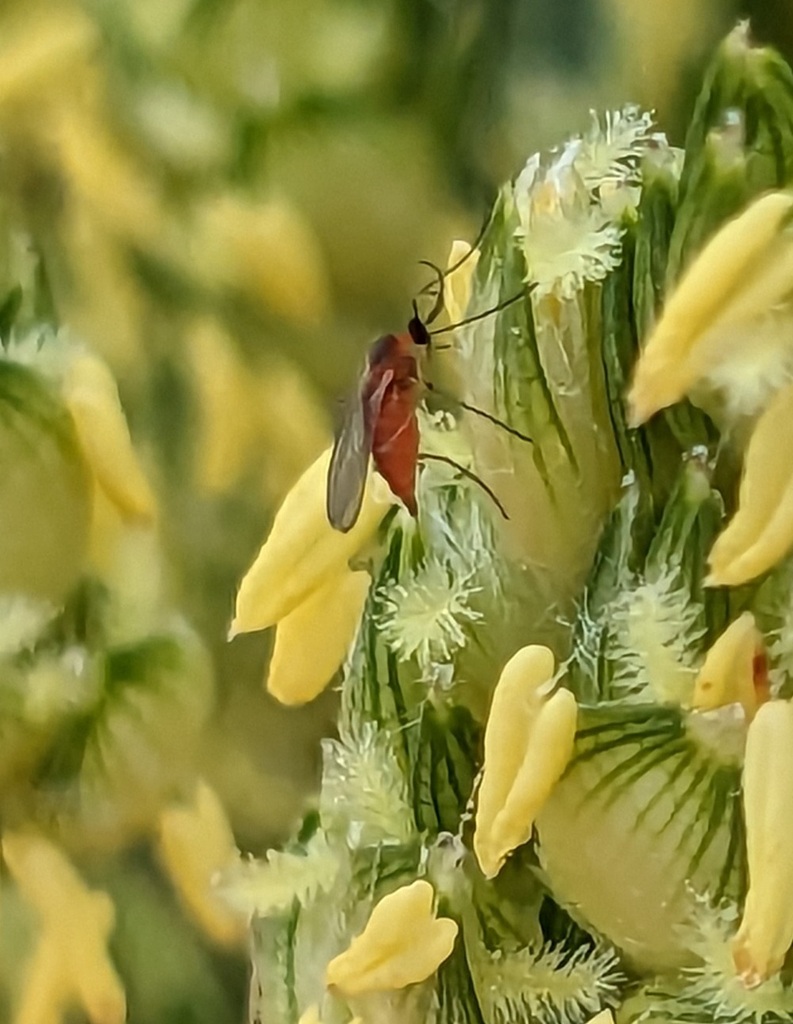
The grain heads appear empty or blasted, with individual florets failing to develop seeds and often showing a flattened or shriveled appearance.
Causes
- Warm and humid weather conditions during the flowering stage of the plant.
- Presence of wild sorghum or Johnson grass nearby that acts as a host for the midges to breed before moving to your crop.
Could be confused with
- Head smut · Head smut causes the entire head to turn into a mass of black spores, whereas midge damage leaves the head looking empty but intact.
- Drought stress · Drought stress typically affects the entire plant with wilting and yellowing, while midge damage is specific to the grain development in the heads.
Find out what's really wrong with your plant
Problems that look alike are easy to mix up. Pocket Botanist looks at a photo of your actual plant and tells you what's going on, how serious it is, and what to try first. Identification and a health check are free.



Scan with your phone's camera to get the app
Or go to pocketbotanist.app/get on your phone
Treatment
- 1. Remove and destroy all wild sorghum and Johnson grass in the immediate vicinity to eliminate breeding grounds.
- 2. Harvest the crop as early as possible to prevent further generations of midges from completing their life cycle.
- 3. Apply lambda-cyhalothrin to the grain heads when flowering begins if the midge population is high, follow the label.
Without chemicals
- Plant sorghum varieties that bloom uniformly to shorten the window of vulnerability.
- Destroy crop residues immediately after harvest to kill overwintering larvae.
- Rotate crops to non-host species to break the life cycle.
Chemical options
- lambda-cyhalothrin, apply to the grain heads during the flowering stage, follow the label.
Preventing it
- Plant early in the season so that the flowering period does not coincide with the peak midge population.
- Maintain a clean field by removing all weeds and grasses that can host the midge.
- Use resistant sorghum hybrids that are less attractive to the midge.
Season
The warm growing season, specifically when the plants are in the flowering stage.
Spread risk
High
Severity
High
When to act
Act as soon as you see the first signs of flowering to protect the developing grain. If the infestation is widespread and the grain heads are already empty, remove the crop to prevent the pest from spreading to future plantings.
Keep your plants healthy from here
Save your plants in Pocket Botanist and you get care reminders timed for each one, plus a care history that shows what worked. Identification and a health check are free.
Questions people ask
- Can I save the grain if I see midges?
- If you see the adult flies during flowering, you can use a treatment to protect the remaining florets, but any grain already infested will not recover.
- How do I know if it is midge or something else?
- Look closely at the grain heads. If you see tiny orange flies or empty, blasted florets without fungal growth, it is likely the sorghum midge.
Plants it affects
Answers plant by plant
This guide was generated with AI on and is general information, not horticultural advice. Read about how we build these guides.