 Pocket Botanist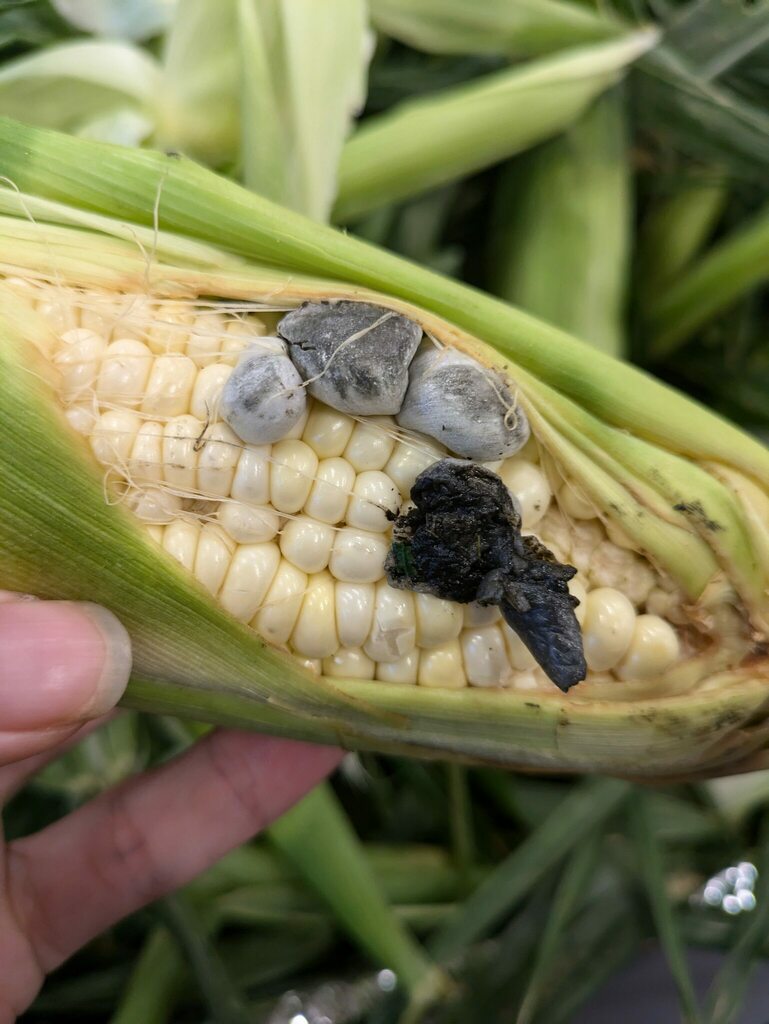
Symptoms by part
Fruit
The fruit develops swollen, distorted galls that eventually rupture to reveal a black, soot like powder.
Stems
Stems may show elongated, blister like swellings that burst open to release dark fungal spores.
Causes
- High humidity levels around the plant.
- Poor air circulation in the growing area.
- Extended periods of wet weather during the development stage.
- Soil temperatures that favor fungal spore germination.
Could be confused with
- Rust · Rust produces orange or reddish brown pustules, whereas Smut produces black or dark grey powdery masses.
- Gall forming insects · Insects create solid, woody galls that do not contain powdery spores when broken open.
Treatment
- Prune away and destroy any stems or fruit showing signs of swelling or dark powder immediately.
- Sterilize your pruning tools with rubbing alcohol between every cut to prevent moving spores to healthy tissue.
- Remove all plant debris from the soil surface at the end of the season to reduce the number of spores overwintering.
- Apply potassium bicarbonate as a foliar spray to the remaining healthy parts of the plant to inhibit fungal growth, follow the label.
Without chemicals
- Improve spacing between plants to increase airflow.
- Use a rain cover or cloche to keep foliage and stems dry during wet spells.
- Practice crop rotation to avoid planting susceptible species in the same spot for 3 to 4 years.
- Water only at the base of the plant to keep the stems and fruit dry.
Chemical options
- Potassium bicarbonate, mix with water and spray on foliage to change the pH and stop fungal growth, follow the label.
Preventing it
- Choose resistant varieties when selecting seeds or starts.
- Ensure the planting site has excellent drainage to prevent waterlogged soil.
- Thin out dense foliage to allow sunlight and air to reach the center of the plant.
- Clean all garden tools thoroughly after working in areas where the disease was present.
Season
The warm growing season.
Spread risk
Moderate
Severity
Moderate
When to act
Act the moment you see any swelling or dark powder on the plant. If more than half of the plant is affected, it is best to remove and destroy the entire plant to protect your other crops.
Think it's Smut?
This guide covers the general picture. Pocket Botanist looks at your actual plant from a photo and tells you what's really going on, how serious it is, and what to try first. Identification and a health check are free.


Questions people ask
- Can I compost plants that have Smut?
- No, you should not compost infected material because home compost piles rarely get hot enough to kill the fungal spores.
- Is Smut harmful to humans or pets?
- While most types of Smut are not toxic, you should avoid eating any fruit or plant parts that show signs of the disease.
Plants it affects
This guide was generated with AI and is general information, not horticultural advice. Read about how we build these guides.